
Riuki Kikuyu Cultural Centre Tours Nairobi
Riuki Cultural Centre offers immersive half-day tours (0900 Hours-1300 Hours or 1400 Hours-1800Hours) from Nairobi, providing an in-depth experience of the traditional Gikuyu lifestyle.
Visitors explore a traditional village, enjoy cultural dances, taste local food, and visit local farms, with tours focusing on education and interaction with local community life.
Highlights of Riuki Cultural Centre Day Tour
✓ Surrounding Area: Visits to local tea/coffee farms and schools
✓ Culinary Experience: Tasting traditional Gikuyu food and drinks
✓ Cultural Activities: Traditional dances, music, and ceremonies (such as cleansing)
✓ Educational Tours: Lectures on the history and rites of passage of the Kikuyu people
✓ Cultural Experience: Guided tours of a traditional Kikuyu village, including demonstrations of the traditional lifestyle, homes, and artifacts
✓ Logistics: The tour includes transportation from Nairobi and takes visitors through the rural areas past Ndumberi and Tinganga to Karia Village
Riuki Cultural Center Day Tour Activities
✓ Village & Hut Tours: Guided exploration of a traditional Kikuyu village homestead, including a tour of traditionally built huts with explanations of social structures like the age-set system (Mariika).
✓ Cultural Performances: Live traditional songs, proverbs, and dances performed by local women, typically representing ceremonies for weddings or harvests.
✓ Traditional Rituals: Demonstrations of traditional medicine, healing, and cleansing ceremonies conducted by a local “traditional doctor”.
✓ Culinary Experience: A highlight of the visit is sampling authentic Kikuyu meals, including Mukimo (mashed potatoes and peas), Githeri (maize and bean stew), Irio, and roasted goat.
✓ Extended Activities: Optional visits to local tea and coffee farms, factories, or primary schools. Overnight homestays or campfire experiences on traditional banana fiber mats can also be arranged.
Riuki Cultural Centre 1-Day (Half-Day) Itinerary
0900 Hours/ 1400 Hours: Pickup & Departure: Pickup from your Nairobi city hotel/CBD. Drive towards Githunguri in Kiambu County.
1000 Hours/ 1500 Hours: Arrival and Welcome: Traditional welcome by village elders. Welcome drink (locally brewed Muratina) and traditional porridge tasting
1015 Hours/ 1515 Hours: Cultural Immersion: Guided tour of the traditional village (Kikuyu homestead). Demonstrations of traditional lifestyle, homes, and artifacts. Traditional dances, songs, and storytelling. Lectures on Kikuyu rites of passage and history
1130 Hours/ 1630 Hours: Village Activities & Farming
Visits to the surrounding area (tea/coffee farms, local school, or church). Traditional doctor cleansing ceremonies
1230 Hours/ 1730 Hours: Traditional Lunch
Enjoy a full buffet of traditional Kikuyu food with a local family
1300 Hours/ 1800 Hours: Return to Nairobi
Transfer back to your hotel in Nairobi
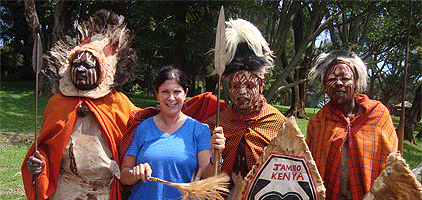
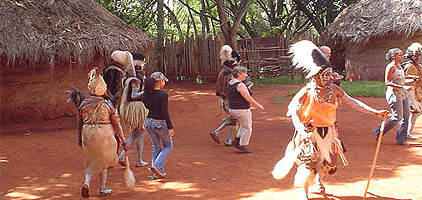
Riuki Kikuyu Cultural Centre Tours Nairobi offers vocational entertainment and cultural education on Kikuyu Traditional Culture for locals, school teams, and international visitors and tourists.
Riuki Cultural Centre is located about 25 km outside of Nairobi, Kenya, in the Kikuyu Heartland of Kiambu. To get there, you drive via Kiambu, Central Province District Headquarters, past Ndumberi, Tinganga, and Ikinu Villages to Karia Village through lush green agricultural Gikuyu country until you reach Riuki Cultural Centre.
Our Riuki Kikuyu Cultural Center Tours in Nairobi are led by Dr. Kinuthia Njoroge, the guide, and a host of children. Riuki Cultural Centre is run by Dr Kinuthia Njoroge, who built a traditional Kikuyu village homestead to show local children the history and customs of the Kikuyu community.
The Kikuyu are the largest community in Kenya and have always played a central role in the development of the independent Nation. Kenya is famous for its 42 cultures, but aside from the nomadic Masai and Samburu, few of them are widely known outside the country.
Riuki Cultural Centre is devoted to the Kikuyu, Kenya’s largest tribe (accounting for approximately 25% of the total population of 7 million), and offers a unique experience of this tradition-rich culture in the modern world.
For this reason, many believe that modern influences have eroded the traditional way of life of the Kikuyu tribe, who mainly live around the capital and in the highlands. Now, visitors to Kenya can come to Riuki Cultural Centre and spend a day learning more about the Kikuyu tribe and their culture.
Some of the cultural activities available include a guided tour of the Kikuyu village, cleansing ceremonies performed by a Kikuyu traditional doctor, tasting traditional Kikuyu food and drinks, Kikuyu traditional dances, and a lecture on the Kikuyu tribe’s traditional lifestyle.
Riuki Kikuyu Cultural Centre Tours Nairobi Half Day
The Tour includes a guided tour of the village, traditional doctor cleansing ceremonies, traditional dances, traditional food tasting, a lecture on the Kikuyu traditional lifestyle, and visits to tea/ coffee farms, factories, a church, and a local school.
The morning tour departs Nairobi city at 0900 Hours and returns at 1300 Hours. The afternoon tour departs Nairobi at 1400 Hours and returns to the city at 1800 Hours. Booking is required.
Return transportation from Nairobi is included.
Riuki Kikuyu Cultural Centre Tours Nairobi Prices
Riuki Kikuyu Cultural Centre Tours Nairobi Rates Include
✓ A sampling of the local Kikuyu food
✓ Services of a Professional Guide for the Cultural Tour
✓ Pickup from your hotel in Nairobi and drop-off at your hotel
✓ All Fees for the cultural entertainment, service charge, and taxes
✓ Professional English-speaking guides. All are experts in African wildlife, culture, and tour guiding, many of whom speak other European languages
| Dates From | Dates To | Price Per Person | Children Aged 3 to 11 Years |
|---|---|---|---|
| 1st January 2026 | 31st December 2026 | Request for rates | Request for rates |
Notes
* This tour departs daily from Nairobi Hotels or Jomo Kenyatta International Airport
Riuki Kikuyu Cultural Centre Tours Nairobi Do Not Include:
✘ Drinks
✘ Tips or gratuity
✘ Travelers Insurance
✘ Communication charges
✘ Minimum of 1 person required
✘ Visas, international airfares, and airport taxes; meals
✘ Sightseeing not included in the package; optional activities
✘ Personal expenses such as transfers to/ from the airport (supplement airport transfer cost applies for tours starting from the airport)
Riuki Kikuyu Cultural Centre Tours Nairobi Itinerary
These tours in Nairobi depart daily in the morning (African Spice Safaris) and will pick you up from your hotel or residence. and travel to Kiambu Town, then through Ndumberi, Tinganga, and Ikinu Villages to Karia Village, with lush green agricultural land.
The Kikuyu country is rich with banana plantations and coffee trees. Upon arrival, you will be greeted in person by Dr. Kinuthia Njoroge, the guide, and a host of the Centre. Riuki Kikuyu Cultural Centre Tours in Nairobi begin with a visit to a traditionally built hut, where visitors learn how traditional society operated.
Communities always remained bound by strong, strict ties of clan loyalty and an even stronger sense of tribal unity. There was an age-set system among young men, known as Mariika, but all clans and villages (itura) always paid deference to the tribe’s wisdom and law.
After the hut tour, follow Riuki Cultural Centre’s Traditional Songs, Proverbs, Dances, Myths, and Legends of the Kikuyu to life. A group of local women performs for visitors, presenting a series of dances traditionally performed at weddings and initiations, along with songs. These are simple love and courting songs, traditional hunting songs, and chants used when going to work in the fields.
The highlight of the tour is a chance to sample a typical Kikuyu meal – delicious, healthy food including sweet potatoes, Githeri (a maize and bean stew), Mukimo (a mashed mixture of green peas and potatoes), roasted goat, and Irio, a great Kikuyu favorite.
The food at Riuki Cultural Centre is prepared by Dr. Njoroge’s two wives. Riuki Cultural Centre also displays traditional medicine, healing, and divination.
Riuki Kikuyu Cultural Centre Tours in Nairobi can include extended programs to visit local farms and schools, spend the night under the stars by a campfire on a traditional banana fiber mat, or stay in a specially arranged Homestay in a typical Kikuyu home.
For anyone with a free day in Nairobi, the Riuki Cultural Centre is an excellent way to learn more about Kikuyu culture and make many new friends on your safari. Kindly contact African Spice Safaris to arrange a special package for the excursion mentioned above.
Booking & Reservations Riuki Kikuyu Cultural Centre Tours Nairobi Contact
Mobile: +254-721-242-711
WhatsApp: +254-721-242-711
Reservations: +254 718-179-967
Email: [email protected]
Website: https://africanspicesafaris.com