Mombasa City Tour Half Day Sightseeing Trip
The Half-Day Mombasa City Tour takes you to some of Mombasa City’s top attractions, giving you a real feel for Kenya’s second-largest city. Discover the diverse cultures and fascinating history of Mombasa on this informative journey through the city’s past and present.
Experience the natural beauty, vibrant streets, and captivating architecture of Mombasa. This morning or afternoon guided city tour provides visitors with a good overview of Mombasa city, visiting highlights such as:
✓ Fort Jesus Historical Museum (UNESCO World Heritage site)
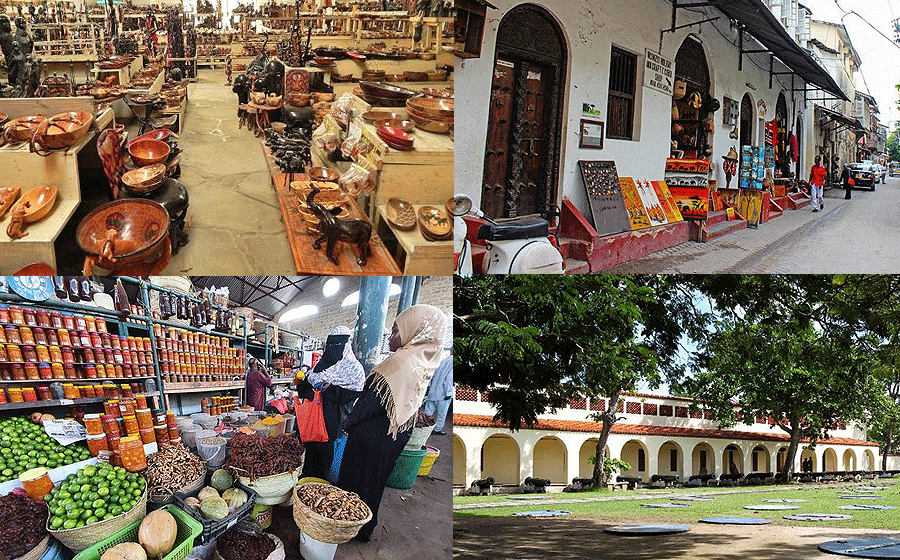
✓ Bazaar & Markets: A visit to the Marikiti Spice Market to see local spices, fruits, and fabrics
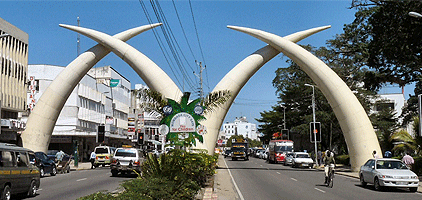
✓ Monuments: Includes stops at the iconic Mombasa Elephant Tusks on Moi Avenue and the BAPS Shri Swaminarayan Mandir Hindu temple
✓ Shopping at the Akamba Wood Carvers (opportunities to shop for souvenirs and learn about local craftsmanship at the Akamba Woodcarvers market)
0800 Hours: Our local tour guide will pick you up from your hotel in Mombasa for your half-day Mombasa town tour. Mombasa town dates back to the 12th century when spice traders arrived from Arabia, blown across on the Trade Winds.
Visit the historic old quarter, dominated by the medieval Fort Jesus built by the Portuguese in the 16th Century, with its ancient mosques and narrow bustling streets, the old dhow harbor, central market, and a visit to the Akamba wood carvers, where you have the opportunity to see the carvers at work and buy souvenirs.
1400 hours: A leisurely drive brings you back to Mombasa City, where your guide drops you off at the Hotel.
Note:
✓ What to Bring: A camera, sunscreen, a hat, and comfortable walking shoes. It is recommended to bring a copy of your ID or passport for site entries
✓ Best Time to Start: Morning tours typically begin around 0800 Hours to avoid the peak tropical heat, while afternoon tours often start at 1400 hours
Mombasa City Tour Half-Day Sightseeing Trip is a private tour showcasing some of the best highlights of this colorful old city—Mombasa Town, the second-largest city in Kenya, on the island.
Mombasa City has a diverse and intriguing population. It is primarily a Swahili town, and women can be seen chattering in dark bui-bui or wrapped in brilliant multicolored kanga. Mombasa City Tour Half Day Sightseeing Trip includes the following historical and cultural places: Fort Jesus:
Mombasa Old Town, the Mwembe Tayari open-air market, the local bazaars, and handicraft carvers, walk through the famous curvy alley roads and the central business district.
Mombasa City Tour Half Day Sightseeing Trip Highlights
* The Likoni Channel-Port entry into Kenya
* The Elephant tusks – the gateway to Mombasa
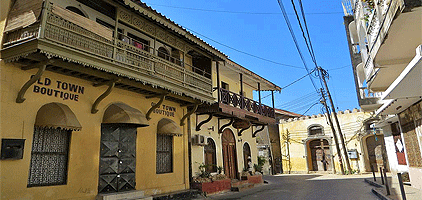
* The Old town with its Swahili and Arabic culture
* The Akamba wood carving factory – local talents in arts
* The Fort Jesus Museum, essentially a history of the East African Coast
* The City food and spice market – a glimpse into the lives of the local people
Mombasa City Tour Half Day Sightseeing Trip Itinerary
0800 Hours: Depart from your beach hotel in the morning and drive to Mombasa Town. Begin the tour with a visit to the Baobab forest along Mama Ngina Drive. The Baobab forest contains several trees, such as the baobab and neem, which are medicinal and are believed to cure over 40 illnesses.
Proceed to Fort Jesus Museum, built by the Portuguese. The fort is Mombasa’s most popular tourist attraction. The fort, located along the coast near the Old Town, is a monumental piece of architecture built in the 16th century by the Portuguese.
The fort has a museum that displays various artifacts from the era when Mombasa served as a transit point for the slave trade and commodities, and which enjoyed regular visits by seafarers and the like.
Its interior comprises torture rooms and prison cells where slaves were kept in captivity before being traded. Weapons such as cannons, used to defend the fort against invading foreigners and rioting locals, can be seen both inside and outside the fort. The tour of the Museum takes about 1-3 hours, depending on your interest and level of fitness.
We take a walk into Mombasa’s “Old Town”. It is the part of Mombasa that is reminiscent of the days when the Arabs exerted a heavy influence on the town and its culture, especially in the architecture and language.
(Kiswahili has a lot of phrases derived from various Arabic dialects). It is well known for its ancient buildings, extravagant art, and curio shops selling antique and popular Kenyan souvenirs.
Old Town is best seen when explored on foot with an experienced guide, as the streets are too narrow to accommodate many vehicles. The town’s inhabitants are mostly of Arab origin, whose forefathers once roamed the town’s streets.
Later visit Mombasa “Tusks”, which are symbolic representations of entrance into the heart of the town. The tusks were built to commemorate Queen Elizabeth’s 1952 visit to the town, as they lie directly on the path from the port to the town.
Ivory was considered an exquisite commodity at the time, and, in essence, the tusks were meant to embrace the Queen and the British Empire into the town and its social structure. Coincidentally, the tusks also spell the letter “M” for Mombasa.
Next, we visit the Hindu Temple. It is one of the many symbols of Mombasa’s cultural diversity. The temple is a popular tourist spot, and a tour can be taken inside, with a historical background provided by one of the temple gurus.
Extravagant idols and stone carvings of various religious beliefs are displayed within the temple and on its walls. It is located near the Railway Station, just outside the downtown area. We also visit Mackinon market before proceeding to Akamba Woodcraft in Changamwe, where you can see the craftsmen at work and select your carvings at the lowest prices you can get.
1500 Hours: Afterwards, transfer back to your hotel.
Mombasa City Tour Half Day Sightseeing Trip Prices
Mombasa City Tour Half-Day Sightseeing Trip Rates Includes:
✓ Shopping time
✓ Walking and driving
✓ Mineral water during tour
✓ Possible to customize the tour
✓ Professional English speaking guides
✓ All entry fees, guide fees, service charges, and taxes
✓ Pickup from your hotel in Mombasa and drop-off to your hotel
| Dates From | Dates To | Price Per Person | Children Aged 8 to 12 Years |
|---|---|---|---|
| 1st January 2026 | 31st December 2026 | Request for rates | Request for rates |
Notes
* Our Mombasa Half Day City Tour time: 0800 Hours – 1500 Hours
Mombasa City Tour Half-Day Sightseeing Trip Rates Do Not Include:
* Drinks
* Tips or gratuity
* Travelers Insurance
* Communication charges
* Lunch (option and extra charges direct)
* Visas, international airfares, and airport taxes
* Sightseeing not included in the package; optional activities
* Personal expenses such as transfers to/ from the airport (supplement airport transfer cost applies for tours starting from the airport)
Booking & Reservations Half Day Mombasa City Tour Contact
Mobile: +254-721-242-711
WhatsApp: +254-721-242-711
Reservations: +254 718-179-967
Email: [email protected]
Website: https://africanspicesafaris.com