
Amboseli Crocodile Park | Kimana Gate of Amboseli National Park | 2 km (3-minute drive) from Kimana Gate (Amboseli NP) in Kajiado County | 240 km (5-hour drive) from Nairobi | 460 km | 45-minute scheduled flight from Nairobi’s Wilson Airport to the Amboseli Airstrip, followed by a 20 km (45-minute) local transfer.
Amboseli Crocodile Park is Kenya’s newest wildlife attraction, where you can come face-to-face with the legendary Nile Crocodile, just minutes from Amboseli National Park. Conveniently located only 2 kilometers before Kimana Gate on the main access road, the park is the perfect addition to any Amboseli safari itinerary, requiring no detour from the route travelers are already taking.
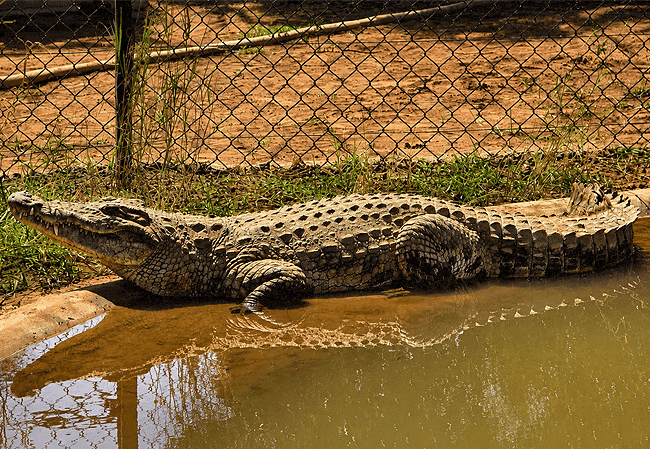
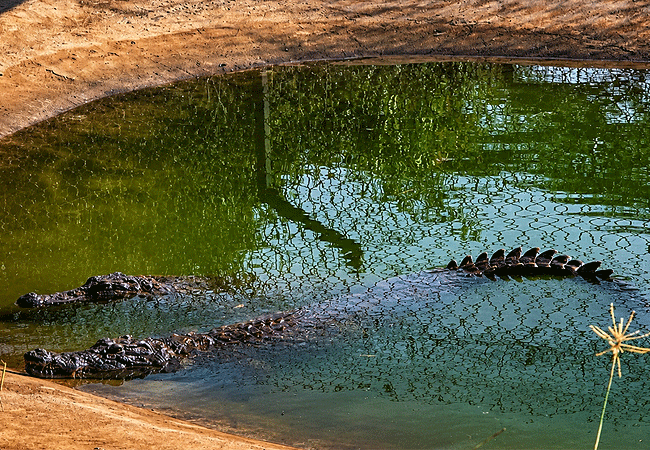
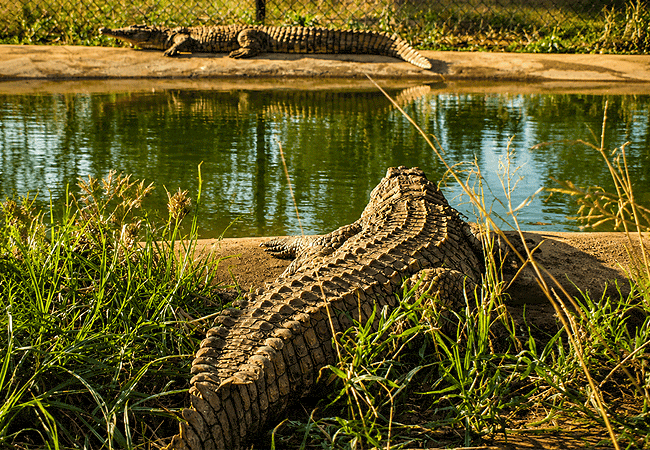
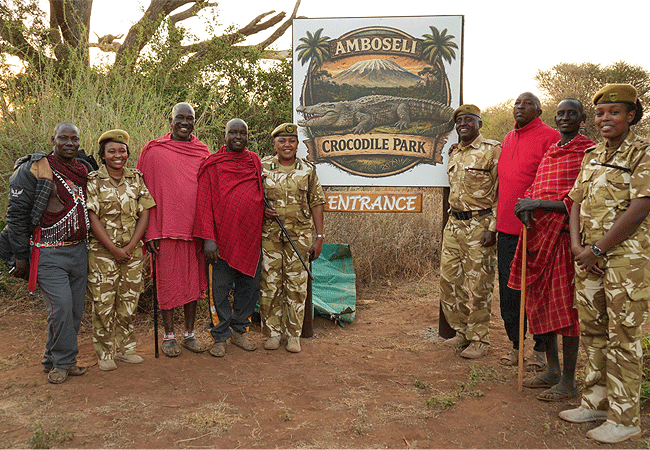
The park grew from a private initiative that the Kenya Wildlife Service (KWS) licensed and commissioned, and was officially opened by KWS Chief Licensing Officer Madam Lucy Muita. It is the first facility of its kind within the Amboseli ecosystem, centered on a man-made pool built to hold and display Nile crocodiles in a controlled setting, paired with educational signage on crocodile biology and their role in East Africa’s wetlands.
The park sits alongside Amboseli National Park in Kajiado County as a standalone licensed attraction; it is not part of the park’s core wildlife-viewing circuit, but a separate destination in its own right.
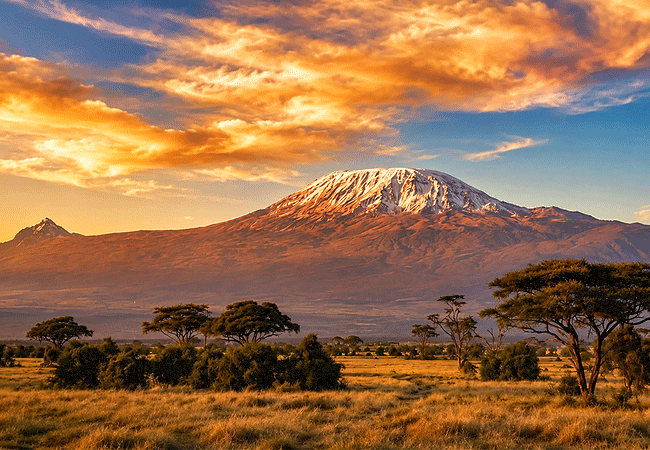
Dedicated to conservation, education, and responsible wildlife tourism, Amboseli Crocodile Park gives visitors the chance for safe, up-close encounters with one of Earth’s oldest surviving predators a living relic shaped by over 200 million years of evolution while learning about its biology, behavior, and vital ecological role. Experiences include guided educational tours, scheduled crocodile feeding sessions, baby crocodile encounters, and unforgettable photo opportunities, all set against the backdrop of Mount Kilimanjaro.
Beyond its secure enclosures lies an educational center where conservation enthusiasts, students, and local communities can learn about crocodiles and appreciate their vital role in nature, while the park itself demonstrates how sustainably managed wildlife can diversify tourism products and strengthen local economies.
Location & Accessibility
Amboseli Crocodile Park is located in Kajiado County, within the greater Amboseli ecosystem, on the same road network travelers already use to reach Amboseli National Park’s gates.
✓ Easy stop for both safari tour vehicles and self-drive visitors
✓ Free parking available for tour vehicles and private visitors alike
✓ Just 2 kilometers from Kimana Gate, directly on the main access road
✓ No detour required; the park sits right on the route whether driving in or heading back from Amboseli
By Road
✓ Leave Nairobi via Mombasa Road (A109)
✓ The park sits on the right side, exactly 2 km before reaching Kimana Gate
✓ Driving distance from Nairobi: roughly 236 km, taking 4 to 4.5 hours depending on traffic
✓ Follow the tarmac road toward Kimana, then turn onto the Amboseli–Kimana Road (C103)
✓ Drive approximately 125 km down Mombasa Road to Emali town, then turn right onto the Emali–Loitokitok Road (C102)
Alternative route: the Nairobi–Namanga Road (A104) enters via the Meshanani Gate on the opposite side of the park, requiring a drive all the way through Amboseli National Park to reach the Kimana side.
By Air
✓ Scheduled daily flights depart from Wilson Airport (WIL) in Nairobi
✓ Local carriers Safarilink Aviation and AirKenya operate regular morning and afternoon flights
✓ Flight time: approximately 35 to 45 minutes from Nairobi, eliminating the bumpy road sections entirely
✓ Arrival at Amboseli Airstrip, located inside the national park (some charter flights land at the nearby Kilimanjaro Buffalo Lodge airstrip instead)
✓ Ground transfer of approximately 30 to 40 minutes by road to exit through Kimana Gate and reach the Crocodile Park; a taxi or lodge transfer vehicle should be arranged in advance to meet you at the airstrip
Gates & Access Points
✓ Kimana Gate: on the park’s southeastern side near Kimana town, the closest access point to this part of Kajiado County, and the one most itineraries built around the crocodile park will use
✓ Meshanani Gate: the main entrance on the Namanga side, the standard route for travelers coming straight from Nairobi by road, though it requires transiting through the park to reach Kimana
Amboseli Crocodile Park Entry Fees
2026 Amboseli Crocodile Park Entry Fees
|
Citizen Rate Per Person Per Day |
Non-Resident Rate Per Person Per Day |
|
|
Adult |
1,000 Kenya Shillings |
25 US Dollars |
|
Children |
300 Kenya Shillings |
15 US Dollars |
Notes
* Children under 5 years: Free entry
* Opening Hours are from 0900 hours to 1830 hours daily
Amboseli Crocodile Park Experience & Conservation Efforts
Amboseli Crocodile Park offers a compact, single-site visit rather than a half-day safari activity, a chance to come face-to-face with the Nile crocodile, one of nature’s oldest survivors, shaped by over 200 million years of evolution. The core draw is the crocodile pool itself, a man-made enclosure with viewing platforms and interpretive signage that explains crocodile behavior, breeding, and the species’ role in the wetland ecosystems bordering Amboseli’s swamps.
Nile Crocodiles Up Close
✓ Scheduled crocodile feeding sessions at set times
✓ See adults and young crocodiles up close, in a secure, controlled setting
✓ Learn about their biology, behavior, and vital role in Africa’s ecosystems
✓ Excellent photography opportunities in natural light, ideal for capturing unforgettable wildlife moments
Baby Crocodile Encounter
Discover the early life of the Nile crocodile through a supervised educational encounter, guided by the park’s trained team with the highest regard for animal welfare a unique experience leaving lasting memories. Availability is subject to operational schedules and animal welfare considerations, so it’s worth enquiring at the ticket counter upon arrival for the latest information.
Discover Amazing Crocodile Facts
Far more than a fearsome predator, the Nile crocodile is one of nature’s oldest survivors, essential to African ecosystems. Through immersive displays and visual storytelling, myth gives way to genuine understanding, perfect for school groups, families, and curious minds of all ages.
School Visits & Educational Tours
Curriculum-linked learning experiences connect students directly with Kenya’s wildlife, covering biology, freshwater ecosystems, biodiversity, and conservation.
✓ Group bookings recommended
✓ Ideal for schools, colleges, universities, and youth groups
✓ Infographic displays and guided sessions encourage curiosity and critical thinking
Best Time to Visit
Because the crocodile park is a fixed-site facility rather than a wildlife-viewing drive, it isn’t weather-dependent the way game drives are; the better question is when to visit wider Amboseli.
✓ Long rains (March–May) bring the fewest crowds, but also the most clouded mountain views and muddier back roads around Kajiado’s rural stretches
✓ If clear Kilimanjaro photos matter more than avoiding crowds, book around the dry windows and expect to share Observation Hill’s viewpoints with more vehicles
✓ Dry season (June–October and January–February) offers the clearest Kilimanjaro views and concentrates wildlife around Amboseli’s swamps, since animals gather where water remains. Travelers routing through Kimana Gate for a dry-season safari have the easiest add-on trip to the crocodile park
Conservation & Community Impact
Because of their ferocious appearance, crocodiles are almost always associated with danger. But what if, instead of fear, we saw opportunity an opportunity that inspires learning, strengthens conservation, and creates livelihoods? That vision has become a reality in Amboseli, where a young entrepreneur transformed his vision into Amboseli Crocodile Park, the first facility of its kind within the Amboseli ecosystem.
Officially opened by Kenya Wildlife Service (KWS) Chief Licensing Officer Madam Lucy Muita, the facility is set to promote conservation and ecotourism in the region. Beyond its secure enclosures lies an educational center where conservation enthusiasts, students, and local communities can learn about crocodiles and appreciate their vital role in the natural world. It also demonstrates how sustainably managed wildlife can diversify tourism products while strengthening local economies.
A Model for Sustainable Wildlife Utilization
The park is a practical example of how KWS continues to expand Kenya’s wildlife economy by supporting innovative conservation enterprises that benefit both people and nature. Through licensing, environmental compliance, habitat suitability assessments, animal welfare standards, and regular inspections, KWS ensures these ventures remain safe, ethical, and sustainable.
✓ Part of the broader goal of expanding Kenya’s wildlife economy, as outlined in the KWS Strategic Plan 2024–2028
✓ Amboseli Crocodile Park reflects KWS’s commitment to regulated wildlife utilization, diversifying community economies and formalizing wildlife commerce
✓ Kenya’s wildlife sector is a significant economic driver, with tourism directly contributing billions to Kenya’s GDP, alongside creating employment for Kenyans
✓ The “wildlife economy” refers to the sustainable use of wildlife resources to generate economic benefits while ensuring conservation, ecological integrity, and compliance with national and international law
✓ KWS has framed the park’s opening as proof of a wider licensing push; individuals, community groups, and investors can now apply to keep wildlife species commercially, provided they meet conservation, welfare, and regulatory standards, with Amboseli Crocodile Park the first facility publicly pointed to under that framework in this ecosystem
Supporting Community Livelihoods
✓ Contributes directly to the region’s growing conservation economy
✓ By offering employment and business opportunities, Amboseli Crocodile Park supports this model
Inspiring the Next Generation Through Conservation Education
Kenya’s future conservation champions are being nurtured today through initiatives like the KWS Wild Scholars Schools Initiative, which connects students with nature through subsidized park visits.
✓ Bringing young people into the wild gives them space to learn, decompress, and connect with nature
✓ Increased visitation to parks and reserves by young people inspires dreams, hopes, and ambition the threads that future conservationists braid into the ropes that hold wildlife conservation together for posterity
Amboseli Crocodile Park offers so much more than a chance to see crocodiles; it offers a glimpse of what’s possible when courage meets conservation.
Highlights
✓ Kenya’s newest eco-tourism attraction, just 2 km from Amboseli National Park’s Kimana Gate, with zero detour required
✓ Up-close encounters with Nile crocodiles, one of Earth’s oldest surviving predators, shaped by over 200 million years of evolution
✓ Baby crocodile encounters, scheduled feeding sessions, and excellent photography opportunities against the backdrop of Mount Kilimanjaro
✓ Quick, flexible visit: 30 minutes to an hour, open daily 0900 hours –1830 hours, no reservation required, easily paired with any Amboseli safari itinerary
✓ Curriculum-linked educational tours for schools, colleges, and youth groups, alongside a genuine community livelihoods and conservation economy story
✓ Officially licensed by the Kenya Wildlife Service (KWS), opened by Chief Licensing Officer Madam Lucy Muita, as a model for sustainable wildlife utilization
Booking & Reservations Amboseli Crocodile Park Contact
Mobile: + 254-721-242-711
WhatsApp: +254-721-242-711
Reservations: +254 718-179-967
Email: [email protected]
Website: https://africanspicesafaris.com