
Karen Blixen Museum | Located on Karen Road | 10 km from Nairobi city centre
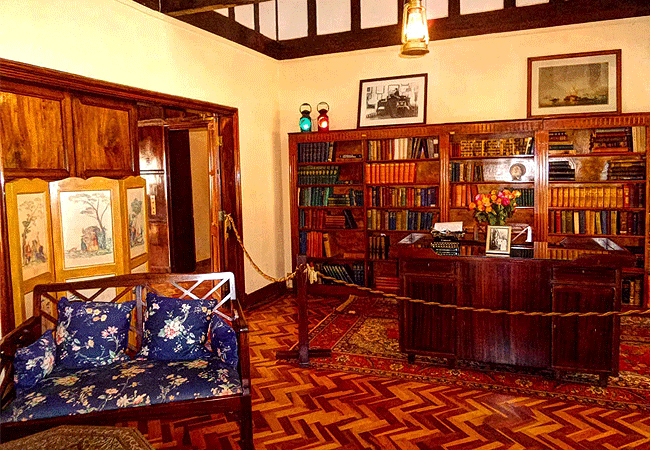
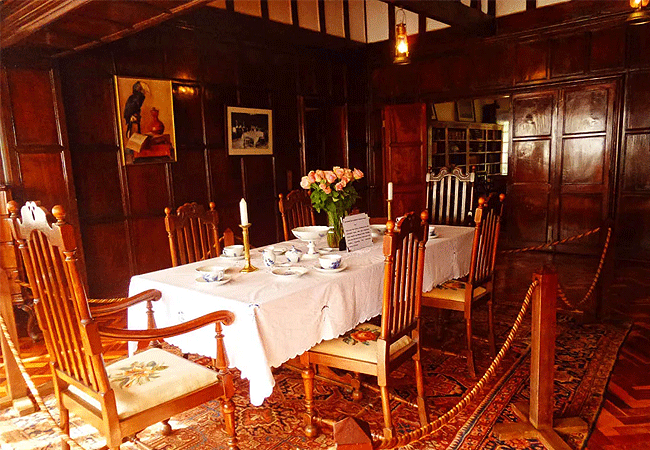
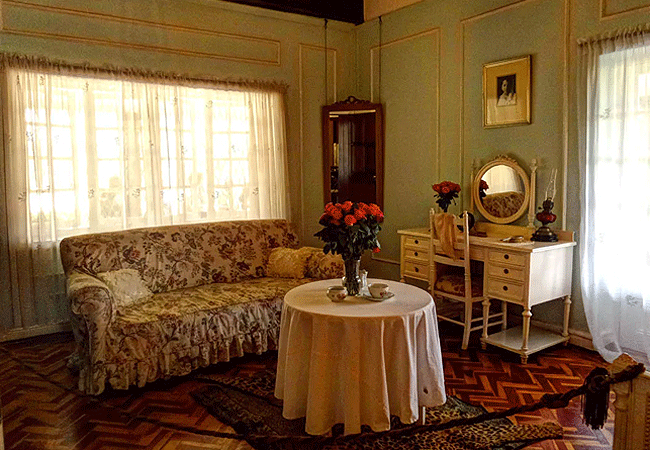
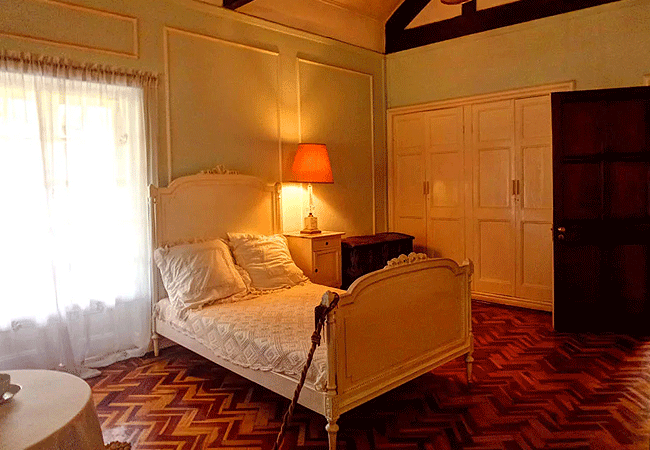
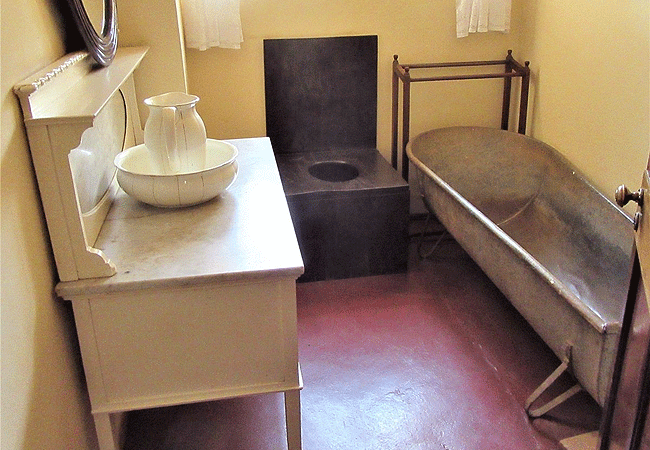
Karen Blixen Museum: The Danish author of Out of Africa lived in a coffee plantation farmhouse at the edge of Kenya’s beautiful Ngong Hills, where a small museum now celebrates her life and work. Since much of the original furniture has been preserved, it’s a fascinating glimpse into a colonial-era home and an interesting stop even if you haven’t read Blixen’s books.
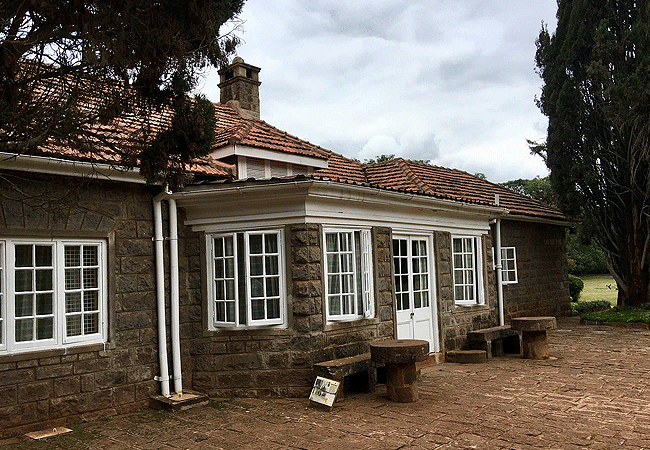
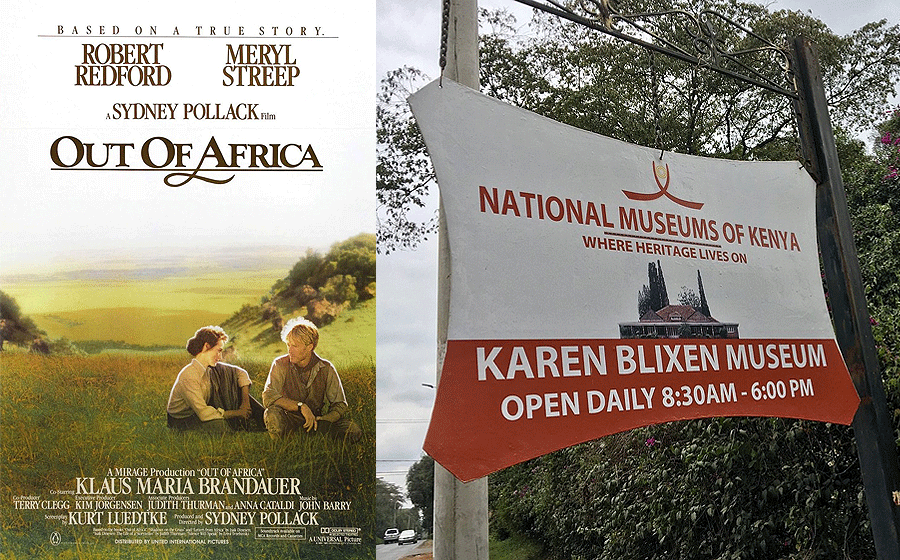
Karen Blixen Museum is a colonial-era house, where Baroness Karen Blixen lived with her husband. The Oscar-winning movie “Out of Africa” was based on Karen Blixen’s life in Kenya, based on her autobiographical book. The house was built in 1912 and bought by the couple in 1917, becoming the farmhouse for their 4,500-acre farm, of which 600 acres were used for coffee farming.
The museum is located 10 kilometers (6 miles) from Nairobi City Center, and Jomo Kenyatta International Airport is 16 Kilometers away. A visit to this museum provides an opportunity to step back in time and gain an insight into this remarkable woman’s life. Views of the Ngong Hills can be admired from the museum’s beautifully landscaped gardens. The museum is open between 8:30 am and 5:30 pm, all year round, including public holidays and weekends.
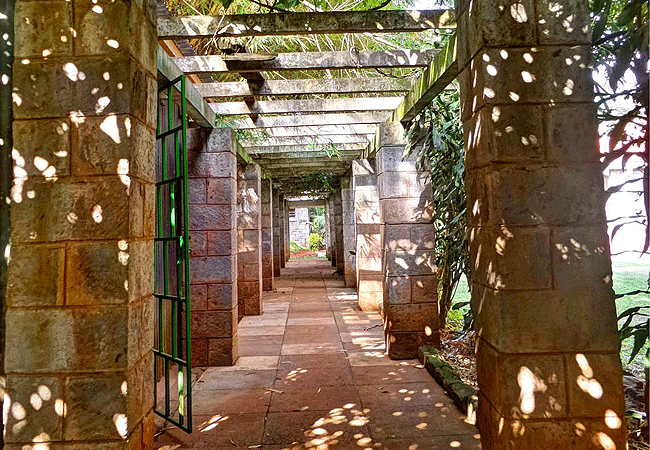
Set in the serene suburb of Nairobi, the Karen Blixen Museum not only provides the most comprehensive insight into the life of Karen Blixen but also offers a fantastic space for personal reflection along our nature trail, against the backdrop of Karen’s beloved Ngong Hills.
The Karen Blixen Museum was once the centerpiece of a farm at the foot of the Ngong Hills owned by Danish Author Karen and her Swedish Husband, Baron Bror Blixen-Finecke. Located 10km from the city center, the museum belongs to a different period in Kenya’s history and later gained international acclaim with the release of the movie ‘Out of Africa’, an Oscar-winning film based on Karen’s autobiography of the same title.
Built in 1912 by Swedish Engineer Ake Sjogren, the house was bought by Karen and her husband in 1917, and it became the farmhouse for their 6,000-acre farm, of which 600 acres were used for coffee farming. Their marriage failed after eight years, and in 1921, the Baron moved on, leaving Karen to run the farm.
Karen lived at the house until her return to Denmark in 1931. The farm was bought by Remy Martin, who broke the land into 20-acre parcels for sale. Subsequent development created the present suburb of Karen. Records indicate that Lt. Col. G. Lloyd, an officer of the British Army, bought the house in 1935 and lived there until his death in 1954, after which it passed to his daughters, Mrs. G. Roberts and Lavender Lloyd. A transfer of title to Mrs. J.P Robson and Mrs. L.B. Hyde is in the City Hall records of 1956. The house was intermittently occupied until it was purchased by the Danish government in 1964 and given to the Kenyan government as an independence gift.
Subsequently, the government established a college of nutrition, and the house was used as the principal’s residence. In 1985, the shooting of the movie based on Karen’s autobiography began, and the National Museums of Kenya expressed interest in acquiring the house to establish a Museum. The Museum was opened in 1986.
Karen, also known by her pen name Isak Dinesen, was born at Rungstedlund in Denmark on 17th April 1885, as the second child of Wilhelm and Ingeborg Dinesen’s five children. She came to Africa in 1914 to marry her half-cousin and practice dairy farming in the then-British Colony of Kenya. Her husband, however, had changed his mind and wanted to farm coffee. Her uncle, Aage Westenholz, financed the farm, and members of both families were shareholders. The coffee farm did not do well, suffering various tragedies, including a factory fire and continuous bad harvests. After her divorce, Karen was left to run the financially troubled farm on her own, a daunting task for a woman of that generation.
She fell in love with an Englishman, Denis Finch Hatton, and his death in Tsavo in 1930, coupled with the failed farming, left Karen little choice but to return to Denmark. She turned to writing as a career after her departure from Africa and published works such as Seven Gothic Tales (1934), Out of Africa (1937), and Babette Feat (1950). She died on her family estate, Rungsted, in 1962 at the age of 77.
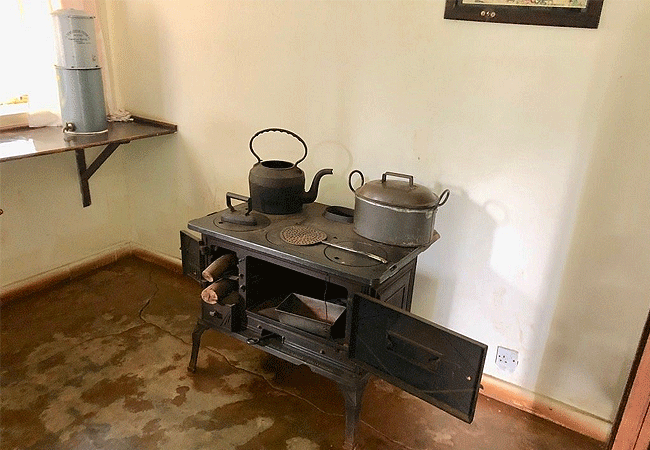
Karen Blixen called the house “Bogani” or “Mbogani,” meaning a house in the woods, and occupied it until 1931. By 1985, with renewed interest in Karen Blixen occasioned by the film adaptation of Out of Africa, an agreement was reached with the college to transfer the house to the National Museums of Kenya. Many of the pieces of furniture that Karen Blixen sold to Lady McMillan on her departure were later acquired by the Museum and form part of the exhibition.
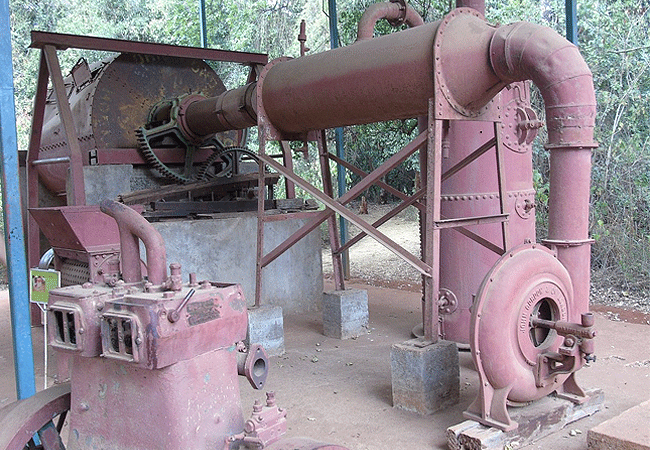
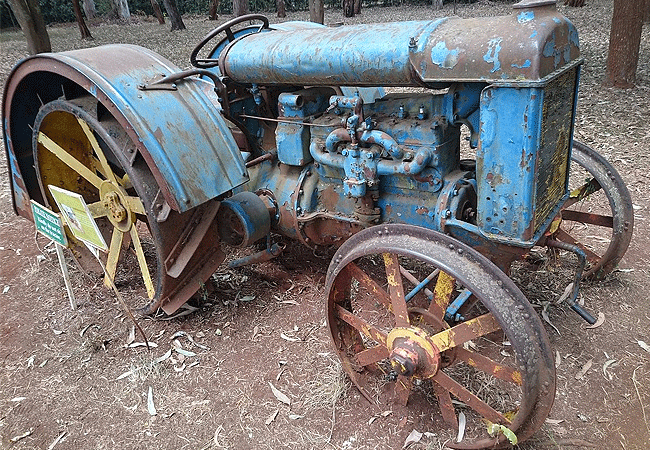
The Museum house remains a serene environment that seems to belong to the past, surrounded by a tranquil garden and indigenous forest, with a splendid view of Karen’s beloved Ngong Hills. She honors the hills with the phrase ‘I had a farm in Africa at the foot of the Ngong Hills’. Farm tools, including a tractor from that period, wagons, plows, and original coffee-processing factory equipment, are part of this rich collection and serve as outdoor exhibits.
The well-maintained, lush green gardens offer the ideal setting for all outdoor events, including weddings and wedding receptions, corporate galas, and team-building events. We support local and upcoming artists at Karen’s Art Corner in line with Karen’s passion for art. Guided tours are offered continuously throughout the day by our well-trained multilingual guides.
A museum shop offers a wide selection of souvenirs, including handicrafts, posters and postcards, the Movie ‘Out of Africa’, books, and other mementos. Children and school groups are not left out, as the Museum offers curriculum-aligned educational programs and tailored art activities.
The nature trail offers sneak peeks of tree hyraxes and is a haven for birdwatchers, with plenty of birds. Our trees are labelled to help in identification and learning. The Karen Blixen Museum has received various awards for excellence in service and is highly rated on TripAdvisor. The Museum is easily accessible by both public and private transport.
The Entry Fees are listed below for residents and non-residents. The museum is open between 8:30 am and 5:30 pm, all year round, including public holidays and weekends.
Night tours: Exclusive for organized groups of at least 10 people. Requests can now be made through bookings. The Museum will be open between 6:00 pm and 10:00 pm, except during privately held functions.
Day tours of the museum can be arranged through African Spice Safaris. Kindly inquire about a tour on the following link
Karen Blixen Museum Nairobi Day Tour
2026 Karen Blixen Museum Nairobi Entrance Fee
|
Karen Blixen Museum – Entrance Fees |
|||
| Category | Citizen Kenya/East African |
Residents & Rest of Africa |
Non-Residents |
|
Adults |
550 Kenya Shillings | 1,200 Kenya Shillings | 2,200 Kenya Shillings |
|
Children below 16 Years |
300 Kenya Shillings | 800 Kenya Shillings |
1,200 Kenya Shillings |
Booking & Reservations Karen Blixen Museum Nairobi, Kenya Contact
Mobile: + 254-721-242-711
WhatsApp: +254-721-242-711
Reservations: +254 718-179-967
Email: [email protected]
Website: https://africanspicesafaris.com