
Malindi Marine National Park & Reserve | Located just 5 km south of Malindi town
Malindi Marine National Park & Reserve is located in the warm, crystal-clear waters of the Indian Ocean off the coast of Kenya. Established in 1968, it holds the prestigious title of Africa’s oldest marine park and was declared a UNESCO World Heritage Site in 1979.
The protected area encompasses a 6 sq km core National Park enclosed by a sweeping 213 sq km National Reserve. The landscape features a diverse array of coastal ecosystems, including fringing reefs, magnificent coral gardens, sea-grass beds, mangroves, and mudflats.
Bordering the historic Gede Ruins and the Arabuko Sokoke Forest, the park offers an unparalleled blend of vibrant marine biodiversity, pristine white-sand beaches, and rich cultural history. With its high diversity of fish and marine mammals, it offers one of the most rewarding aquatic and snorkeling experiences in East Africa.
Location & Accessibility
The park is located south of Malindi town, extending towards the beautiful Mida Creek, approximately 118 km north of Mombasa.
By Road:
✓ From Mombasa: The drive covers a distance of 118 km along the Mombasa-Malindi Highway (B8) and typically takes 2 to 2.5 hours
✓ From Malindi Town: The park is situated just 5 km from the Malindi town center via Casuarina Road, which is only a 10-minute drive
✓ From Nairobi: The road distance is approximately 560 km via the A109 and B8 highways. The journey by bus or car takes about 9 to 10 hours
✓ Local Route: When driving along the main Mombasa-Malindi highway, turn towards the Indian Ocean; the park sits 11 km from the main road turnoff
By Air:
✓ Airstrip: The closest facility is Malindi Airport (MYD), located just a short 10-minute drive (approx. 6 km) from the Marine Park’s shores.
✓ Other Connections: The airport also receives short 30-minute flights from Mombasa, daily flights from Lamu, and easily accommodates private charters.
✓ Flights from Nairobi: Daily scheduled flights operate from both Jomo Kenyatta International Airport (NBO) and Wilson Airport (WIL). The flight covers a distance of roughly 420 km and takes 1 hour to 1 hour 15 minutes.
Marine Life & Biodiversity
Malindi Marine Park is a veritable underwater paradise, boasting an incredible array of flora and fauna.
Sea Turtles
✓ The park’s real draw is its monitored turtle population, which ensures the main beach remains a safe nesting site.
✓ Species: Five species visit or nest here, including Green, Hawksbill, Olive Ridley, Loggerhead, and Leatherback turtles (Green and Hawksbill breed in the park)
Fish & Mammals
✓ Mammals: Visitors can spot migrating Humpback Whales, playful humpback dolphins, and the gentle, algae-eating Whale Shark
✓ Fish: Over 300 species of fish inhabit the park (and up to 1,000 in the wider reserve), including Angelfish, Barracuda, Butterflyfish, Surgeonfish, and Parrotfish
Corals & Invertebrates
✓ Invertebrates: The seabed is crawling with crabs, lobsters, sea stars, sea anemones, and octopus
✓ Corals: The North Reef alone records 145 species of hard coral, including Boulder, Organ Pipe, and Staghorn corals
Birdlife: A Coastal Spectacle
✓ The park and nearby Mida Creek are havens for over 100 bird species
✓ Marine Birds: Spot Roseate and Bridled Terns nesting on Whale Island
✓ Waders & Raptors: Keep an eye out for migratory waders, the Black Kite, Speckled Mousebird, Yellow Canary, and Lizard Buzzard
Key Landmarks & Viewpoints
The area’s topography offers spectacular coastal and historical highlights.
✓ Coral Gardens: Magnificent fringing reefs that drop gradually to a seagrass bed descending into the deep Barracuda Channel
✓ Magic Island: A tidal sandbank that appears and disappears magically with the tides, perfect for sunbathing in the middle of the ocean
✓ Mida Creek: A large saltwater lagoon merging with a huge mangrove forest, featuring a 260m suspended boardwalk and canoe excursions
✓ Gede Ruins & Arabuko Sokoke Forest: Nearby 13th-century Swahili city ruins and a unique coastal forest ideal for hiking and bird watching
Activities
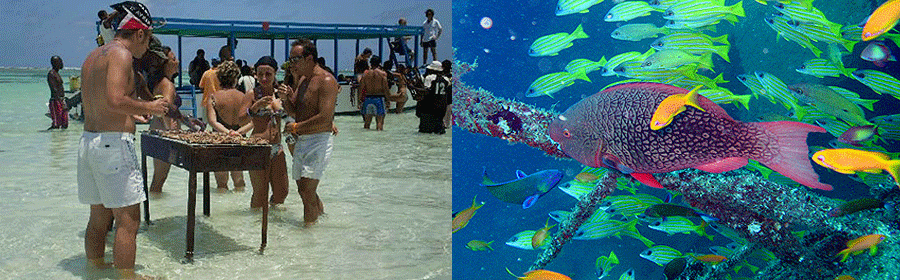
✓ Beach Picnics: Enjoy fresh seafood barbeques and relaxation on Sardegna Island or Magic Island
✓ Glass Bottom Boats: Perfect for non-divers to view the coral reef biodiversity and visit tidal sand islands
✓ Water Sports: The warm waters are ideal for windsurfing, kite surfing, jet-skiing, water-skiing, and sailing
✓ Snorkeling: Best done two hours on the low tide in the shallow waters of the Coral Garden (just 300 meters offshore)
✓ Camping: Available along the beach among the Casuarina trees, offering a serene environment with the sound of ocean waves
✓ Scuba Diving: Popular dive sites like Coral Garden and Tewa are 15-25 minutes away by boat, with depths ranging from 11m to 23m
Climate & Best Time to Visit
✓ Rainy Seasons: Short rains occur from October to November, and long rains from April to July
✓ Climate: The coastal climate is predominantly hot and humid year-round, with daily temperatures ranging from 22°C to 30.5°C
✓ Best Time: The dry seasons (June to September and January to March) offer the best conditions for diving, snorkeling, and beach relaxation
Accommodation
KWS Self-Catering & Camping:
✓ Casuarina Campsite: Set under the cool shade of indigenous trees. Equipped with BBQ and cooking areas, flush toilets, showers, and security lights
✓ Malindi Bandas: Comfortable, cost-effective self-contained cottages (single and twin beds) with a communal kitchen available for self-catering or hiring a cook
Nearby Hotels & Resorts:
✓ Beach Clubs & Villas: Driftwood Beach Club, Marine Holiday House, Villa Fortuna Malindi, and Eden House Cottages
✓ Luxury Resorts: Diamonds Dream of Africa, Kilili Baharini Resort & Spa, Ocean Beach Resort, and White Elephant Sea and Art Lodge
Malindi Marine Park and Reserve Park Entrance Fees
2026 Malindi Marine Park And Reserve Entrance Fees
|
East African Citizen |
Kenyan Resident |
Non-Resident |
African Citizen |
||||
|
Adult |
Child/ |
Adult |
Child/ |
Adult |
Child/ |
Adult |
Child/ |
|
500 |
250 |
675 |
350 |
25 |
15 |
15 |
10 |
Notes
* Child refers to persons from three years but below 11 years
* Resident refers to persons of other nationalities residing in Kenya with valid documentation from the Kenyan government
* Citizen – A native or inhabitant of East African countries (Kenya, Uganda, Tanzania, Rwanda, Burundi, and South Sudan) with valid identification documents or a passport
* Daily – Fee paid for a single entry to a national park, national reserve, or sanctuary, and which shall be valid for no longer than twenty-four hours
Malindi Marine National Park & Reserve Attractions
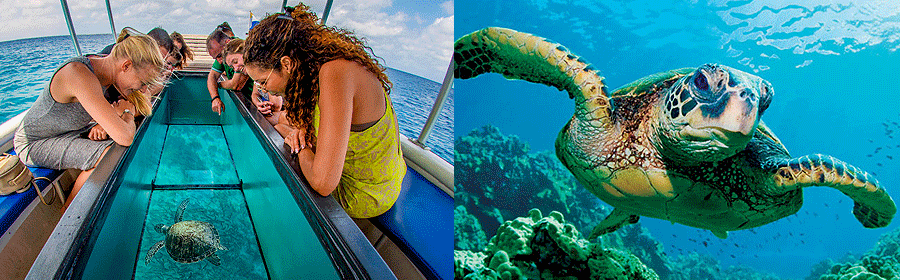
Turtles
Malindi Marine National Park & Reserve’s real draw is its turtle population, and those interested in turtles should consider a visit. The park runs a monitored turtle watch program that has helped ensure that the main beach remains a nesting site for endangered sea turtles.
Turtle species that visit or nest here include the Green turtle, the Hawksbill, the Leatherback, the loggerhead, and the rare Olive Ridley. Green and Hawksbill turtle breeds in the park.
Fishes (Experience an amazing new world underwater!)
Over the entire reserve, there are said to be more than 1000 fish species, as well as whale sharks, octopus, and barracuda. Visitors can snorkel and dive on the reef, provided they don’t disturb any marine life, and an afternoon taking in its vibrant colors, sights, and sounds is not to be missed. All fishing within the Park is forbidden.
You can see Technicolor Fish of impossible shapes and various sizes such as Flute Mouths, Half Beaks, Hawk Fishes, Lizard Fish, Parrot-Fish, Porcupine Fish, Puffers, Thorn Heads, Trigger Fishes, Zebra Fish, Angelfish, Barracuda, Butterflyfish, Goatfish, Fusiliers, Emperors, Groupers, Grunt/ Sweetlips, Jacks, Parrotfish, Rabbitfish, Sharks, Snappers, Surgeonfish, Triggerfish, Wrasses and hundreds of others.
Invertebrates
At least 135 species of gastropods and 12 species of echinoids have been identified in the park and reserve. The common invertebrates in the park include Clams, crown-of-thorns, Lobsters, Octopus, Sea anemones, Sea cucumbers, Sea stars, Sea urchins, crabs, and Shells.
Benthic cover
200 species of algae have been identified. A total of 55 genera and 145 species of hard coral have been recorded on the north reef. Generally, the substrate is covered by Coralline algae, Halimeda, Dead Coral, Soft Coral, Fleshy algae, Sand, Hard Coral, Rubble, and Algal Turf.
Corals (Come in many colors, shapes, and sizes!)
There is a tantalizing variety of superb coral to be seen below the waters of Malindi National Park. Just to give you an idea, 145 species of hard coral have been recorded on the North Reef alone! Expect to see beautiful examples of Boulder Coral, Organ Pipe Coral, Seagrass, and Staghorn Coral, among many others.
Birds
Marine Birds in the park include Roseate and Bridled Terns, which nest on Whale Island, as well as a variety of migrant shore and terrestrial birds. Just 20km south of Malindi. Mida Creek is a large saltwater lagoon that merges with a vast Mangrove forest, which provides habitat for many endemic and migratory bird species and serves as a breeding ground for endangered Turtles.
The Mida Creek forest attracts a variety of birdlife, with over 100 species to be found there. Birds to keep an eye out for include the Black Kite, Speckled Mousebird, Yellow Canary, and Lizard Buzzard. The Boardwalk tour (guided) will take you along a 260 m suspended boardwalk to a rustic hide where you can spend some time watching a wide variety of marine birds. Canoe excursions over the mud flats are also available.
Plants
Generally, a wide variety of terrestrial plants are found on the shore surrounding the Marine Park. Some of the species include: Suregada zanzibariensis, Turraea wakefieldii, Cainthium glaucitin, Flueggea virosa, Turraea nilotica, Casuarina equisetifolia, Delonix regia, and Azadirachta indica.
On some of these plants, you will find insects of different kinds, such as butterflies, moths, bees, ants, and wasps.
Mammals (Splendid and spectacular adventures you can’t afford to miss!)
The Dolphins, algae-eating Whale Shark, and migrating Humpback Whales.
Malindi Marine National Park Activities
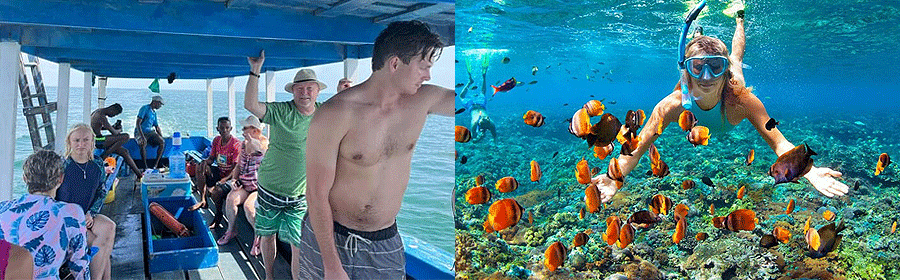
Diving and Snorkeling:
Visitors can enjoy a fabulous marine adventure by getting a boat to the offshore coral formation. The best time for snorkeling is two hours on the low tide. Wearing only your swimsuit, snorkel, and mask, you watch varied fish like zebra, angel, snapper, butterfly, scorpion, rubber, puffer, damsel, and too many other species to name!
The fish dart about so quickly that you may have difficulty discerning between the various species, and occasionally a slow-moving form may catch your eye. Perhaps it is a grouper, ray, or another large underwater creature.
Glass Bottom Boats:
Whether you prefer swimming, snorkeling, or just viewing the biodiversity of the coral reef from a boat, the marine boat operator offers the following services:
* Boat excursion rides throughout the Marine Park and reserve
* Trips to Mayungu, a tidal sand island, where you can have fresh seafood
* Visits the coral gardens to see the tropical fish in their natural environment
Camping:
Camping along the beach is possible as long as you bring all the supplies you need, such as food, water, and anything else you may need. The campsite has 2 BBQs and cooking areas, 2 toilets with running water, pit latrines, and security lights for the night. It is a cool way to spend a Kenyan beach safari, with the sound of the waves on the shore marking the night.
Sunbathing on Magic Island
This is a rather unique experience for tourists who are not accustomed to water activities; they can just relax and enjoy the sunset on the beach and the cool breeze of the Indian Ocean.
The island, which is situated inside the Marine Park, is so-called because it appears and disappears magically with the tides. At low tide, the sandbank pops out of the ocean and makes the perfect place for sunbathing, surrounded by the warm waters of the Indian Ocean.
Water spots:
There is a wide variety of water sports to enjoy off the Malindi Beach, including water skiing, jet skiing, parasailing, surfing, windsurfing, and even kitesurfing.
Scuba Diving
Keen scuba divers can look forward to exploring various very rewarding dive sites, including a wreck that lies in fairly shallow waters and has become a home for several shoals of fish. The most popular dive sites are all located about 15 to 25 minutes by boat from the shore.
Coral Garden, Marine Park, and Tewa sites all have a maximum depth of 11 Meters, making them suitable for beginners. At Turtle Point and Papa Point, you can drop down to around 16 m, and The Channel has a maximum depth of 23 m.
All equipment is available for hire from several Scuba Diving centers, and lessons are available.
Snorkeling
Snorkeling is by far the most popular activity at Malindi – all you need is your snorkel and some fins (available for rental), and you can set off to enjoy an amazing and safe marine adventure. There are spectacular coral formations in the fairly shallow waters of the Coral Garden, just 300 meters offshore and accessible by boat.
Fishing:
Fishing is very limited on the island, but can be done at the reserve. Hemingway recognized Malindi as a gaming destination in 1934. Fishing gear is available, and the ocean is rich with various fish species.
Sardegna Island (Picnic and barbecue on the island)
Sardegna can be accessed by boat from the Malindi Marine Park. You can take a full-day glass-bottom boat and enjoy Sardinia, lunch on the boat, and snorkeling.
Arabuko Sokoke Forest Reserve
Just a short distance from Malindi National Park, you will find the Arabuko Sokoke Forest Reserve, which contains a somewhat unique stretch of coastal forest. Arabuko is great for hiking and bird watching, and you may come across some of the rare endemic animals that live there.
The Gedi Ruins and the Kipepeo Butterfly Farm
Both of these attractions can be visited on an interesting half-day tour. Walk through the extensive ruins of what was obviously a thriving coastal Swahili city, dating from about the 13th century, which appears to have been abandoned in the 17th or 18th century.
Surprisingly advanced architectural techniques are evident in the many well-preserved relics of palaces, mosques, wells, and houses. The Butterfly Farm is a cooperative initiative between the Kenya Wildlife Service and the Arabuko Sokoke community and is well worth a visit. You can also buy some great silk products to take home.
Malindi Marine National Park Accommodation | Hotels
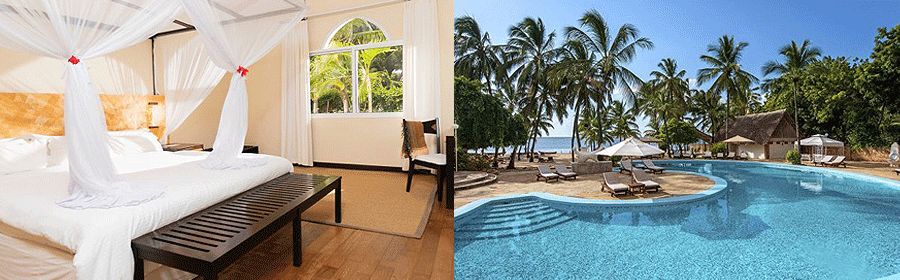
The Accommodation Malindi Marine National Park is available at the campsite in the park, named Casuarina, with comfortable, relaxing accommodation. The campsite has cool shade from indigenous trees, which provides a scenic, serene environment with a marked nature trail.
Your stay here will bring back memories of unspoiled splendor because nature is precisely as it was intended to be. Equipped with 2 erected barbeque and cooking areas, working security lights, 2 flush toilets, 2 pit latrines, and 5 showers.
You could also stay at the Malindi Bandas: 3 single beds and 6 twin beds, self-contained cottages. Comfortable and cost-effective, with a spacious dining hall. The kitchen can be hired for self-catering or with a cook’s service.
There are several hotels, resorts, and guest houses close to Malindi Marine Park and Reserve such as Diamonds Dream of Africa, Driftwood Beach Club, Marine Holiday House, Villa Fortuna Malindi, Hotel Villa Malindi, Eden House Cottages, Swordfish Villas, Malindi White Elephant Sea and Art lodge, Ocean beach resort, White Nyumba, Bella Azzura villa, and Kilili Baharini Resort & Spa.
Malindi Marine Park and Reserve Location | Best Time to Vist
Malindi Marine National Reserve is pleasant to visit year-round, with an average temperature of around 22º Celsius minimum and 30, 5º Celsius maximum. The Landscape in Malindi is predominantly plain; the climate is generally hot and humid throughout the year.
There are short rains from October to November and long rains from April to July. The best time to visit is during the dry season, in which June – September, and January – March are the dry months, but the key rainy seasons are between April – June, and October – December.
Getting to Malindi Marine National Park & Reserve
Malindi Watumu is 120km north of Mombasa and 28km south of Malindi. Driving along the main Mombasa – Malindi road, turn towards the Indian Ocean and the park sits 11km from the main road. The nearest town to the park is Malindi, a seaside town set along a strip of tropical beaches that are popular with holidaymakers in search of the sun.
Malindi tropical beaches offer the visitor a range of world-class Resorts and quiet relaxing hideaways. Malindi is where Ernest Hemingway came from in the 1930s in search of Sarlin, sailfish, and Wahoo. There are excellent and relatively inexpensive facilities for fishing.
By Air: If you wish to fly into the area, the nearest airport is also located in Malindi. Malindi Airport has daily scheduled flights to Mombasa, Nairobi, and Lamu. The airport also serves Private Charters
Malindi Marine National Park & Reserve is located in the Indian Ocean, off the coast of Kenya. It is claimed to be Africa’s oldest marine park. The park lies at Malindi, about 118 km north of Mombasa, and is protected and administered by the Kenya Wildlife Service. The park borders the Arbuko Sokoke forest and Gede ruins. Closest Airstrip: Malindi Airport.
The park has a total area of 6 km2 and lies between latitudes 3° and 4° South. It is located south of Malindi town, extending to Mida Creek. It neighbors Gede ruins and the Arabuko Sokoke forest. The park is surrounded by a national reserve and a 100-foot strip of coastal land, from the Vasco-da-Gama pillar to Watamu.
The reserve covers 213 km2 and extends three and a half nautical miles seaward. Malindi Marine water was opened in 1968 and declared a UNESCO World Heritage Site in 1979. Together with the Watamu Marine National Park, Malindi Marine Park is enclosed by the Malindi Marine National Reserve, and the park’s attractions include coral reefs, tropical fish, barracuda, zebra fish, turtles, and dolphins.
Malindi Marine Park is endowed with beautiful resources, including coral gardens in the lagoons, seagrass beds, fringing reefs, mudflats, mangroves, marine mammals, turtles, and numerous unique shorebird species. Turtles include Green, Hawksbill, Olive Ridley, and Loggerhead turtles.
Fishes: Over 300 species of fish have been recorded in the park, with the most common groups including Angelfish, Barracuda, Butterflyfish, Goatfish, Fusiliers, Emperors, Groupers, Grunt/Sweetlips, Jacks, Parrotfish, Rabbitfish, Sharks, Snappers, Surgeonfish, Triggerfish, and Wrasses.
The Landscape in Malindi is predominantly plain, as the climate is generally hot and humid throughout the year. The daily temperature ranges from about 22º Celsius to 30.5º Celsius. There are short rains from October to November and long rains from April to July.
Malindi Marine Park comprises magnificent resources, including fringing reefs, coral gardens in the lagoons, seagrass beds, mangroves, mudflats, marine mammals, turtles, and various species of shorebirds. The fringing reefs are so close to the shore and are exposed during low tide, but drop gradually to a seagrass bed that descends precipitously to the deep Barracuda Channel.
Coral is the most important element of the park: it is not just a tourist attraction but also an economic support for local people. Fishing and coral picking are forbidden in most parts of the reserve, but near the shores, there are specific points where fishermen – and only fishermen!- can work, under control.
The main activity in Malindi Marine National Park is Scuba diving. Tour operators organize “underwater safaris“. So they let people admire the many particular coral species – Porites, Montipora, Turbinaria, Astaeopora, and Millepora.
On the islets and the shores, you can also do birdwatching, especially admiring the passage of migratory waders. You will admire turtles, dolphins, incredible invertebrates, and much more.
Other activities tourists can do at Malindi Marine National Park & Reserve and its surroundings include surfing, windsurfing (in the reserve), and boat rides (on special glass-bottom boats to see underwater without diving). You can also enjoy the sun and swimming in the warm ocean water, dhow rides, educational tour, Picnic and barbecue on the island, some shopping, and some walks in nature.
There is the possibility of camping within the park, on the beach, among the lovely Casuarina wood. Malindi is famous as a tourist town, with the requisite scenic beauty of its landscape and clean white beaches.
This is a perfect place to cool off on a beautiful slice of Kenya’s Indian Ocean coastline, offering a lifetime getaway experience. As a nice alternative, when you are tired of too much wonderful nature, you can take a bus or rent a car and go to visit the city of Malindi. It is only a 10-minute drive from the Marine Park’s shores.
At Malindi Marine National Park, you cannot: go fishing, swim too close to corals, pick corals, touch corals, or hire local people to take corals or other elements of the seabeds for you.
Booking & Reservations Malindi Marine National Park & Reserve Contact
Mobile: +254-721-242-711
WhatsApp: +254-721-242-711
Reservations: +254 718-179-967
Email: [email protected]
Website: https://africanspicesafaris.com