
Sera Wildlife Conservancy | Samburu Ecosystem | Northern Kenya
Sera Wildlife Conservancy is a vast, community-owned conservation area spanning over 840,000 acres (345,000 hectares) in northern Kenya’s Samburu County. Nestled within the Sere-Olipi and Losesia community lands in Samburu East, Sera offers a rugged landscape of open plains, dense acacia bushland, and sandy luggas lined with doum palms, creating one of Kenya’s most dramatic wilderness backdrops.
The conservancy serves as a vital wildlife corridor and a role model for community conservation, managed entirely by the Samburu communities who call it home. Home to the Samburu Special Five — the Reticulated giraffe, Beisa oryx, Grevy’s zebra, Somali ostrich, and Gerenuk — Sera also supports growing populations of elephants, lions, leopards, cheetahs, African wild dogs, and massive flocks of sandgrouse.
Uniquely, it hosts the Sera Rhino Sanctuary, the first and only community-owned black rhino sanctuary in East Africa, now home to both black and white rhinos. With only one lodge (Saruni Rhino) and designated campsites operating within its borders, the conservancy ensures exclusive, crowd-free safari experiences.
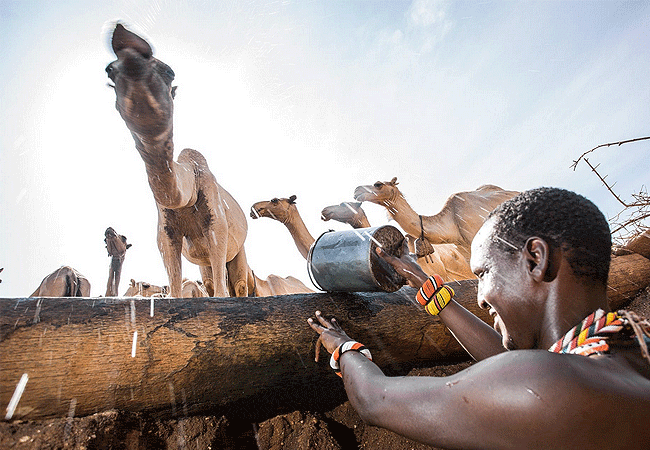
Visitors can enjoy rhino tracking on foot, game drives, birdwatching, and immersive cultural visits to the “Singing Wells” at Kisima Hamsini, where pastoralists sing to their livestock while digging for water.
How to Get There
By Road:
✓ Distance: Approximately 350–400 km from Nairobi
✓ Travel Time: 7–9 hours; the journey is for the adventurous and requires a sturdy 4×4 vehicle
✓ Scenery: The landscape stretches further than the eye can see, transitioning from the highlands to the semi-arid northern frontier, giving a sense of limitless possibility
✓ Route: From Nairobi, drive north through Nanyuki, Isiolo, and Archer’s Post. The route heads towards the town of Sereolipi before turning onto rough tracks leading into the conservancy
By Air:
✓ Helicopter: Helicopter excursions and landings can also be arranged upon request
✓ Charter Flights: Private charters can land directly at Kauro Airstrip, located just 5 minutes from Saruni Rhino Camp, for a seamless arrival
✓ Scheduled Flights: Daily scheduled flights from Wilson Airport (Nairobi) land at Kalama Airstrip (flight time approx. 1 hour). From Kalama, it is a scenic 2-hour game drive transfer to Sera Conservancy
History
Sera Wildlife Conservancy was officially established in 2001 with a vision to balance wildlife conservation and community development. It was registered as a Trust in 2005 and later as a not-for-profit company in 2011, solidifying its legal structure as a community-owned enterprise. The conservancy emerged as a solution to longstanding conflicts among the Rendille, Samburu, and Borana communities over resources such as water and grazing land.
By fostering peace and unity, Sera created a model where both people and wildlife could thrive. Supported by organizations such as the Northern Rangelands Trust (NRT), Kenya Wildlife Service (KWS), and Lewa Wildlife Conservancy, Sera has implemented comprehensive conservation and community programs.
These include the groundbreaking establishment of the Sera Rhino Sanctuary in 2015, which began with 10 black rhinos and has grown to 26 black and 4 white rhinos today, with zero poaching. The conservancy employs over 100 permanent staff and 50 community scouts trained to KWS standards.
Tourism infrastructure has steadily grown, including Saruni Rhino Camp and camping facilities. The implementation of carbon credit projects and the Ujuzi Manyattani livelihoods program further demonstrates the conservancy’s vision of sustainable growth and self-reliance.
Activities that can be done in Sera Wildlife Conservancy
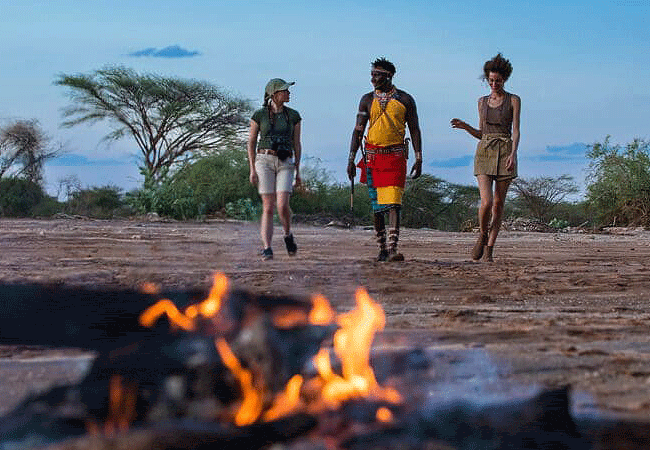
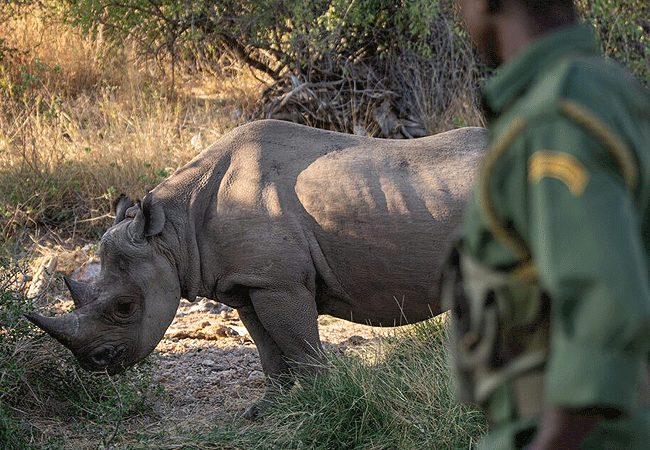
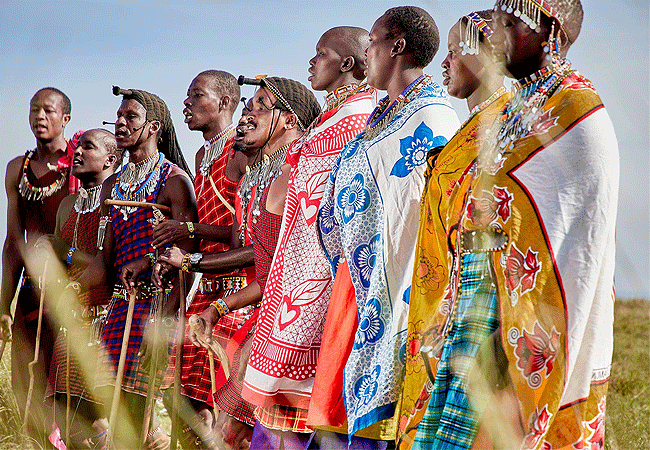
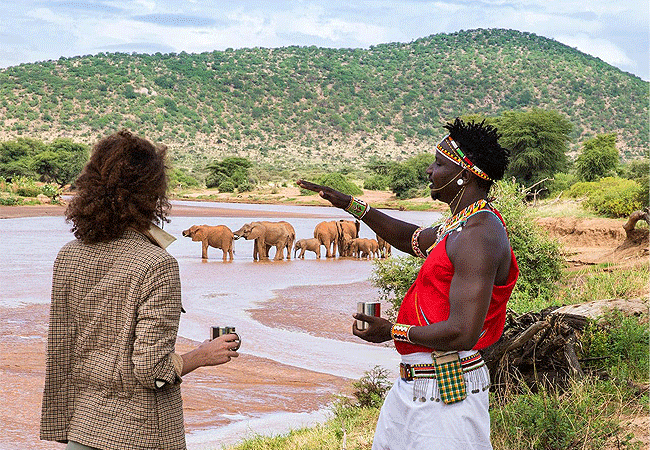
Wildlife Viewing Experiences
✓ Morning & Afternoon Game Drives: Set out on guided drives across Sera’s vast 840,000-acre landscape, traversing open plains, dense acacia bushland, and sandy luggas. The conservancy is home to the Sera Rhino Sanctuary, the first community-owned sanctuary in East Africa.
Drives here offer the unique opportunity to encounter the Samburu Special Five—the Reticulated giraffe, Beisa oryx, Grevy’s zebra, Somali ostrich, and Gerenuk—alongside growing populations of elephants, lions, leopards, and cheetahs. The sanctuary also hosts breeding populations of endangered black and southern white rhinos, reintroduced to their ancestral lands after decades of absence.
✓ Sunset Safaris: As the heat of the day subsides, the northern frontier landscape transforms. Guests staying at Saruni Rhino or at the designated campsites can enjoy evenings by the waterhole, watching elephants and Grevy’s zebras come to drink. The silence of the remote bush, broken only by the calls of sandgrouse and the distant sounds of hyenas, creates a deeply atmospheric end to the day.
✓ Camping in the Wild: For the adventurous, Sera offers a rare chance to experience the wilderness at night through camping. With no fences and few visitors, this is conservation at its rawest. Accompanied by a ranger escort for safety, guests sleep under canvas in the heart of the sanctuary or the wider conservancy. It is a place to disconnect from everything else and feel profoundly connected to nature, listening to the sounds of the African night under a canopy of stars.
Nature-Based Guided Walks
✓ Rhino Tracking on Foot: This is Sera’s signature experience and a pioneering conservation initiative. Join expert rangers and Samburu guides to track black and white rhinos on foot within the 107km² sanctuary.
Using traditional tracking skills and modern monitoring data, visitors can get up close to these prehistoric creatures while learning about the conservancy’s anti-poaching success. It is a breathless, intimate encounter that contributes directly to the protection of the species.
Note: Only guests aged 16+ may participate.
✓ Birdwatching & Bush Walks: Sera is a haven for bird enthusiasts, famous for the “staggering concentrations” of sandgrouse that flock to water points like Kisima Hamsini in the dry season. The conservancy also supports populations of the Somali ostrich and other arid-adapted species.
Guided bush walks allow you to immerse yourself in the landscape, identifying animal tracks, medicinal plants, and the smaller details of the ecosystem that define this rugged terrain.
Immersive Conservation & Community Experiences
✓ Eco-Project Insights: Discover how Sera serves as a role model for community conservation. Guests can learn about the Community Carbon Initiative, which funds rangeland restoration and community projects, and the Anti-Poaching Unit, trained by KWS to safeguard the rhinos using drones, canines, and aerial support.
Understanding how revenue from carbon credits and tourism supports education bursaries, healthcare, and water security deepens appreciation of the conservancy’s mission: “Conserving Nature, Empowering Communities.”
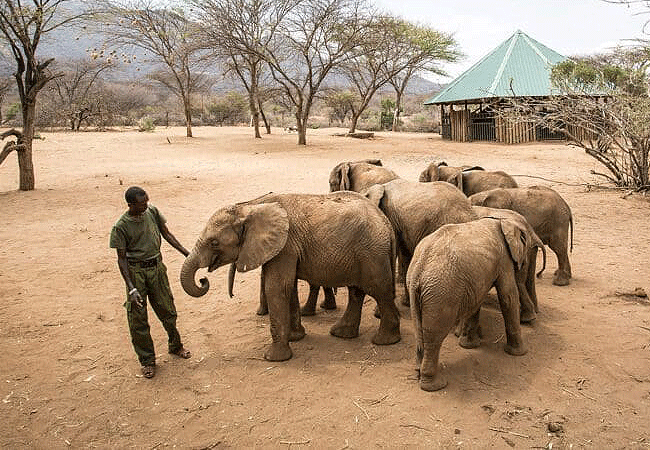
✓ Elephant Encounters (Reteti Release Site): Sera holds a special place in elephant conservation as the first point of release for elephant orphans from the nearby Reteti Elephant Sanctuary. Rescued elephants are reintroduced to the wild at Sera and fitted with satellite collars for monitoring. Seeing these elephants in their natural habitat is a testament to the success of rescue and rehabilitation efforts in the region.
✓ Community Livelihoods: Engage with the Ujuzi Manyattani program, which empowers women and youth through vocational training in entrepreneurship and livestock management. Guests can also learn about the BeadWorks partnership, which supports women’s groups in creating traditional handicrafts, ensuring that conservation translates into tangible economic benefits for local households.
Unique Bush Experiences
✓ The “Singing Wells” (Kisima Hamsini): Visit the sacred “Fifty Wells,” where Samburu pastoralists dig deep into dry riverbeds to reach water. In a profound display of the bond between humans and animals, warriors sing distinctive family songs to call their specific cattle to drink. This ancient, non-commercialized tradition offers a raw glimpse into Samburu culture.
✓ Rock Art & Cultural Landmarks: Explore Sera’s cultural heritage, including ancient rock art sites and the resonant rock gong at Kisima Hamsini. These landmarks serve as powerful reminders of the long human connection to this land.
✓ Day Trips to the Sanctuary: For those not staying within the conservancy, day trips are available to access the Rhino Sanctuary. Visitors can book a game drive or camping experience with a Sera guide, ensuring even short visits contribute to conservation revenue that sustains the rhino population.
Wildlife that can be viewed in Sera Wildlife Conservancy
Wildlife & Biodiversity
Sera Wildlife Conservancy is a critical conservation powerhouse in northern Kenya, encompassing a massive 345,000 hectares (840,000 acres) of wilderness. As the largest community conservancy in the region, Sera forms a vital ecosystem anchor within the Samburu-Laikipia landscape.
It is globally recognized for establishing the first and only community-owned black rhino sanctuary in East Africa, transforming a once-poached landscape into a thriving stronghold for endangered species.
The conservancy’s diverse landscapes — vast open plains, dense acacia bushland, rugged outcrops, and sandy luggas (dry riverbeds) lined with doum palms — provide habitats for species uniquely adapted to the arid northern frontier.
These wild spaces are managed by the Samburu community, demonstrating a successful model in which wildlife conservation, sustainable resource management, and traditional pastoralism coexist.
Sera lies within the Northern Rangelands Trust (NRT) network and plays a pivotal role in ecosystem restoration. It serves as a reintroduction site for locally extinct species such as the black rhino and Grevy’s zebra, and as a release site for rescued elephants, helping ensure the survival of these iconic animals for future generations.
Wildlife at Sera Conservancy
Large Mammals
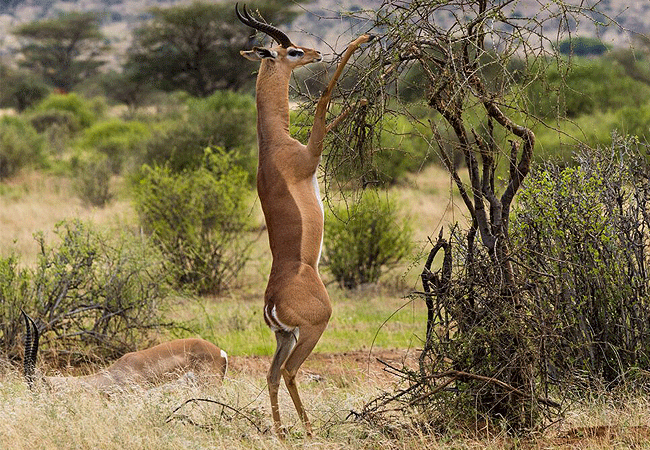
✓ Gerenuks – The unique “giraffe gazelle,” often spotted standing on hind legs to reach higher branches, is perfectly adapted to the dry terrain
✓ Beisa Oryx – A key member of the “Samburu Special Five,” these resilient antelopes are frequently sighted grazing in the open plains and arid scrub
✓ Grant’s Gazelles, Impalas, and Kudus – Common grazers and browsers that have rebounded significantly since the establishment of the conservancy
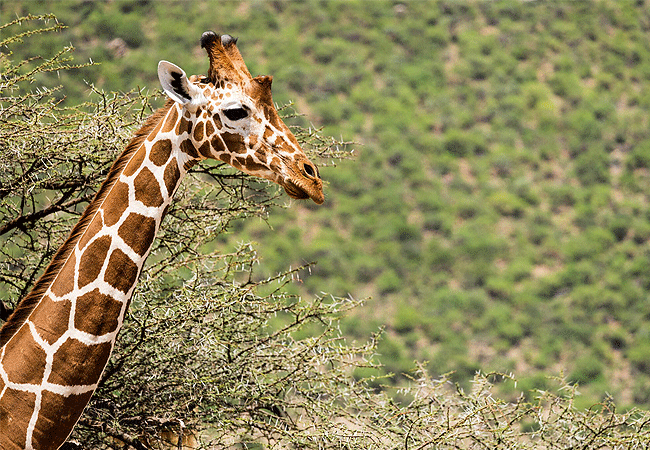
✓ Reticulated Giraffes – Iconic to the north, these strikingly patterned giraffes are regularly seen browsing in the acacia thickets throughout the conservancy
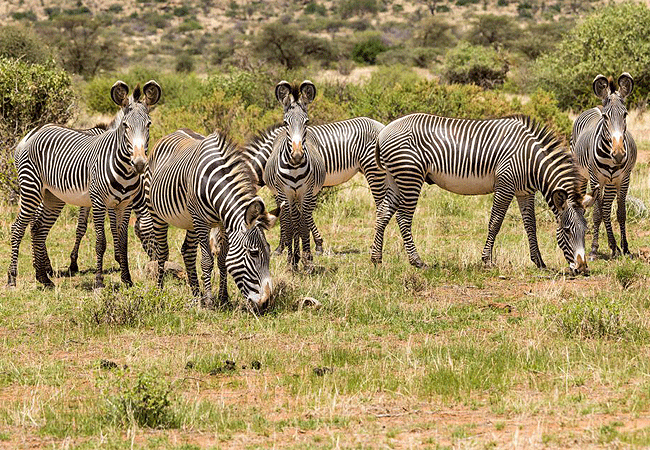
✓ Grevy’s Zebras – Sera is a sanctuary for this endangered species. Populations were re-established with translocations from Lewa, and they now thrive in the conservancy’s protected zones
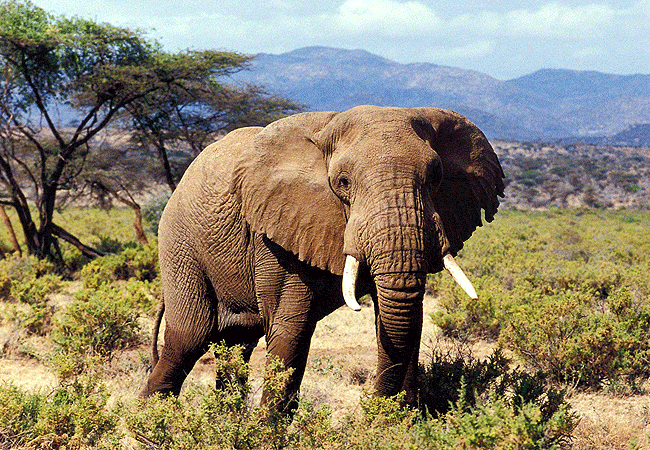
✓ African Elephants – Sera supports a growing elephant population and serves as the first release site for orphaned elephants from the nearby Reteti Elephant Sanctuary, monitored via satellite collars
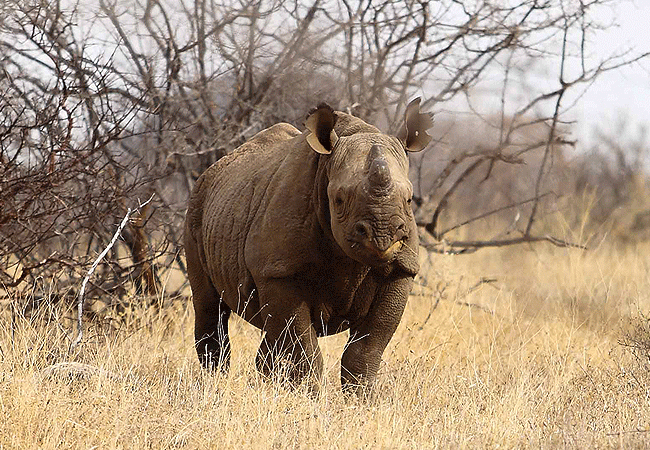
✓ Black & White Rhinos – The crown jewel of Sera. The sanctuary protects a growing population of black rhinos and recently introduced southern white rhinos, offering rare tracking opportunities
Big Cats & Predators
✓ Cheetahs – Occasionally sighted on the open plains, utilizing their speed to hunt gazelles
✓ Lions – Resident prides patrol the conservancy, often tracking the herds of oryx and zebra
✓ Leopards – Elusive and solitary, frequently using the cover of the dense bush and rocky kopjes to ambush prey
✓ Spotted & Striped Hyenas – Both species are present, acting as vital scavengers and hunters within the ecosystem
✓ African Wild Dogs – This endangered predator has been recorded in Sera, using the vast, unfenced landscape to roam in search of prey
Other Mammals
✓ Warthogs – Often found near water points and grazing in open patches
✓ Dik-diks – Tiny antelope commonly seen darting through the undergrowth
✓ Baboons & Vervet Monkeys – Frequently encountered near the permanent springs and riverbeds
✓ Civets, Genets & Aardvarks – Nocturnal species that become active during night drives, adding depth to the safari experience
Birdlife
✓ Raptors – The rocky outcrops and vast skies support diverse birds of prey, including eagles and vultures
✓ Somali Ostrich – The blue-necked, distinct northern subspecies is a common sight striding across the plains
✓ Vulturine Guinea Fowl – Stunningly colored ground birds often seen in large, noisy flocks moving through the scrub
✓ Water Birds – Seasonal rains and permanent springs attract herons, plovers, and other water-dependent species to the arid north
✓ Sandgrouse – Sera is famous for “staggering concentrations” of sandgrouse. Thousands gather at water sources like Kisima Hamsini in the dry season, creating a spectacular avian display
Accommodation options in Sera Wildlife Conservancy
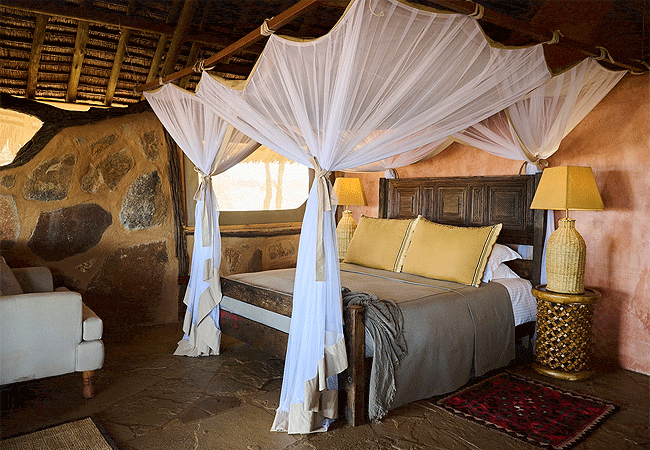
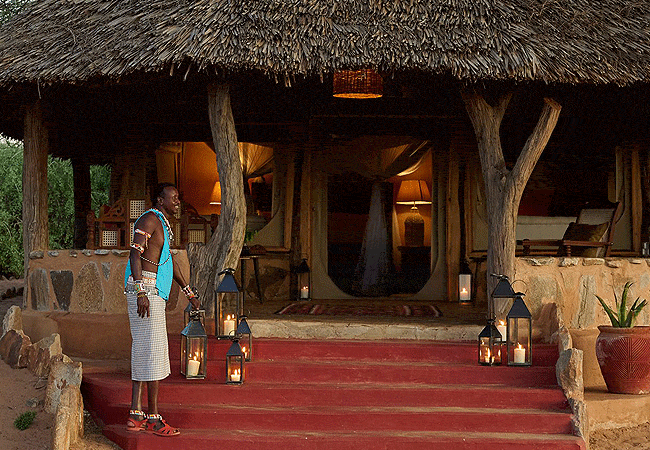
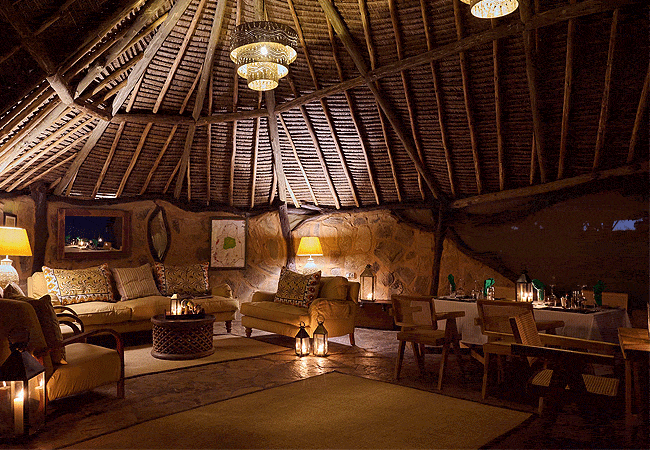
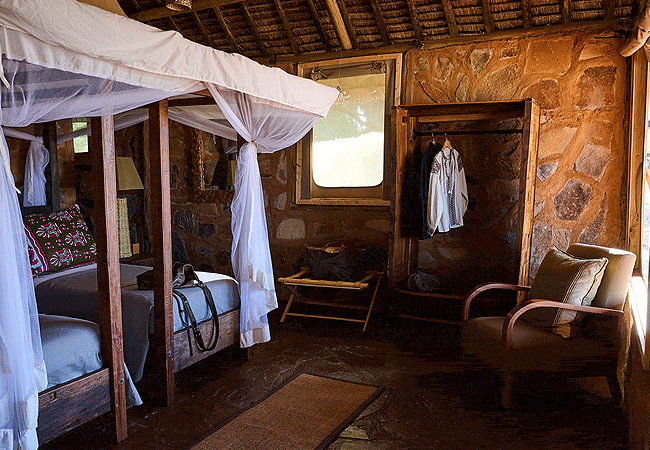
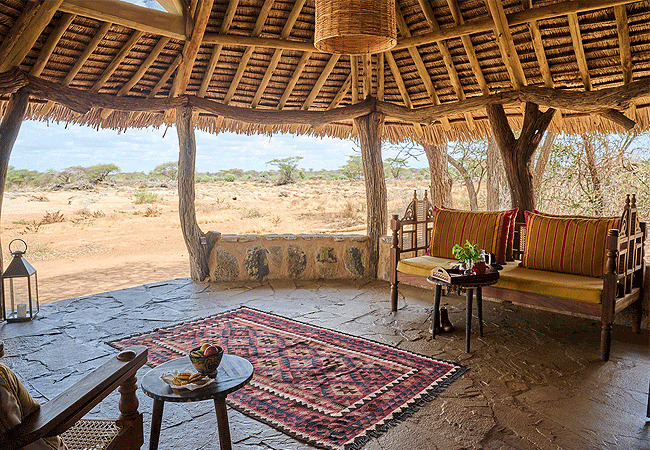
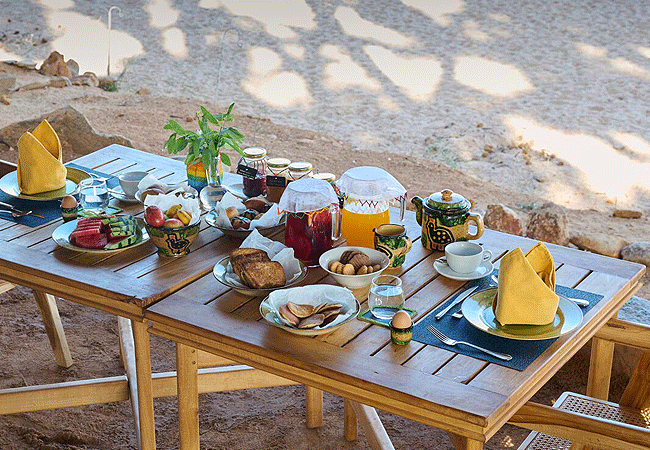
Saruni Rhino Camp
Saruni Rhino Camp is an intimate and exclusive lodge located in the heart of the 839,000-acre Sera Community Conservancy. As the only lodge within the conservancy, it offers a pioneering “beach-in-the-bush” experience set along a dry riverbed lined with doum palms.
The camp comprises just four rustic stone bandas (cottages) with thatched roofs and canvas zip-down windows, designed to blend seamlessly into the wild northern frontier while ensuring maximum privacy. It serves as an extraordinary gateway to conservation, offering the unique opportunity to track Black Rhinos on foot—the first experience of its kind in East Africa.
Banda Options:
✓ Napanu: Honeymoon Banda (Sleeps 2)
✓ Loijipu: Cozy Standard Banda (Sleeps 2)
✓ Nashami: 2-Bedroom Family Banda (Sleeps 4–5)
✓ Ntangaswa: Spacious Standard Banda (Sleeps 2–4)
Guests can relax in the main communal lounge, Swara House, or cool off in the stunning infinity pool, which mimics a tropical oasis with sand underfoot. Dining is a communal, immersive affair celebrating Italian-inspired cuisine, often served as alfresco bush meals or magical starlit dinners in the dry riverbed.
Activities focus on authentic connection, featuring the signature Black Rhino Tracking on Foot, game drives to spot the Samburu Special Five, and the ancient “Singing Wells” tradition where warriors sing to their cattle. The waterhole in front of the camp attracts wildlife year-round, including herds of elephants, impalas, and monkeys, offering exceptional viewing from the comfort of your verandah.
Booking & Reservations Sera Wildife Conservancy Contact
Mobile: + 254-721-242-711
WhatsApp: +254-721-242-711
Reservations: +254 718-179-967
Email: [email protected]
Website: https://africanspicesafaris.com