
Mount Longonot National Park
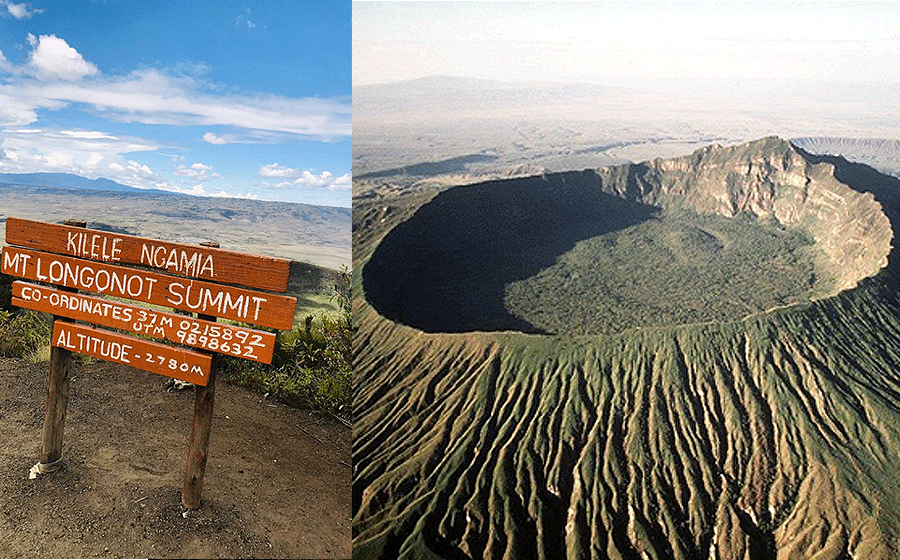
Mount Longonot National Park is home to one of Kenya’s most dramatic and accessible volcanic landscapes. Situated in the heart of the Great Rift Valley, the park takes its name from the Maasai word Oloonong’ot, meaning ‘mountains of many spurs’ or ‘steep ridges’, a fitting description of the volcano’s distinctive, jagged silhouette rising sharply from the valley floor.
The mountain is a stratovolcano thought to have last erupted around 1860. Today, its towering crater rim, unique inner forest, and sweeping Rift Valley views make it one of Kenya’s most rewarding day-trip and short-safari destinations. The park was established in 1984 and covers 52 square kilometres, with elevations ranging from 1,875 to 2,776 metres above sea level.
The landscape is characterised by open grasslands and shrublands dominated by leleshwa bushes and various acacia species, V-shaped valleys, sharp ridges, and sparse vegetation on the outer slopes. A remarkable contrast is found inside the crater, where a thick, lush forest thrives in a hidden green world enclosed by the ancient volcanic walls.
Location & Accessibility
Mount Longonot National Park is located approximately 90 km northwest of Nairobi, southeast of Lake Naivasha in the Great Rift Valley.
By Road:
✓ Distance from Nairobi: Approximately 90 km
✓ Drive Time: Approximately 1.5 to 2 hours, depending on traffic
✓ Route: From Nairobi, drive via the Nakuru–Nairobi Highway (A104), passing through Naivasha town. Follow the signage directing you to Mount Longonot and turn left off the highway onto a smaller road leading directly to the park entrance
By Air:
✓ Flight: Charter a flight from Wilson Airport, Nairobi, to Naivasha Airstrip, approximately 30 minutes
✓ Ground Transfer: From Naivasha Airstrip, arrange road transport for the 20 km drive to the park (approximately 30–40 minutes)
Ecosystem & Landscape
✓ Volcano: A stratovolcano last thought to have erupted around 1860, rising to 2,776 m above sea level
✓ Crater Rim Views: Stunning panoramic views across the Great Rift Valley and Lake Naivasha from the crater rim
✓ Crater Forest: A uniquely lush, thick forest grows within the mountain’s crater a striking contrast to the sparse outer slopes
✓ Terrain: V-shaped valleys, sharp ridges, volcanic rock formations, and open grasslands dominated by leleshwa bushes and acacia trees
✓ Climate: Hot and dry, with an average annual temperature of 25°C (ranging from 20°C to 30°C) and average annual rainfall of approximately 450 mm
Wildlife
Despite its compact size, Mount Longonot National Park supports a variety of wildlife that can be encountered along the hiking trails, at the crater rim, and within the forested crater floor.
Mammals:
✓ Lions: Occasionally present in the park
✓ Primates: Baboons are commonly seen along the trails and around the crater rim
✓ Antelopes: Grant’s gazelles, Thomson’s gazelles, bushbucks, and various other antelope species
✓ Predators: Leopards have been spotted within the park, though they are elusive and rarely seen
✓ Large Mammals: Buffaloes, giraffes, elands, common zebras, and hartebeests roam the slopes and grasslands
Birdlife:
The park is a birdwatcher’s paradise, particularly for raptor enthusiasts. Its location in the Rift Valley makes it an important stopover for migratory birds, and the thermals above the crater attract impressive soaring birds of prey.
✓ Owls: African Grass Owl, Cape Eagle-Owl, and Abyssinian Owl
✓ Waterbirds: Fulvous Whistling Duck, Egyptian Goose, and Olive Ibis
✓ Ground Birds: Common Ostrich, Helmeted Guineafowl, and Scaly Francolin
✓ Best Viewing Time: Early mornings and late afternoons when birds are most active
✓ Raptors: Verreaux’s Eagle and Lammergeier (bearded vulture) are frequently seen catching thermals above the crater; Ayres’s Hawk-Eagle and African Crowned Eagle are also present
✓ Rare & Restricted Species: Kenrick’s Starling is notably confined to this area in Kenya; Abbott’s Starling, Jackson’s Widowbird, Sharpe’s Longclaw, Purple-throated Cuckoo-shrike, and Scarlet-tufted Sunbird
Hiking
Hiking is the park’s signature activity and primary draw. The trail offers one of Kenya’s most rewarding volcano hikes, a challenging but achievable climb to a spectacular crater rim, followed by a panoramic loop around the caldera.
✓ Crater Camping: Camping inside the crater is possible with prior permission, a truly unique and immersive overnight experience
✓ Full Hike: The complete out-and-back trail from the gate to the rim and back covers approximately 13 km and takes 4 to 5 hours, including rest stops
✓ Crater Descent: Venturing into the caldera requires prior permission from park rangers and a guide, as trails inside are unmarked and potentially dangerous
✓ Trail to Crater Rim: A 3.1 km trail ascends steeply from the park gate to the crater rim. The climb is challenging due to the steep, rugged terrain and requires reasonable fitness. The ascent typically takes 1 to 2 hours, depending on pace
✓ Crater Rim Loop: A 7.2 km loop encircles the crater rim, offering stunning 360-degree panoramic views of the Rift Valley, Lake Naivasha, and the crater’s lush forest floor below. Many hikers prefer a counter-clockwise direction for a smoother ascent and more rewarding views
Activities
✓ Hiking: The main crater rim trail (3.1 km ascent) and 7.2 km rim loop is one of Kenya’s most exhilarating day hikes
✓ Nature Walks: Guided walks through open grasslands and forested areas are educational, relaxing, and suitable for all ages
✓ Bike Riding: A 2 km circuit road running toward the volcanic lava flow offers an adventurous cycling experience through the park’s rugged terrain
✓ Game Viewing: Wildlife encounters along the trail and crater floor, including buffalo, zebra, giraffe, antelopes, baboons, and occasionally leopards
✓ Camping: Olongonot Campsite, 2 km from the main gate, accommodates up to 150 people with ablution blocks, showers, and equipment hire available
✓ Bird Watching: Exceptional raptor viewing above the crater thermals and diverse species across the park’s habitats; early mornings and late afternoons are best
✓ Rock Climbing: Volcanic rock formations and rugged cliffs offer challenging and varied climbing routes for enthusiasts; experienced guides and proper equipment are required
Climate & Best Time to Visit
✓ Best Time to Visit: The dry seasons offer the most comfortable hiking conditions and clearest views
✓ Dry Season 1: January to February — short dry season with clear skies; excellent for hiking and photography
✓ Dry Season 2: June to September — long dry season; ideal for wildlife viewing and summit hikes
✓ Rainy Seasons: March to May (long rains) and November to December (short rains) trails can become slippery; still hikeable, but conditions are more challenging
✓ Temperature: Average 25°C year-round, ranging from 20°C to 30°C; evenings at altitude can be cool
✓ What to Bring: Sturdy hiking boots, sun protection, sufficient water, light rain gear, and a light jacket for the crater rim
Accommodation
There are no lodge facilities inside the park. The only in-park option is the KWS campsite. A wide range of accommodation is available in Naivasha town and along Moi South Lake Road, all within easy driving distance of the park.
Camping (Within the Park):
✓ Olongonot Campsite: Located 2 km from the main gate; accommodates up to 150 people; basic ablution blocks with showers for men and women; equipment hire available (tents, blankets, mattresses, sleeping bags, lamps, and cooking gear)
Nearby Luxury Lodges & Resorts:
✓ Naivasha Kongoni Lodge: Approximately 35 km from the park (45-minute drive); cottages and luxury tents; swimming pool, restaurant, and bar
✓ Crater Lake Tented Camp: Approximately 40 km from the park (1-hour drive); situated on the shores of Crater Lake; spacious en-suite tents, restaurant, and guided nature walks
✓ Lake Naivasha Sopa Resort: Approximately 35 km from the park (45-minute drive); nestled near the shores of Lake Naivasha; spacious rooms, landscaped gardens, swimming pools, restaurant, and bar
✓ The Great Rift Valley Lodge & Golf Resort: Approximately 45 km from the park (1-hour drive); perched on the edge of the Great Rift Valley with panoramic views; 18-hole golf course, swimming pools, and multiple dining options
Mount Longonot National Park Entrance Fees
2026 Mount Longonot National Park Entrance Fees
|
East African Citizen |
Kenyan Resident |
Non-Resident |
African Citizen |
||||
|
Adult |
Child/ |
Adult |
Child/ |
Adult |
Child/ |
Adult |
Child/ |
|
500 |
250 |
675 |
350 |
50 |
25 |
20 |
10 |
Notes;
* KENYAN (KE) CITIZEN– refers to Kenyan nationals by birth and registration, with a valid Identification Card
* REST OF AFRICA – refers to nationals of African countries other than East African countries with a valid passport
* RESIDENT – refers to persons of other nationalities residing in Kenya with valid documentation from the Kenyan government
* DAILY FEE is a single entry fee valid for 24 hours of continuous uninterrupted stay inside a KWS national park/ reserve/ sanctuary
* INTERNATIONAL (INTL) VISITORS – refers to visitors other than EAST AFRICAN CITIZENS and the rest of Africa with a valid passport
* SENIOR CITIZEN – refers to Kenyan Citizens aged 75 years and above. Senior citizens shall access all KWS parks, reserves, and sanctuaries for free
* CHILDREN – refers to persons from the age of five (5) years to seventeen years (17) years. Children below the age of five (5) years shall access all KWS parks, reserves, and sanctuaries for free
* CONSERVATION FEES – refers to fees charged in national parks, reserves, and sanctuaries for the purpose of conserving and protecting natural resources, such as wildlife, habitats, and ecosystems
* EAST AFRICAN COMMUNITY (EAC) CITIZEN – refers to nationals of East African countries of Kenya, Uganda, Tanzania, Rwanda, South Sudan, Burundi, and the Democratic Republic of Congo (DRC) with a valid passport
* STUDENT– refers to an individual from a recognized secondary, government, or private college or university, aged up to twenty-three (23) years old, visiting the parks for purposes of learning about conservation through a documented and organized arrangement with that institution. It excludes students on personally arranged holidays. KWS will require a minimum of one (1) week’s notice to issue a written authorization for the student rates
* PERSONS WITH DISABILITIES (PWD) – refers to Kenyan Citizens who have a physical, sensory, mental, or other impairment, including any visual, hearing, learning, or physical incapability, which adversely impacts social, economic, or environmental participation. PWD access to all KWS parks, reserves, and sanctuaries for free upon presentation of valid documentation from the National Council for Persons with Disabilities
Mount Longonot National Park Wildlife | Animals & Birds
Mt Longonot National Park offers a diverse selection of wildlife, making it a fascinating destination for nature enthusiasts and wildlife lovers. As you hike up to the rim of the crater, you’ll have the opportunity to spot various animals, and those venturing into the forested crater can encounter even more species.
The park is home to notable wildlife, including buffalo, giraffes, zebras, and several species of antelopes. Baboons are commonly seen, and although elusive, leopards also inhabit the park. Observing these animals in their natural habitat adds to the adventure and excitement of exploring Mount Longonot.
The park is also a haven for bird watchers, particularly those interested in the diverse avian life of the Rift Valley. A notable number of raptors can be seen catching thermals over the crater, with Verreaux’s Eagle and Lammergeier being common sightings.
Other bird species include Abbott’s Starling, Lesser Kestrel, Jackson’s widowbird, Sharpe’s Longclaw, Olive Ibis, Ayres’s Hawk-Eagle, African Crowned Eagle, African Grass Owl, Cape Eagle-Owl, Purple-throated Cuckoo-shrike, Long-tailed Widowbird, Abyssinian Owl, Scarlet-tufted Sunbird, and Kenrick’s Starling, which is particularly notable as it is confined to this area in Kenya.
Mount Longonot National Park Activities | What To Do
Hiking
Mt Longonot National Park offers an exceptional hiking experience, taking you to the rim of an extinct volcano with breathtaking views. The journey starts at the park gate, where a 3.1-kilometer trail ascends to the crater rim. Though the distance might seem manageable, the hike is challenging and requires reasonable fitness due to the steep and rugged terrain.
The ascent to the rim typically takes between 1 to 2 hours, depending on your pace and fitness level. Once at the rim, you can choose to hike around the perimeter of the caldera, a 7.2-kilometer loop offering stunning panoramic views.
Regular hikers often prefer a counter-clockwise direction for a smoother ascent and more rewarding views. The complete hike, covering 13 kilometers from the park gate and back, usually takes around 4 to 5 hours, including necessary rest stops.
For those seeking an adventurous challenge, venturing into the caldera requires permission from park rangers and a guide due to the unmarked and potentially dangerous trails. Camping inside the crater is possible with prior permission, adding to the unique experience of exploring Mount Longonot.
Game Viewing
Despite its smaller population of large mammals, Mount Longonot National Park offers an engaging game-viewing experience. As you hike up to the rim and explore the forested crater floor, you may encounter animals such as buffalo, zebra, antelopes, baboons, leopards, bushbucks, Grant’s gazelles, elands, and hartebeests.
These sightings make the park a worthwhile destination for wildlife enthusiasts. The blend of hiking and game viewing provides a unique opportunity to appreciate the park’s natural beauty and biodiversity.
Rock Climbing
Mount Longonot’s rugged terrain and steep cliffs make it an excellent spot for rock climbing enthusiasts. The volcanic rock formations offer challenging and varied climbing routes. Climbers can enjoy the thrill of scaling the rock faces while taking in the stunning views of the surrounding landscape. The activity requires proper equipment and safety measures, and climbers are advised to go with experienced guides to ensure a safe and enjoyable experience.
Camping
Camping at Mount Longonot National Park offers a wild adventure, distinct from the usual hotel experience. The park campsite is the Olongonot Campsite located 2 kilometers from the main gate and can accommodate up to 150 people, making it suitable for large groups or individual campers seeking solitude amidst nature.
Equipped with basic toiletries and washroom services. These campsites feature complete ablution blocks with showers for both men and women. Visitors can rent equipment from the Mt. Longonot Tour Guide, including tents, blankets, mattresses, sleeping bags, lamps, and cooking gear.
Camping within the park allows for a unique overnight experience, with the possibility of camping inside the crater for those who seek a more immersive adventure.
Nature Walks
Nature walks in Mount Longonot National Park provide a serene and immersive way to experience the park’s natural beauty. These guided walks take you through diverse landscapes, from open grasslands to dense forests, offering a closer look at the park’s flora and fauna.
Walking through the park allows visitors to appreciate the intricate details of the ecosystem, from the variety of plant species to the smaller animals and insects that inhabit the area. Nature walks are suitable for all ages and provide an educational and relaxing way to explore the park.
Bird Watching
Mount Longonot National Park is a bird watcher’s paradise, known for its significant bird population. The park’s diverse habitats, including forests and open grasslands, attract a wide variety of bird species. Bird watchers can spot Verreaux’s Eagle, Lammergeier, common Ostrich, Fulvous whistling duck, Egyptian Goose, helmeted guinea fowl, scaly francolin, and Speckled Pigeon, among others.
The park’s location in the Rift Valley makes it an important stopover for migratory birds, adding to the richness of the birdwatching experience. Early mornings and late afternoons are the best times for bird watching when the birds are most active.
Bike Riding
Bike riding in Mount Longonot National Park offers an adventurous way to explore the rugged terrain and scenic landscapes. The park features a 2-kilometer circuit road that runs towards the volcanic lava flow, providing a challenging yet exciting ride.
Biking through the park allows you to cover more ground and experience the varying landscapes, from rocky areas to forested sections. This activity is perfect for adventure seekers looking to combine fitness with the thrill of exploring the natural environment. Proper biking gear and safety precautions are recommended to ensure a safe and enjoyable experience.
Mount Longonot National Park Accommodation | Where To Stay
While there are no accommodation options in the park, there are many nearby options. Some of these hotels and lodges are:
Lake Naivasha Sopa Resort
Lake Naivasha Sopa Resort is situated approximately 35 kilometers from Mount Longonot National Park, about a 45-minute drive away. Nestled near the shores of Lake Naivasha, the resort offers a perfect blend of luxury and nature.
Guests can enjoy spacious rooms, beautifully landscaped gardens, and amenities such as swimming pools, restaurants, and a bar. The tranquil environment, coupled with stunning views of the lake and its wildlife, makes it an ideal base for visitors looking to relax after a day of exploring Mount Longonot.
The Great Rift Valley Lodge and Golf Resort
The Great Rift Valley Lodge and Golf Resort, located about 45 kilometers from the park (roughly an hour’s drive), sits majestically on the edge of the Great Rift Valley. This luxurious resort offers breathtaking panoramic views, well-appointed rooms, and an 18-hole golf course.
With amenities such as swimming pools and multiple dining options, the lodge offers a relaxing retreat. Its scenic location makes it a perfect choice for those who want to enjoy both the beauty of the Rift Valley and the adventure of hiking Mount Longonot.
Crater Lake Tented Camp
Crater Lake Tented Camp is another unique accommodation option, approximately 40 kilometers from the park, or about an hour’s drive. This camp, situated on the shores of Crater Lake, combines adventure with comfort. It offers spacious tents with en-suite facilities, a restaurant, and guided nature walks.
The serene environment and the chance to see wildlife up close make it a favorite among nature lovers. The camp’s location allows easy access to both Crater Lake and Mount Longonot, offering a dual experience of two stunning natural attractions.
Naivasha Kongoni Lodge
Naivasha Kongoni Lodge, located about 35 kilometers from Mount Longonot (a 45-minute drive), provides a range of accommodations, from cottages to luxury tents. This lodge features amenities such as a swimming pool, restaurant, and bar, ensuring a comfortable stay.
Its proximity to Lake Naivasha and Mount Longonot makes it a convenient and enjoyable option for visitors who wish to explore the area’s natural beauty and attractions.
Booking & Reservations Mount Longonot National Park Contact
Mobile: + 254-721-242-711
WhatsApp: +254-721-242-711
Reservations: +254 718-179-967
Email: [email protected]
Website: https://africanspicesafaris.com