
Sibiloi National Park | Marsabit County | 800 km north of Nairobi
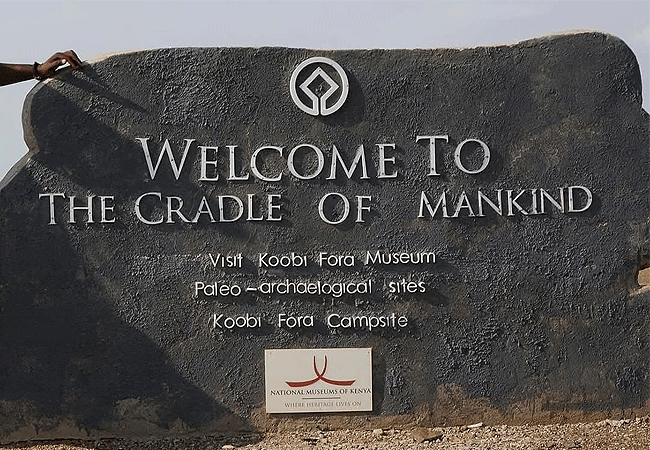
Sibiloi National Park is a 1,570-square-kilometer wildlife reserve and archaeological site located on the wild and rugged northeastern shores of Lake Turkana in northern Kenya. Famously known as the “Cradle of Mankind,” it protects some of the most significant paleontological sites in the world, alongside unique desert-adapted wildlife.
Established with a strong emphasis on preserving human evolutionary history and safeguarding a fragile ecosystem, Sibiloi blends groundbreaking science with extreme wilderness adventure to protect ancient fossil beds and local biodiversity.
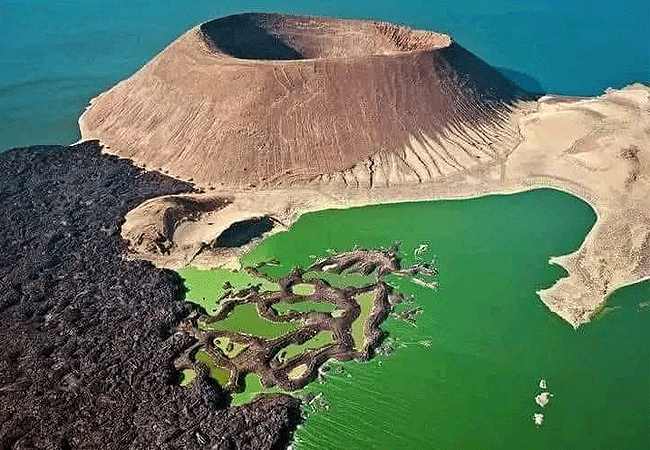
The park is home to endangered Grevy’s zebras, Beisa oryx, gerenuks, greater kudu, lions, cheetahs, and the world’s largest population of Nile crocodiles. With its semi-desert plains, volcanic formations like Mount Sibiloi, ancient petrified forests, and the striking, color-shifting waters of the “Jade Sea,” Sibiloi offers dramatic habitats teeming with specialized life, making it an extraordinary destination for pioneering travelers and researchers.
How to Get There
Sibiloi National Park is located on the remote northeastern shores of Lake Turkana in northern Kenya.
From Nairobi (by road):
✓ Distance: Approximately 800 km to 1,000 km.
✓ Travel Time: A 2 to 3-day overland expedition by road via Marsabit and North Horr, or via Maralal and South Horr
✓ Along the route, travelers will navigate rugged terrain. A high-clearance 4WD is essential year-round, and traveling in a convoy is highly recommended
✓ Alternative Route: Travel via Kitale and Lodwar to Kalokol on the lake’s western shores. From Kalokol, boat hire services are available across the lake to Alia Bay
By Air:
✓ Commercial flights operate to the Lodwar airstrip, followed by a 2- to 3-hour drive in a 4×4 vehicle to reach the park
✓ Visitors can take a 2-hour charter flight from Nairobi’s Wilson Airport directly to the Koobi Fora Airstrip within the park
History
Sibiloi National Park was established in 1973 by the government of Kenya to protect the area’s incredible wildlife and vital paleontological sites. The park’s creation was championed in part by the National Museums of Kenya to preserve the Koobi Fora region, where groundbreaking discoveries by paleoanthropologists like Dr. Richard Leakey have contributed more to the understanding of human evolution than any other site on the continent.
The park protects an impeccable treasure trove of prehistory, including fossilized remains of a 3-million-year-old giant tortoise, an ancient species of elephant (Elephas recki), and a massive 45-foot prehistoric crocodile named “Behemoth.” In 1997, the park’s natural, cultural, and historical assets were recognized globally when it was listed as a UNESCO World Heritage Site as part of the Lake Turkana National Parks.
Today, Sibiloi stands as a monument to human origins and geological history. It is surrounded by the Turkana, Gabra, and Dassanach communities, whose rich, traditional cultures add profound depth to the experience of visiting this rugged and ancient landscape.
Important Information
Sibiloi is an extreme, remote wilderness destination. The park is completely waterless apart from the highly alkaline waters of Lake Turkana and a few remote waterholes.
Any expedition to Sibiloi must be well-equipped and entirely self-sufficient. Visitors must carry ample fresh water, extra fuel, and emergency supplies, and it is highly recommended to travel with experienced guides. Standard Kenya Wildlife Service (KWS) park entry fees apply for access to the reserve, camping facilities, and the Koobi Fora Museum.
Sibiloi National Park Entrance Fees
Sibiloi National Park Entrance Fees (1st January – 31st December 2026)
|
East African Citizen |
Kenyan Resident |
Non-Resident |
African Citizen |
||||
|
Adult |
Child/ |
Adult |
Child/ |
Adult |
Child/ |
Adult |
Child/ |
|
500 |
250 |
675 |
350 |
40 |
20 |
20 |
10 |
Notes
* Child refers to persons from three years but below 11 years
* Resident refers to persons of other nationalities residing in Kenya with valid documentation from the Kenyan government
* Citizen – A native or inhabitant of East African countries (Kenya, Uganda, Tanzania, Rwanda, Burundi, and South Sudan) with valid identification documents or a passport
* Daily – Fee paid for a single entry to a national park, national reserve, or sanctuary, and which shall be valid for no longer than twenty-four hours
Sibiloi National Park Activities
Wildlife & Aquatic Viewing Experiences
✓ Desert & Savannah Game Drives: Embark on thrilling guided 4×4 safaris across the rugged, semi-arid plains and volcanic terrains. While wildlife is less concentrated than in traditional southern parks, this extreme environment protects a fascinating array of specialized, desert-adapted species. Spot endangered Grevy’s zebras, Beisa oryx, gerenuks, greater kudu, and northern topi. You also have the chance to encounter resilient predators, including lions, leopards, cheetahs, caracals, and both striped and spotted hyenas
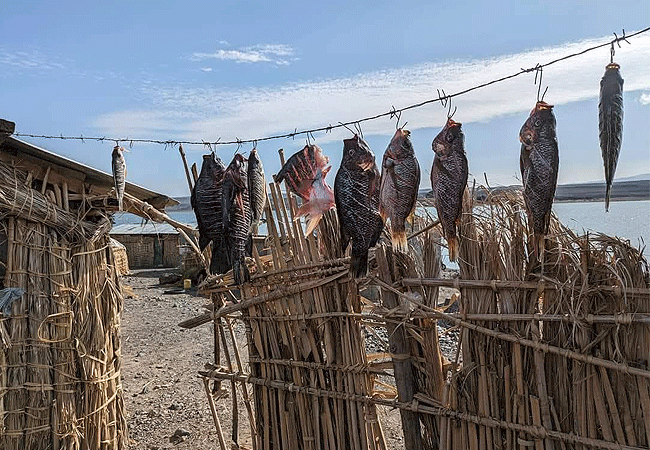
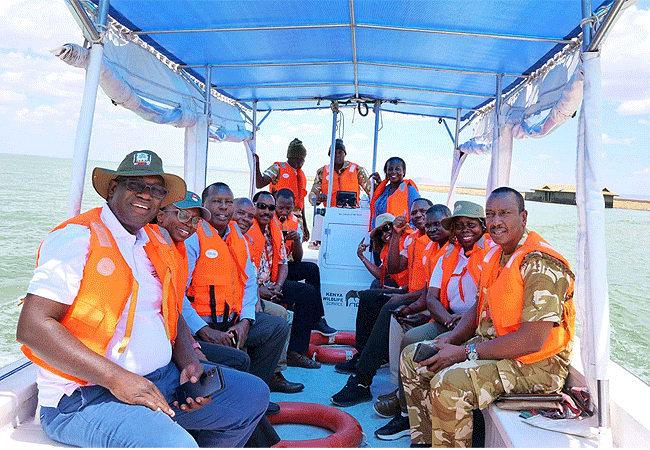
✓ Crocodile Kingdom & Boat Safaris: Take to the striking, color-shifting waters of the “Jade Sea” (Lake Turkana) to witness the world’s largest population of Nile crocodiles, estimated at over 12,000. These formidable reptiles have thrived here largely unchanged for 130 million years. Between April and May, visit the island’s crater lakes to hear baby crocodiles squeaking from their sandy nests. The lake also offers phenomenal fishing for massive Nile perch and tilapia, while hippos wallow in the shallows
✓ Avian & Migratory Birding Safaris: Sibiloi is a recognized Important Bird Area (IBA) and a true paradise for birdwatchers, boasting over 350 recorded species. The alkaline shores attract vast flocks of vibrant lesser flamingos and pelicans. Marvel at Goliath herons, African skimmers, and swallow-tailed kites. For an extraordinary experience, time your visit between March and May to witness the spectacular arrival of 34 species of European Palearctic migrants utilizing the lake as a vital stopover
Nature-Based Guided Walks & Archaeological Safaris
✓ Koobi Fora Fossil Walks: Join expert paleontological guides for an unforgettable walking safari through the “Cradle of Mankind.” Walk the exact terrain where groundbreaking discoveries of Australopithecus and early Homo species were made. The guided trails also reveal awe-inspiring non-humanoid fossils left exposed to the elements, including a 3-million-year-old giant tortoise, an ancient Elephas recki (a forebear elephant), and the fossilized remains of a 45-foot prehistoric crocodile affectionately named “Behemoth.”
✓ The Petrified Forest Trail: Trek along the edges of Mount Sibiloi and Alia Bay to discover the remnants of a 7-million-year-old petrified cedar forest. This fascinating guided walk provides a stark visual contrast, proving that this currently harsh, sun-baked desert was once a lush, densely wooded, and well-watered environment before tectonic shifts altered the landscape
Immersive Cultural & Educational Experiences
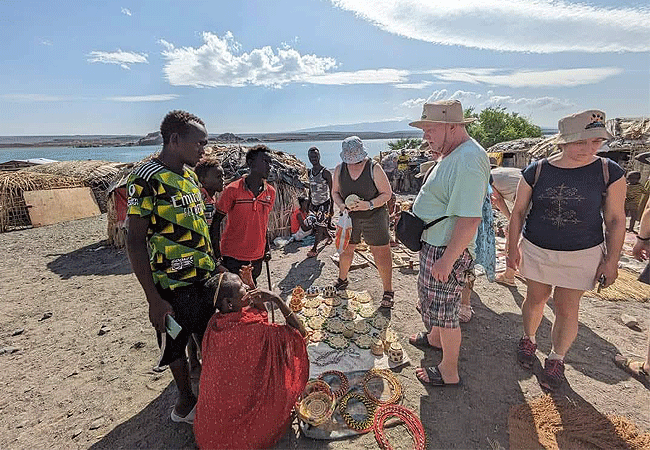
✓ Indigenous Community Visits: Gain profound insights into human resilience by interacting with the surrounding Turkana, Gabra, and Dassanach communities. These deeply traditional, pastoralist tribes have maintained their rich, unpolluted cultural heritage and nomadic lifestyles for centuries, living in complete harmony with one of the most extreme environments on Earth. Enjoy authentic, respectful exchanges that highlight their unique survival techniques, craftsmanship, and ancient customs
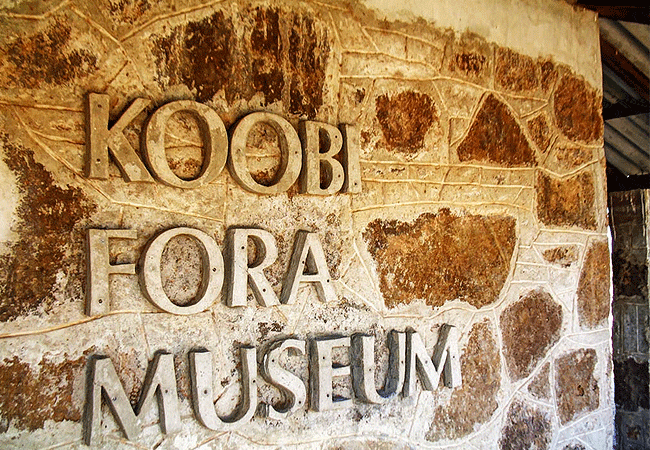
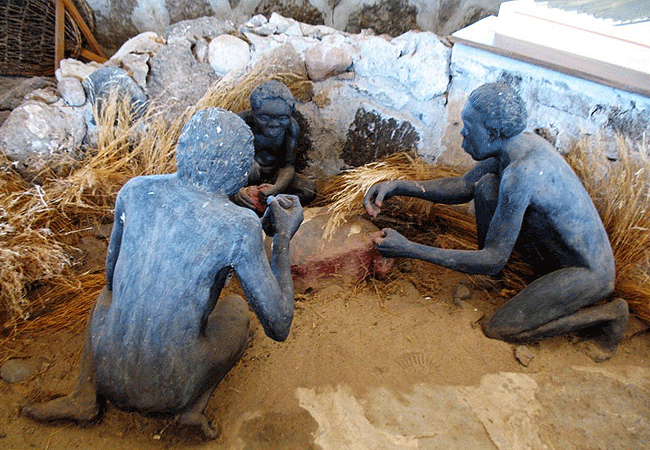
✓ Museum & Scientific Insights: Delve deeper into the rich history of the Turkana Basin with visits to the on-site Koobi Fora Museum and the nearby Turkana Basin Institute (TBI) museum facilities. Here, you can view impeccably preserved casts and exhibits detailing the tectonic shifts, climatic changes, and over 4 million years of mammalian and hominid evolution that ultimately shaped the modern world
Sibiloi National Park Wildlife
Wildlife & Biodiversity
Sibiloi National Park is a UNESCO World Heritage Site located on the wild and rugged northeastern shores of Lake Turkana in northern Kenya. Covering 1,570 square kilometers of semi-desert plains, volcanic terrain, and riverine forests, this extreme habitat serves as a vital refuge for specialized, desert-adapted wildlife. It is celebrated not only as the “Cradle of Mankind” for its groundbreaking paleontology but also for its remarkable biodiversity, supporting resilient mammals, prehistoric reptiles, and an astonishing avian population.
Wildlife at Sibiloi National Park
Large Mammals
✓ Gerenuk
✓ Beisa Oryx
✓ Greater Kudu
✓ Grant’s Gazelle
✓ Northern Topi
✓ Grevy’s Zebra (endangered) & Plains Zebra
✓ Elephant (occasionally spotted near fresh water sources)
✓ Hippopotamus (found wallowing in the shallow waters of Lake Turkana)
Big Cats & Predators
✓ Lion
✓ Jackal
✓ Caracal
✓ Cheetah
✓ Leopard
✓ Striped & Spotted Hyena
Reptiles & Aquatic Life
✓ Monitor Lizards
✓ Venomous Snakes (including the saw-scaled viper, night adder, puff adder, and cobra)
✓ Nile Crocodile (hosting the world’s largest breeding colonies globally, with an estimated 12,000 individuals)
✓ Endemic & Prehistoric Fish (including huge Nile perch, large tilapia, and puffer fish, indicating the lake’s prehistoric connection to the Red Sea)
Birdlife
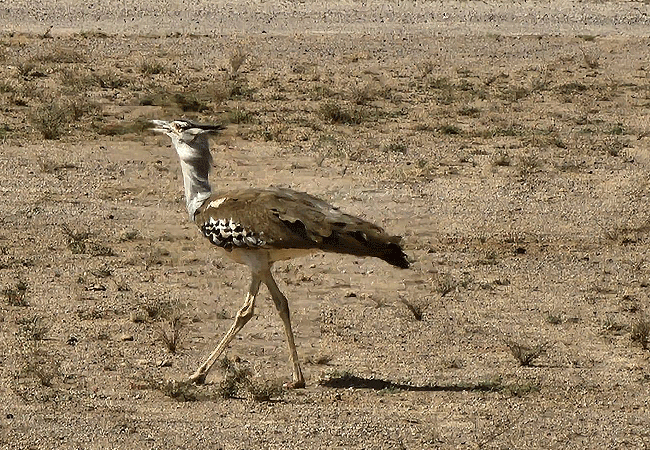
✓ Somali Ostrich (a prominent dryland species)
✓ Over 350 bird species recorded in and around the park
✓ Birds of prey such as Fish Eagles and Swallow-tailed Kites
✓ Dryland specialists, including the Crested Lark and Heuglin’s Bustard
✓ Vast flocks of Flamingos and Pelicans are attracted to the alkaline waters of the lake
✓ Waterbirds including Goliath Herons, African Skimmers, Gulls, and African Open-billed Storks
✓ 34 species of European Palearctic migrants that use the park as a vital stopover between March and May
Sibiloi National Park Accommodation Options
Accommodation at Sibiloi National Park offers an intimate, off-the-beaten-path experience set within the heart of a 1,570-square-kilometer UNESCO World Heritage Site. Due to the park’s extreme remoteness, lodging options lean toward functional, self-catering, and adventurous setups, providing a profound sense of seclusion and immersion in the “Cradle of Mankind,” all framed by the shimmering turquoise waters of the Jade Sea and ancient volcanic formations.
Designed for functionality in a high-temperature desert environment, the lodging options emphasize durability and shelter from the elements. The structures use natural textures and shaded areas to create a peaceful connection with the rugged surroundings, allowing guests to witness the lake’s shifting colors directly from their doorstep.
Accommodation Options:
✓ Lobolo Tented Camp: A privately owned, comfort-oriented tented camp nestled near the lake, offering a more traditional safari lodge experience with essential amenities
✓ Oasis Lodge & Sibiloi Safari Camp: Basic lodging options providing functional, sheltered stays for researchers and adventurous tourists exploring the remote northern frontier
✓ KWS Alia Bay Guest House: Managed by the Kenya Wildlife Service, this facility offers basic, self-catering comforts in the heart of the park, ideal for independent travelers and groups
✓ Designated Campsites: For the fully off-grid wilderness experience, guests can pitch their own tents at privately owned and KWS-designated sites such as the Turkana Campsite and Sunset Strip Camp. Guests choosing this option must be completely self-sufficient
The main guest areas at the larger camps and guest houses include communal dining spaces and shaded lounges overlooking the lakeshore. The nearby Koobi Fora Research Center and Museum serve as the intellectual hub of the park, offering guests access to maps, trail guides, and incredible fossil exhibits.
Experiences are deeply personalized and focused on discovery, including expert-led tours of the Koobi Fora fossil beds, archaeological walks through the petrified forest, and boat safaris to Central Island. Meaningful cultural interactions with the local Turkana, Gabra, and Dassanach communities further enhance the journey, offering a rare glimpse into the traditional lifestyles that thrive in this extreme and ancient landscape.
Booking & Reservations Sibiloi National Park Contact
Mobile: + 254-721-242-711
WhatsApp: +254-721-242-711
Reservations: +254 718-179-967
Email: [email protected]
Website: https://africanspicesafaris.com