
Karen Blixen Museum Nairobi Tour | Duration: 1 to 2 hours
The Karen Blixen Museum tour visits the famous museum on Karen Road, on the outskirts of Nairobi. Its history dates back to 1914, during the First World War, with the arrival of Karen Blixen from Denmark.
The aim here is to take an individual back in time and provide a visual impression of each settler’s life in Kenya. At the foot of the Ngong Hills, Karen Blixen established herself as a farmer. After her departure in 1931, the suburbs retained Karen’s commemorative home.
The Danish government donated the house and the surrounding land to Kenya after independence. The house was restored by the Danish government and was used during the filming of “Out of Africa,” which immortalized Karen Blixen’s book by the same name.
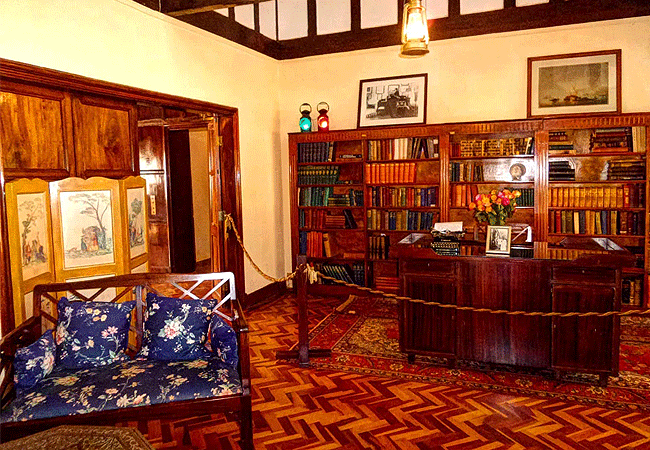
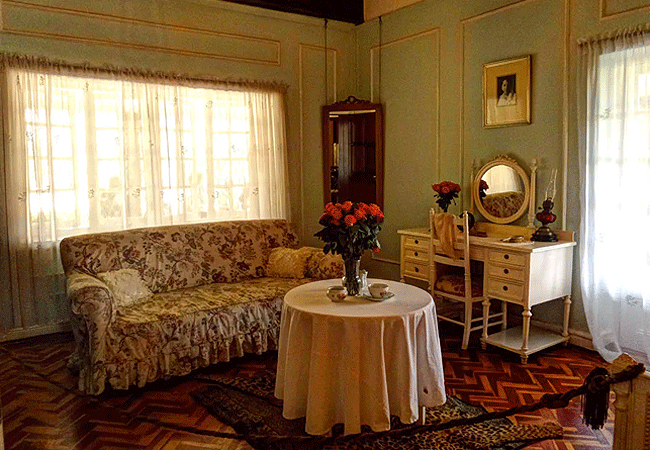
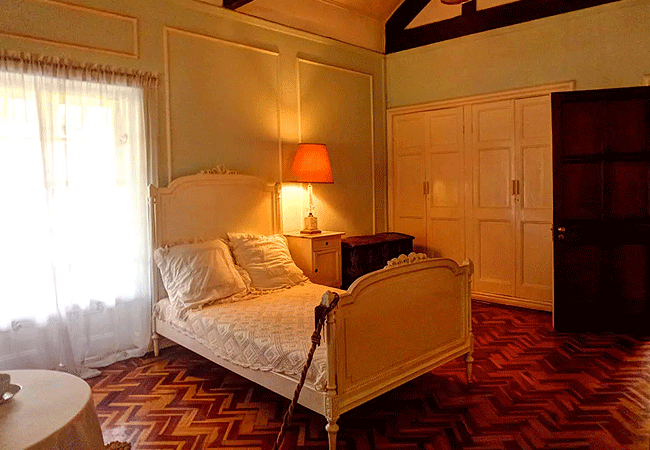
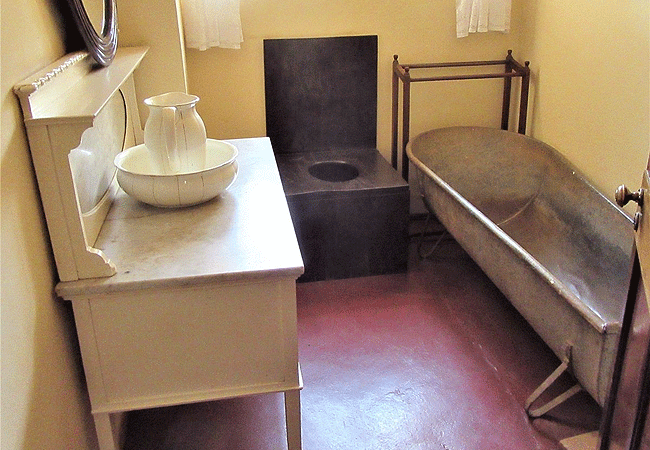
The Karen Blixen Museum was opened to the public in 1986. A striking feature of the Karen Blixen Museum is the beautiful grounds. During your Karen Blixen Museum Nairobi tour, you will learn that much of the original furniture is on display in the house.
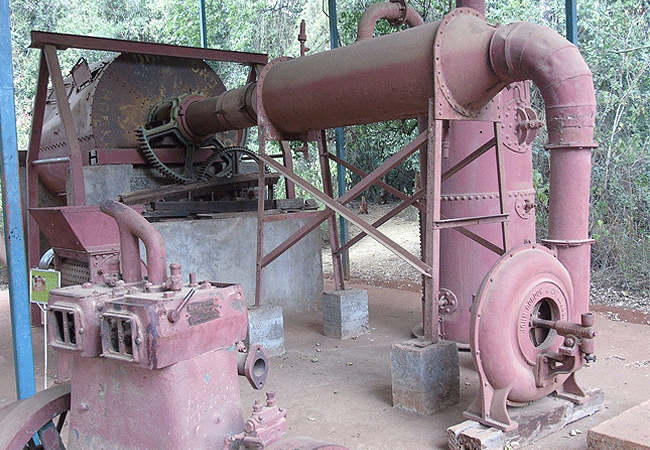
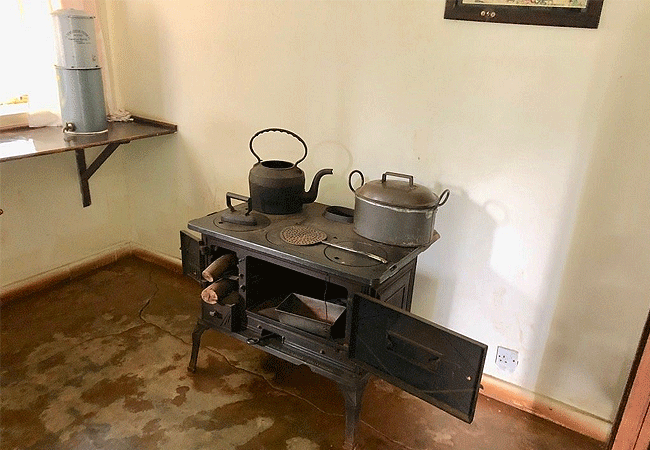
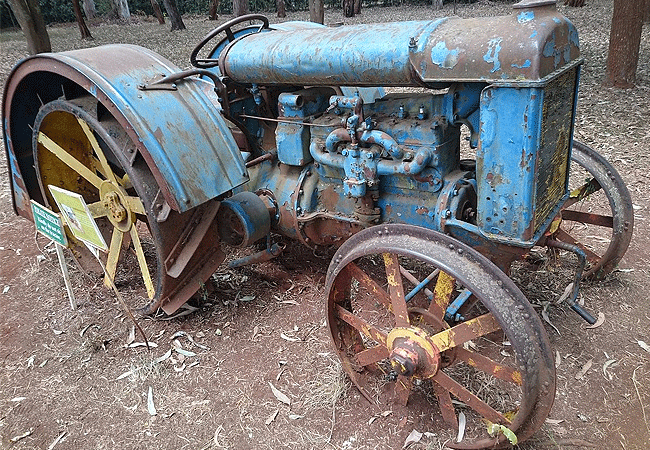
The original kitchen has been restored and is now open for viewing. A Dove Stove, similar to the one used by Karen Blixen, is on display, along with the kitchen utensils. Reconstruction of the coffee factory, along with another old piece of farm machinery, is underway.
The Karen Blixen Museum has become a hub for activities, including private parties, research, and visits, from around the world. The income so generated is used to refurbish and maintain the Karen Blixen Museum and other regional museums.
The Karen Blixen Museum tour is led by a guide and lasts roughly 30 minutes, but it’s worth lingering to walk around the scenic grounds. Since the Karen Blixen Museum is located near several top Nairobi attractions—including the David Sheldrick Wildlife Trust, the Giraffe Centre, the Kazuri Beads Factory, and Bomas of Kenya—some of our Nairobi city tours combine two or more of these destinations to save time in transit.
Opening Hours: Daily from 0830 Hours to 1800 Hours (including weekends and public holidays). The last admission is typically at 1730 Hours
Karen Blixen Museum Tour Highlights
✓ The House: Multilingual guides lead 30- to 60-minute tours through the house, which features original decor and props from the 1985 film Out of Africa
✓ The Grounds: Visitors can explore the expansive gardens, which feature original coffee processing machinery and offer panoramic views of the Ngong Hills
✓ Nature Trail: A serene trail through an indigenous forest ideal for birdwatching and spotting tree hyraxes
✓ Museum Shop: Sells local handicrafts, copies of Blixen’s books, and movie mementos
Karen Blixen Museum Visit Day Itinerary (1 to 2 hours)
0930 Hours – 1030 Hours: Guided Tour of the House: Join a knowledgeable guide for a 45-minute to 1-hour walk through the 1912 farmhouse. You’ll see original 1920s furnishings, the library where she wrote, and the famous veranda.
1030 Hours – 1100 Hours: Explore the Grounds & Gardens: Stroll through the beautifully landscaped gardens with views of the Ngong Hills. Check out the restored kitchen, original coffee-drying machinery, and the nature trail with labeled indigenous trees
1100 Hours – 1130 Hours: Museum Shop & Gallery. Browse the gift shop for Out of Africa editions, local handicrafts, and souvenirs. Visit Karen’s Art Corner, which supports local Kenyan artists
1130 Hours – 1230 Hours: Refreshments at the Coffee Garden. Take a short walk to the nearby Karen Blixen Coffee Garden for farm-to-table lunch or Kenyan coffee under the acacia trees
Important information
Combo Day Trip: Since the museum is a relatively quick stop, many travelers combine it with a visit to the Giraffe Centre (5-minute drive) or the Sheldrick Elephant Orphanage (15-minute drive)
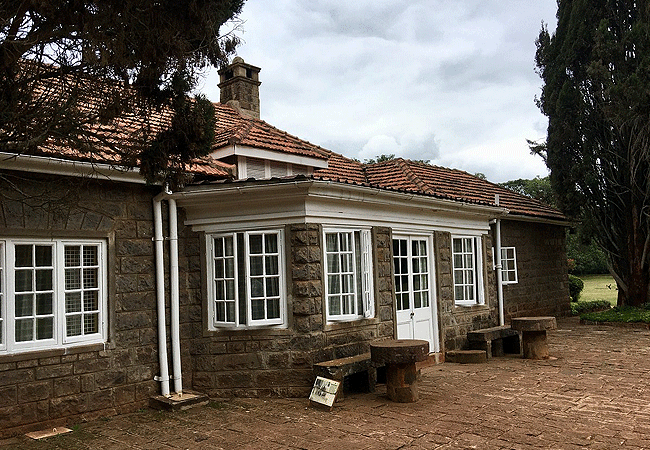
The Karen Blixen Museum Nairobi Tour visits the famous museum on Karen Road, on the outskirts of Nairobi. Its history dates back to 1914, during the First World War, with the arrival of Karen Blixen from Denmark.
The aim here is to take an individual back in time and provide a visual impression of each settler’s life in Kenya. At the foot of the Ngong Hills, Karen Blixen established herself as a farmer. After her departure in 1931, the suburbs retained Karen’s commemorative home.
The Danish government donated the house and the surrounding land to Kenya after independence. The house was restored by the Danish government and was used during the filming of “Out of Africa,” which immortalized Karen Blixen’s book by the same name.
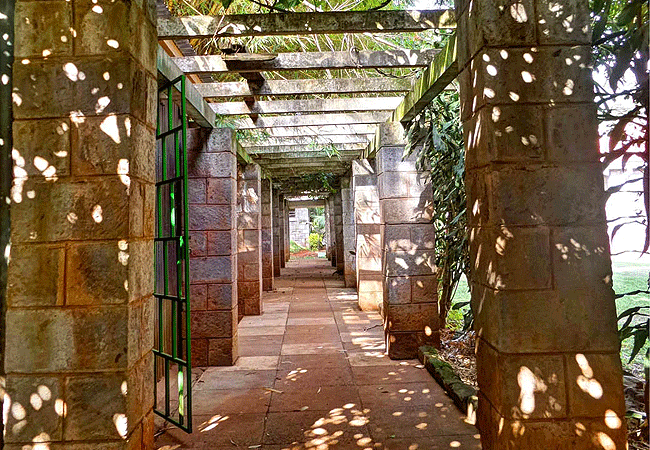
The Karen Blixen Museum was opened to the public in 1986. A striking feature of the Karen Blixen Museum is the beautiful grounds.
The house, built in 1910, has a red-tile roof and mellow wood paneling throughout the rooms. When Karen Blixen bought the property, it had 6,000 acres, but only 600 were developed for coffee; the rest was left as natural forest.
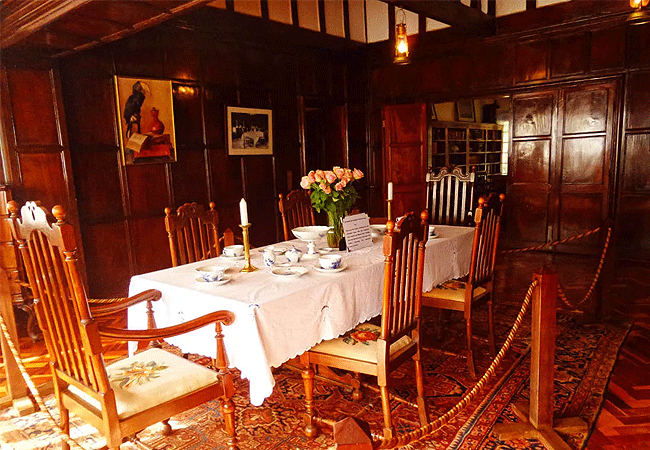
During your Karen Blixen Museum Nairobi tour, you will learn that much of the original furniture is on display in the house. The original kitchen has been restored and is now open for viewing.
A Dove Stove, similar to the one used by Karen Blixen, is on display, along with the kitchen utensils. Reconstruction of the coffee factory, along with another old piece of farm machinery, is underway.
The Karen Blixen Museum has become a hub for activities, including private parties, research, and visits, from around the world. The income so generated is used to refurbish and maintain the Karen Blixen Museum and other regional museums.
Karen Blixen (1885–1962) History
Karen Blixen (1885-1962), also known by her pseudonym Isak Dinesen, is famous for her memoir Out of Africa and several works of fiction, including Seven Gothic Tales (1934) and Winter’s Tales (1942).
A 2007 opinion poll in her native Denmark lists Karen Blixen as one of the most representative personalities in Danish history. She was twice nominated for the Nobel Prize in Literature. She wrote in English after living on a coffee farm in Kenya from 1914 to 1931.
She married her second cousin, Baron Bror Blixen of Sweden, thereby becoming a baroness. Following their separation and divorce, she had a long affair with the safari hunter, Denys Finch Hatton, son of a titled English family.
In 1931, after losing her coffee farm during the Great Depression, Karen Blixen returned to Denmark and embarked on a writing career that lasted until her death in 1962. She was played by Meryl Streep in the 1985 film Out of Africa.
Her memoir was arresting in many ways, especially in its oblique references to the author’s love story with the English hunter Denys Finch Hatton. It left the reader tantalized by a series of enigmas: Who was the writer’s husband, and what happened to him?
Why didn’t she and Finch Hatton marry? Did she ever plan to return to Africa? What was her life now?
The answers to these questions remained private until after her death. She had married a Swede named Baron Bror von Blixen-Finecke, her second cousin, from whom she took the title, Baroness. Bror was the twin of the celebrated horseman Hans von Blixen-Finecke, the man Karen loved in her youth.
Bror himself wrote a book describing how he and his wife had set out to run a pioneer farm in Kenya. They divorced after eleven difficult years of marriage. She fought the divorce, and her Letters from Africa suggest that she loved her husband. Bror married twice again, but Karen did not remarry and never had children.
Her talent for hospitality in Kenya attracted a variety of aristocratic and bohemian friends, including Berkeley Cole. She called Denys Finch Hatton the love of her life, but the nature of their relationship has never been clear.
She appears to have suffered two miscarriages during the eight or more years of the affair. However, the writer Beryl Markham, a friend of Karen Blixen and Denys Finch Hatton, claimed to biographers that Finch Hatton was homosexual.
Due to the worldwide economic depression and miscalculations in pioneer farming, Karen Blixen’s coffee farm, financed by her family, never turned a profit. She was homesick much of her time in Africa.
Although she had had her farm for nearly 18 years, she spent nearly four of those years in her beloved Denmark. She left Kenya in 1931 and never returned.
Literature: Karen Blixen [Isak Dinesen] can be compared with no other writer. Her voice was shaped by her Scandinavian roots and influenced by a wide range of European literature. Her writing emphasizes story rather than characters and a philosophical understanding of personal identity. Her stories underscore a fascination with fate’s role in shaping human lives.
She believed that a person’s response to the vicissitudes of fate offers the possibility of heroism and, ultimately, of immortality.
A small selection of her literary influences includes:
* Goethe
* Lord Byron
* Mary Shelley
* Walt Whitman
* Mozart’s Don Juan
* Soren Kierkegaard
* Charles Baudelaire
* Shakespeare’s plays
* Percy Bysshe Shelley
* Milton’s Paradise Lost
Karen Blixen Museum Nairobi Tour Prices
Karen Blixen Museum Nairobi Tour Rates Include:
✓ Price per person
✓ All Park Entry Fees, Service Charge, and Taxes
✓ Pickup from your hotel in Nairobi and drop-off at your hotel
✓ Professional English-speaking African Spice Safaris Driver Guide
✓ Visit Karen Blixen Museum in Langata, Karen District, Nairobi, Kenya
| Dates From | Dates To | Price Per Person | Children Aged 6 to 12 Years |
|---|---|---|---|
| 1st Jan 2026 | 31st Dec 2026 | Request for rates | Request for rates |
Notes
* Karen Blixen Museum, Nairobi Day Tours depart daily from Nairobi Hotels
Karen Blixen Museum Nairobi Tour Rates Excludes
✘ Travelers Insurance
✘ Personal expenses such as drinks
✘ Gratuity to your Safari Driver Guide
✘ Optional activities in the stipulated itinerary
✘ Meals and sightseeing are not included in the package
✘ Communication charges, visas, international airfares, and airport taxes
✘ Transfers to/ from the airport (supplement airport transfer cost applies for tours starting from the airport)
Karen Blixen Museum Nairobi Tour (Frequently Asked Questions)
1.) What are the nearest attractions to Karen Blixen Museum?
The museum is 10km (6 miles) from the center of Nairobi in the suburb of Karen (“at the foot of the Ngong Hills”). It is near several attractions such as the Kazuri Beads Factory, the Giraffe Centre, and the Bomas of Kenya
2.) What is the best time to visit the Karen Blixen Museum?
The Karen Blixen Museum is open on weekdays, weekends, and public holidays from 9:30 am to 6 pm, with the last admission at 5:30 pm. Since the grounds are a highlight for many visitors, it’s worth visiting on a clear day to make the most of the trip. Mornings at the museum tend to be quiet, so come early if you’d like to enjoy the grounds crowd-free
3.) Why is the Karen Blixen Museum important?
The Karen Blixen Museum was established in 1985 to commemorate the life of Baroness Karen Blixen, the talented Danish author, poet, and farmer. Karen Blixen is the author of several books, including the famous “Out of Africa,” which was later adapted into a film of the same name.
4.) Where is Karen Blixen’s house?
The Karen Blixen Museum, located 10 km outside of Nairobi, Kenya, “at the foot of the Ngong Hills”, is the former African home of Danish author Karen Blixen, famous for her 1937 book Out of Africa, which chronicles life at the estate.
5.) Was Out of Africa filmed at Karen Blixen’s house?
As Karen’s farmhouse was, at the time of filming, part of a local nursing school, the filming took place in her nearby first house, “Mbogani”, which is a dairy today. Her actual house, known as “Mbagathi,” is now the Karen Blixen Museum.
6.) Where is Karen Blixen buried?
Karen Blixen passed away on 7th September 1962, in her bed at Rungstedlund, surrounded by close family members. She was buried under the spreading branches of a large, old beech tree at the foot of Ewald’s Hill in the bird sanctuary at Rungstedlund in Denmark.
7.) When did Karen Blixen arrive in Kenya?
1914. Karen, also known by her pen name Isak Dinesen, was born at Rungstedlund in Denmark on 17th April 1885, as the second child of Wilhelm and Ingeborg Dinesen’s five children. She came to Africa in 1914 to marry her half-cousin and practice dairy farming in the then-British Colony of Kenya.
8.) What is Karen Blixen’s most famous book?
Out of Africa. Her second book, now the best-known of her works, Out of Africa, was published in 1937. Its success firmly established her reputation. Having learned from her previous experience, Blixen published the book first in Denmark and the United Kingdom, and then in the United States
9.) Who is Karen Blixen better known as?
Karen Blixen (1885-1962) Karen (Christentze Dinesen) Blixen, better known by her pen name Isak Dinesen, remains one of Denmark’s most widely acclaimed modern authors.
10.) Why did Karen Blixen move to Kenya?
Karen, also known by her pen name Isak Dinesen, was born at Rungstedlund in Denmark on 17th April 1885, the second of the five children of Wilhelm and Ingeborg Dinesen. She came to Africa in 1914 to marry her half-cousin and practice dairy farming in the then-British Colony of Kenya.
11.) Where in Kenya was Out of Africa filmed?
Ngong Hills: Meryl Streep delivers a compelling portrayal of a woman navigating life in colonial Africa, while Robert Redford’s performance is nuanced and captivating. The movie was filmed in stunning locales, predominantly in the Karen/Lang’ata region, near the genuine Ngong Hills just outside Nairobi
12.) Why did Karen Blixen never return to Africa?
When Karen Blixen left Kenya at 46, she was penniless after the failure of her coffee plantation. She returned to Rungstedlund, the house where she was born, and was dependent on her family for financial support for the rest of her life.
13.) What hotel was Out of Africa filmed at?
The Out of Africa Experience. By a quirk of fate, Angama Mara Lodge in the Masai Mara National Reserve was built on the same site where many of the most memorable scenes from Out of Africa were filmed.
Booking & Reservations, Karen Blixen Museum Nairobi Tour, Contact
Mobile: +254-721-242-711
WhatsApp: +254-721-242-711
Reservations: +254 718-179-967
Email: [email protected]
Website: https://africanspicesafaris.com