
Central Island National Park Lake Turkana Kenya
Central Island National Park is a 5 sq km volcanic island located in the middle of Lake Turkana, the world’s largest permanent desert lake, widely known as the “Jade Sea.” A designated UNESCO World Heritage Site, the park stands out starkly against the blue-green waters, composed of three active volcanoes that emit sulphurous smoke and steam. These volcanic cones shelter three scenic crater lakes—Crocodile, Flamingo, and Tilapia—which provide a unique ecosystem in the heart of the Northern Kenya desert.
Known locally as Chooro, the island is a sanctuary of raw, prehistoric beauty and a vital breeding ground for the world’s largest concentration of Nile crocodiles. It serves as a birdwatcher’s paradise, acting as a crucial stopover for migratory birds from Europe and home to thousands of flamingos that carpet the crater lakes in pink.
Central Island offers a rare, off-the-beaten-path adventure where visitors can hike up volcanic rims, explore black lava flows, and camp under the stars in one of Africa’s most remote and dramatic landscapes.
How to Get There
Central Island National Park is located within Lake Turkana in Northern Kenya, approximately 800 km from Nairobi. Access requires a combination of road/air travel to the lake’s shores, followed by a boat transfer.
From Nairobi (by Road):
✓ Distance: Approximately 800 km
✓ Vehicle: A sturdy 4×4 vehicle is essential due to rough terrain and long distances. Vehicles are left at the KWS camp or secure parking in Kalokol or Eliye Springs before taking a boat
✓ Route: The journey typically takes 2 days via Kitale to Lodwar and Kalokol on the western shores. Alternatively, a 3-day drive via Marsabit and North Horr, or via Maralal and South Horr, leads to the eastern shores
By Air:
✓ Airstrips: There are all-weather airstrips in Lodwar and Kalokol
✓ Helicopter: Private helicopter charters can fly directly to the island for a scenic aerial arrival.
✓ Flights: Scheduled flights operate from Nairobi (Wilson Airport) to Lodwar. From Lodwar, visitors must hire a transfer vehicle to Kalokol (the lake shore) to board a boat
By Boat:
✓ Travel Time: The boat ride takes approximately 1.5 to 2 hours, depending on lake conditions
✓ Transfer: Access to the island is exclusively by boat from Kalokol, Eliye Springs, or Ferguson’s Gulf
History
Central Island is a geological marvel born of fire and water. It consists of more than a dozen craters and cones, three of which are filled by small lakes. The island is part of Lake Turkana National Parks, inscribed as a UNESCO World Heritage Site in 1997 for its outstanding universal value due to its fossils and biodiversity.
Historically, the island demonstrates the region’s volcanic activity, with vents still belching steam today. The lakes are believed to have maintained an ancient connection to the Red Sea, evidenced by the presence of pufferfish, a species typically found in saltwater oceans.
Culturally, the island is known as Chooro by the local Turkana and El Molo communities. While human settlement on the island is nonexistent due to its active volcanism and lack of fresh water, it remains a protected area vital to the conservation of the Nile crocodile and the region’s unique avian life.
Central Island National Park Lake Turkana Kenya Park Entrance Fees
Central Island National Park Entrance Fees (1st January – 31st December 2026)
|
East African Citizen |
Kenyan Resident |
Non-Resident |
African Citizen |
||||
|
Adult |
Child/ |
Adult |
Child/ |
Adult |
Child/ |
Adult |
Child/ |
|
500 |
250 |
675 |
350 |
40 |
20 |
20 |
10 |
Notes
* Child refers to persons from three years but below 11 years
* Resident refers to persons of other nationalities residing in Kenya with valid documentation from the Kenyan government
* Citizen – A native or inhabitant of East African countries (Kenya, Uganda, Tanzania, Rwanda, Burundi, and SouthSudan) with valid identification documents or passport
* Daily – Fee paid for a single entry to a national park, national reserve, or sanctuary, and which shall be valid for no longer than twenty-four hours
Activities that can be done in Central Island National Park Lake Turkana Kenya
Wildlife Viewing Experiences
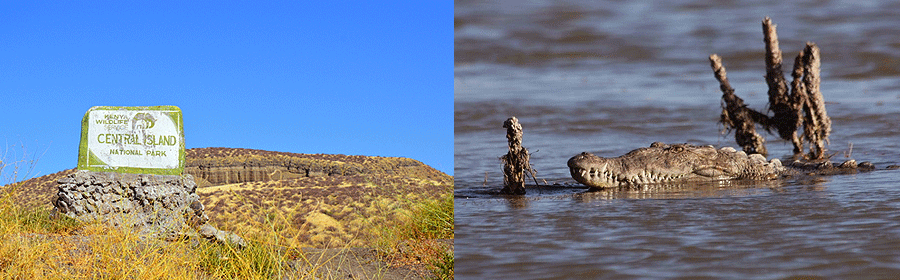
✓ Nile Crocodile Encounters: Central Island is home to the world’s largest breeding population of Nile crocodiles. Visit Crocodile Lake to see these prehistoric giants basking on the shores or gliding through the water. April and May are the best months to hear baby crocodiles squeaking from their underground nests.
✓ Volcanic Crater Exploration: Hike up the island’s three active volcanic cones to view the distinct crater lakes—Crocodile, Flamingo, and Tilapia. The rugged, moon-like terrain offers a dramatic backdrop for wildlife viewing and photography, especially during the golden hours of sunrise and sunset.
✓ Reptile Spotting: Beyond crocodiles, the island hosts diverse reptiles, including large monitor lizards and venomous snakes like the saw-scaled viper, puff adder, and cobras. Visitors are advised to stay on designated trails and walk with a guide.
Nature-Based Guided Walks & Birding
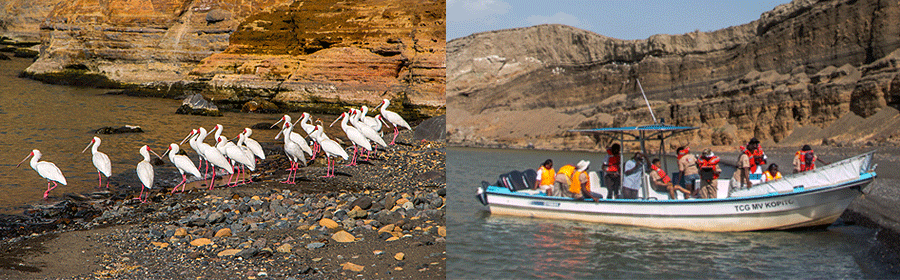
✓ Birdwatching Paradise: A designated Important Bird Area (IBA), the island hosts over 350 bird species. Flamingo Lake is a highlight, often turning pink with thousands of Lesser Flamingos. Other sightings include Goliath herons, African skimmers, Osprey, and Sacred Ibis. Migratory birds from Europe stop here between March and May.
✓ Guided Hiking Trails: Explore the island on foot with a KWS ranger. The hike to the highest point takes about an hour and rewards you with unrivaled panoramic views of the jade-green Lake Turkana and the surrounding desert landscape.
✓ Boat Safaris: Navigate the waters around the island to spot hippos and water birds. The boat trip itself offers a unique perspective of the island’s sheer black lava cliffs rising from the lake.
Immersive Adventure & Special Activities
✓ Sport Fishing: Lake Turkana is famous for its massive Nile Perch and Tiger Fish. Angling enthusiasts can cast their lines in the deep waters around the island (fishing permit required) to catch these legendary fighters, along with large Tilapia and Pufferfish.
✓ Camping Under the Stars: For the ultimate adventure, spend a night at the Chooro Public Campsite. With no light pollution, the island offers spectacular stargazing opportunities, allowing you to sleep amidst the sounds of nature in a raw, prehistoric setting.
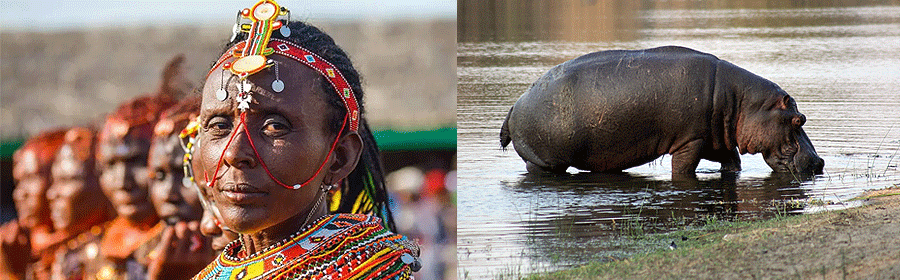
✓ Cultural & Lake Exploration: Combine your island visit with a trip to the mainland shores to meet the El Molo, Kenya’s smallest tribe, or the Turkana people. Learn about their unique fishing culture and survival in one of the world’s harshest environments.
Wildlife that can be viewed in Central Island National Park Lake Turkana Kenya
Central Island National Park is a dramatic volcanic landscape located in the heart of Lake Turkana, the “Jade Sea.” A designated UNESCO World Heritage Site, the park spans approximately 5 sq km and comprises three active volcanoes that emit sulphurous smoke and steam.
This prehistoric environment features three distinct crater lakes—Crocodile, Flamingo, and Tilapia—which provide unique aquatic habitats within a harsh desert setting. The island is renowned as the world’s largest breeding ground for Nile crocodiles and serves as a vital sanctuary for migratory birds and rare aquatic life.
Wildlife at Central Island National Park
Reptiles & Amphibians
✓ Cobras
✓ Puff Adder
✓ Mud Turtles
✓ Monitor Lizards
✓ Saw-scaled Viper
✓ Nile Crocodiles (World’s largest breeding concentration)
Large Mammals
✓ Oryx
✓ Topi
✓ Hippopotamus
✓ Grant’s Gazelle
✓ Grevy’s Zebra (occasionally spotted)
Aquatic Life (Fish)
✓ Catfish
✓ Tiger Fish
✓ Large Tilapia
✓ Nile Perch (huge specimens)
✓ Pufferfish (Marine species indicating prehistoric Red Sea connection)
Birdlife
✓ Osprey
✓ Sacred Ibis
✓ Goliath Heron
✓ Egyptian Geese
✓ African Skimmer
✓ African Fish Eagle
✓ Swallow-tailed Kite
✓ Lesser Flamingos (thousands in Flamingo Lake)
✓ 350+ species recorded in the park (Important Bird Area – IBA)
Central Island National Park Accomodation | Hotels | Lodges
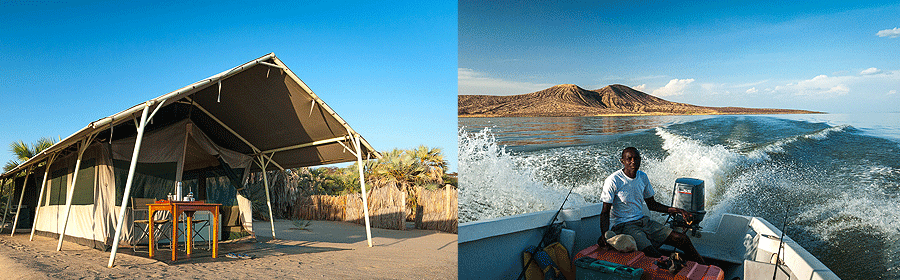
Central Island National Park doesn’t have accommodation services available. Currently, the park doesn’t offer self-catering accommodation but available are the Chooro public campsite and Central Island Campsite. Visitors intending to camp for the night are advised to carry with them tents and appropriate camping gear. For this category, standard amenities are provided; water, toilet/ bathroom, and kitchen area.
There are suitable, pleasant, and peaceful hotels that are located near Central Island Park. They include Eliye Spring Resort, Lodwar Acacia Residences, Stegra Hotel, Solmar Gracious Hotel Lodwar, Malabo Resort Loiyangalani, Oasis Lodge Loiyangalani
Lake Turkana accommodation options; There are privately run tented camps at the western shores of Lake Turkana. These include Lobolo Tented Camp, The Jade Sea tented journeys camp at Lobolo, Napak and Christine’s tented camps at Eliye Springs, and Eliye Springs Resort.
Others include Cradle Tented Camp Lodwar, Allia Bay Guesthouse, Tortoise camp, Bahamas resort camp, Jade sea tented camp, St. Teresa catholic tented camp at Eliye, and the Fimbo campsite at Kalokol Impreza Beach.
Tours
Central Island National Park Climate & The Best Time to Visit
The average annual temperature in Lodwar is 86.0°F. The warmest months, on average, are March and October with average temperatures of 88°F. The coolest month, on average, is July, with a temperature of 84°F. Also, the temperatures are very constant throughout the year.
Scorching hot and arid (especially from December to March), June and July are the coolest months. From May to September, very strong winds blow both in the morning and in the evening. Rainfall is less than 250 mm per annum, and in some places, it may not rain for several years.
The best time to visit Central Island National Park is in June and July, when temperatures are cooler. From December to March, it is scorching hot and extremely arid. Visitors are advised to carry plenty of drinking water and snacks.
April and May are the best months to visit the lake during the breeding time. You can hear hundreds of baby Crocodiles squeaking in their eggs under the sand. Their parents buried them here as a safeguard against the Monitor Lizards. The voracious lizards lurk in the vicinity, waiting to devour them.
If you are timely, you may catch the dramatic moments when the parents heed their babies’ cries. They dig them up and transport them to the shallow parts of the lake. Here, they will spend the next few months under close adult supervision.
Once you finish your crocodile business, you could try hiking to the top of “Flamingo Crater”. Here, you will not only catch spectacular views of the surrounding scenery. You will also see the beautiful pink lesser flamingos. Sometimes they are in their thousands on the opal-colored waters of the alkaline Flamingo Lake in the crater.
Central Island National Park Climate & The Best Time to Visit
The Central Island National Park, also known as Crocodile Island (commonly known as Chooro by the local community), is located in northern Kenya ( about 800 km from Nairobi) in the middle of Lake Turkana.
Central Island is made up of three active volcanoes that belch sulfurous smoke and steam. Three crater lakes, Crocodile Lake, Flamingo Lake, and Tilapia Lake, provide breeding grounds for the world’s largest concentration of Nile crocodiles. The island is relatively small, which means it’s possible to explore all of the scenic lakes in one visit.
Central Island National Park is almost in the middle of Lake Turkana, also known as the Jade Sea. Otherwise known as Crocodile Island because of its prolific Nile crocodile population, Central Island encompasses a mere 5 km2 of exquisite territory. Lake Turkana, formerly Lake Rudolf and also known as the Jade Sea, is 265 km long and has an average width of 30km.
An isolated and stunningly beautiful lake, the Lake appears as a mirage from the depths of the Chalbi Desert in Northern Kenya. Central Island is one of three National Parks (the other two are the Sibiloi National Park and Southern Island National Park) situated on Lake Turkana, and together these three parks provide an incredible storehouse of archaeological and paleontological sites.
The park is situated at an altitude of 355 m above sea level. The park is a major drawcard for birders, fishermen, and those with a penchant for geographical marvels. Lake Turkana is the most saline of Africa’s great lakes, recognized as a UNESCO World Heritage Site, and the largest and most impressive alkaline desert lake in the world. The lake floor is so deep that it is close to sea level.
There are 60 recorded fish species in the lake, including Nile Perch and large Tilapia. It’s quite possible to see pufferfish in the lakes, as they’re a saltwater fish species. This is a clear indication of an ancient connection to the Red Sea, where these fish are abundant.
Central Island National Park is renowned for its prolific concentration of Nile crocodiles and houses the world’s largest population of these reptiles. In addition to crocodiles, there are abundant hippos, bats, and mud turtles in the area.
There are over 350 birds in the area, such as flamingos, pelicans, sandpiper, African skimmer, and Heuglin’s bustard. Small creatures are found throughout, including scorpions and the deadly carpet viper. On the interior, it’s possible to spot Grevy’s zebra, topis, oryx, and Grant’s gazelle. Lake Turkana is home to some of the world’s venomous reptiles, including the saw-scaled viper, puff adder, and cobras
The vegetation is sparse, but some sheltered areas are overgrown with thick grass and bushes for a short period each year. The park is scorching hot and arid, especially from December to March and from June to July, which are the coolest months. From May to September, very strong winds blow both in the morning and in the evening.
Rainfall is less than 250 mm per year, and in some places, it may not rain for several years. You can visit the park island all year round. Central Island National Park activities include: Sportfishing, Game viewing, Camping, Boat ride, Canoeing, Lake exploration, and Nature trail hiking.
Others include Bird and reptile watching, Kite Surfing, Stargazing, Leisure swimming, white-sand beach sunbathing, Donkey, Camel, and bike tours, Prehistoric site tours, Turkana Cultural Village visit, Evening traditional songs and dances, and Sightseeing.
Lake Turkana Safaris | Kenya
4 Days Lake Turkana Safari Koobi Fora Sibiloi & Central Island | Click Here
4 Days 3 Nights Lake Turkana Luxury Fly-in Kenya Safari (with a stay at Lobolo Camp) | Click Here
Booking & Reservations Central Island National Park Lake Turkana Kenya Contact
Mobile: + 254-721-242-711
WhatsApp: +254-721-242-711
Reservations: +254 718-179-967
Email: [email protected]
Website: https://africanspicesafaris.com