
Lake Manyara National Park | Arusha Region of northern Tanzania
Lake Manyara National Park is one of Tanzania’s most enchanting and ecologically diverse safari destinations, a compact yet richly rewarding park nestled at the base of the Great Rift Valley escarpment, 126 km southwest of Arusha.
Covering 330 square kilometres, including a lake surface of 230 sq km, the park sits at an altitude ranging from 945 to 1,375 metres above sea level and is part of Tanzania’s celebrated Northern Safari Circuit alongside the Serengeti, Ngorongoro Crater, and Tarangire National Park.
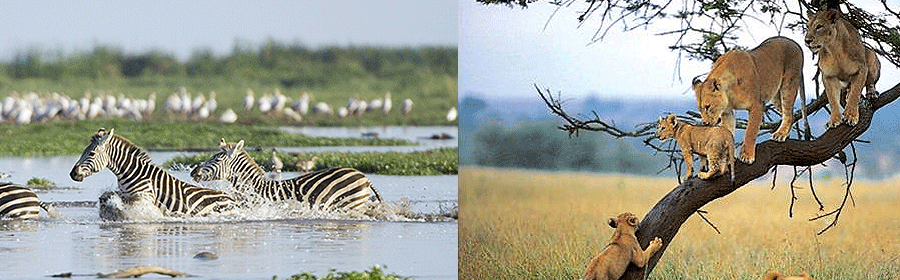
The park is world-famous for one extraordinary phenomenon, its tree-climbing lions. Unlike lions elsewhere in Africa, these remarkable animals spend their days lounging and sleeping on the wide branches of ancient fig trees, descending at dusk when temperatures cool.
This behaviour, found in only two populations on the continent, here at Lake Manyara and in Uganda’s Queen Elizabeth National Park, makes the park an unmissable destination for returning safari-goers and first-timers alike.
Beyond its iconic lions, Lake Manyara dazzles with large elephant herds, spectacular flamingo flocks numbering in the hundreds of thousands, over 400 bird species, hot springs warm enough to boil an egg, and a canopy walkway offering bird’s-eye views over the groundwater forest.
Established in 1960, the park remains one of East Africa’s finest compact safari destinations, offering a crowd-free, deeply immersive wilderness experience within easy reach of Arusha.
Location & Accessibility
Lake Manyara National Park is located 126 km southwest of Arusha in northern Tanzania, on the floor of the Great Rift Valley. It is part of the Northern Safari Circuit and is most commonly accessed from Arusha, Tanzania’s safari capital.
By Road
✓ Recommendation: Arriving early morning avoids the afternoon peak when safari vehicles crowd the northern section of the park
✓ From Arusha: A scenic 126 km drive southwest of Arusha, taking approximately 1.5 hours by road; well-maintained tarmac for most of the journey
✓ Park Gates: Two main entrances, the northern gate (busier, with most lodges nearby) and the southern gate (quieter, with controlled access and fewer camps)
✓ From Ngorongoro Crater: Approximately 80 km from the Ngorongoro Crater, about a 2-hour drive; ideal for combining both destinations on the Northern Safari Circuit
✓ From Tarangire National Park: Lake Manyara is conveniently located between Tarangire and the Ngorongoro Crater, making it a natural addition to any northern Tanzania itinerary
By Air
✓ Ground Transfer: Private transfers and guided safari vehicles are readily available from all airports to the park
✓ Arusha Airport (ARK): Domestic flights from Dar es Salaam, Zanzibar, and Serengeti; short transfer to the park
✓ Lake Manyara Airstrip: The park has its own airstrip with domestic flight connections from Arusha and Serengeti National Park, ideal for visitors wishing to fly directly into the park area
✓ Kilimanjaro International Airport (JRO): The nearest international airport, approximately 50 km from Arusha and around 2 hours from the park by road; well-served by international carriers
Park Hours
✓ Opening Times: Open daily from 6:00 AM to 6:00 PM
Ecosystem & Vegetation
Lake Manyara National Park encompasses one of East Africa’s most diverse ecological gradients, an interconnected series of habitats running from the base of the Great Rift Valley escarpment down to the alkaline lake shore, each supporting a distinct community of plants and animals.
✓ Marshlands & Saline Flats: Wetland areas along the lake margins are crucial for flamingo feeding and breeding
✓ Acacia Woodland: Transitional woodland of acacia species adapted to semi-arid conditions; habitat for giraffe, impala, and a variety of savannah birds
✓ Grassy Floodplains: Open grassland plains surrounding the lake, providing grazing grounds for large herds of zebra, wildebeest, and buffalo during the wet season
✓ Hot Springs: A remarkable geological feature within the park, springs reaching 70°C, hot enough to boil an egg, is one of the park’s most unusual natural attractions
✓ Dry Escarpment Savannah: The dramatic Rift Valley escarpment rising behind the park, dotted with baobab trees and scrubland; home to leopards, klipspringers, and drier-adapted species
✓ Lake Manyara: An alkaline soda lake covering 230 sq km; its silvery salt deposits expand and contract with the seasons; critical habitat for flamingos, pelicans, and thousands of waterbirds
✓ Groundwater Forest: Dense evergreen forest fed by springs emerging at the base of the escarpment; a lush canopy of fig trees, mahogany, and tamarind supporting primates, elephants, and a wealth of forest birds
Wildlife
Despite its compact size, Lake Manyara National Park supports an impressive diversity of mammals across its varied habitats — from forest-dwelling primates to open-plain grazers and lake-dwelling hippos.
The Tree-Climbing Lions
Lake Manyara’s most iconic and extraordinary wildlife phenomenon is lions climbing and resting in the branches of large fig trees, one of only two such populations in the world.
✓ Best Viewing: Game drives in the forested northern section of the park; early morning and evening drives offer the highest chances of sightings
✓ Other Population: Tree-climbing lions are also found in Uganda’s Queen Elizabeth National Park and, to a lesser extent, in Tarangire and Serengeti
✓ Behaviour: These lions spend most of the day resting in the large branches of fig trees, descending at dusk when temperatures cool; believed by some scientists to be a behaviour all lions are capable of but rarely practice
Other Mammals
✓ Other Species: Warthog, waterbuck, impala, bushbuck, Kirk’s dik-dik, and klipspringer
✓ Leopards: A dense leopard population inhabits the escarpment area; elusive but present
✓ Nocturnal Species: Genet, civet cat, porcupine, brown hyena, and leopard are best seen on night game drives
✓ Buffalo, Zebra & Wildebeest: Large herds roam the open grassy floodplains particularly concentrated during the dry season
✓ Giraffes & Hippos: Giraffes are commonly seen in the acacia woodlands; hippos wallow in the lake shallows and marsh areas
✓ Primates: Olive baboons sometimes in troops of up to 200 and blue monkeys are frequently seen in the forested areas near the park entrance
✓ Elephants: Large herds with impressively tusked individuals are a highlight; commonly seen foraging through the groundwater forest and along the lake shore
Birdlife
With over 400 recorded species, Lake Manyara National Park is one of Tanzania’s premier birdwatching destinations. Its diverse habitats, including alkaline lakes, groundwater forests, marshland, and savannahs, support an exceptional range of both resident and migratory birds.
✓ Raptors: Martial eagle, crowned eagle, and a variety of hawks and falcons
✓ Grassland Birds: Kori bustard and yellow-throated longclaw in the open plains
✓ Best Season: Wet season (November to May) for migratory waterbirds and the largest flamingo gatherings
✓ Forest Birds: Silvery-cheeked hornbill, Narina trogon, crowned eagle, and crested guineafowl in the groundwater forest
✓ Waterbirds: Great white pelican, African spoonbill, yellow-billed stork, marabou stork, egrets, herons, and wading birds along the lake edges and water meadows
✓ Flamingos: Hundreds of thousands of greater and lesser flamingos regularly gather on the lake, forming a spectacular pink blanket across its surface one of East Africa’s most breathtaking wildlife spectacles
Key Attractions
✓ Flamingo Lake: Hundreds of thousands of pink flamingos cover the alkaline lake, a truly breathtaking spectacle
✓ Great Rift Valley Escarpment: The dramatic escarpment wall forms a spectacular backdrop to the entire park and lake
✓ Baboon Troops: Olive baboon troops of up to 200 individuals are a regular sight, highly social and entertaining to observe
✓ Large Elephant Herds: Some of Tanzania’s most impressively tusked elephants, commonly seen foraging through the forest
✓ Hot Springs: Geothermal springs reaching 70°C are a unique geological feature and one of the park’s most unusual natural wonders
✓ Tree-Climbing Lions: One of only two populations of tree-climbing lions in the world, the park’s most iconic and sought-after wildlife encounter
✓ Treetop Walkway: A 370-metre aerial canopy walkway rising to 18 metres, with suspension bridges and viewing platforms around ancient tree trunks offering a bird’s-eye view of the groundwater forest, blue monkeys, impalas, and forest birds
Activities
Game Drives
✓ Best Time: Early morning for the most active wildlife and best light; late afternoon for lions descending from trees
✓ Day Game Drives: Morning and afternoon drives through the forest, floodplains, and lake shore for tree-climbing lions, elephants, flamingos, buffalo, giraffe, and primates
✓ Night Game Drives: Depart at 8:00 PM for a 3-hour ranger-guided night drive; excellent for leopards, lions, genets, civets, porcupines, and brown hyena; the park’s all-year water supply ensures wildlife is reliably encountered
Other Activities
✓ Hiking & Biking: Explore the park’s diverse landscapes on foot or by bicycle
✓ Mokoro Rides & Sunset Boat Cruises: Available during the wet season on the lake
✓ Hot Springs Visit: Explore the park’s remarkable geothermal springs, a rare geological experience within a national park
✓ Maasai Cultural Visits: Engage with Maasai tribesmen for an authentic cultural experience, including traditional dances and community visits
✓ Canoeing & Kayaking: Paddle on the tranquil waters of Lake Manyara during the wet season for close-up views of waterbirds and wildlife along the shore
✓ Bird Watching: 400+ species across diverse habitats; guided birding walks and drives available; wet season offers the most spectacular flamingo gatherings
✓ Treetop Canopy Walk: Walk the 370-metre elevated walkway through the forest canopy, rising to 18 metres above the forest floor, for a unique perspective on the park’s groundwater forest ecosystem
✓ Cultural Tours to Mto wa Mbu: Visit the vibrant and ethnically diverse market town of Mto wa Mbu adjacent to the park; interact with local communities, explore bustling markets, and gain insight into local ways of life
Climate & Best Time to Visit
✓ Temperature: Average daytime temperature 25°C to 27°C year-round with cooler nights
✓ November to December: Short rains; flamingo and waterbird numbers increase dramatically on the lake; lush green scenery
✓ December to February: Short dry season; clear skies and reliable wildlife viewing; good for combining with Ngorongoro and Serengeti
✓ March to May: Long rains; the park is at its most beautiful and bird-rich; March and April can be very wet, potentially affecting road access
✓ June to October: Long dry season; optimal game drives; best conditions for the canopy walkway and night drives; shorter grass improves visibility
✓ Recommendation: Stay at least two nights to fully experience the park’s diversity, especially during peak season (July to November) when day visitors crowd the northern section
✓ Best Time to Visit: The dry season from June to October is peak time for wildlife viewing, as animals congregate around water sources, vegetation is less dense, and road conditions are best
Accommodation
Inside the Park
✓ AndBeyond Lake Manyara Tree Lodge: Luxury treehouse suites nestled in the groundwater forest canopy one of East Africa’s most unique and intimate lodge experiences
Outside the Park (Nearby):
✓ Chem Chem Lodge: Located on the southwestern edge of Lake Manyara; breathtaking panoramic views over the lake and escarpment
✓ Other Options: A range of lodges, tented camps, and campsites in the Mto wa Mbu area and along the northern park boundary cater to all budgets
✓ Maramboi Tented Lodge: Comfortable tented accommodation on the shores of Lake Manyara; an adventurous yet comfortable base for exploring the park
Lake Manyara National Park Entry Fees
2026 Lake Manyara National Park Entrance Fees
|
Dates From |
Dates To | East Africa Citizen | Expatriates/ TZ Residents |
Non-Residents |
|
1st Jan 2026 |
14th Mar 2026 | 10,000 Tanzanian Shillings | 25 US Dollars | 50 US Dollars |
| 15th Mar 2026 | 15th May 2026 | 10,000 Tanzanian Shillings | 22.5 US Dollars |
45 US Dollars |
|
16th May 2026 |
31st Dec 2026 | 10,000 Tanzanian Shillings | 25 US Dollars |
50 US Dollars |
|
Child Rate – Aged Between 5-15 Years |
||||
| Dates From | Dates To | East Africa Citizen | Expatriates/ TZ Residents |
Non-Residents |
|
1st Jan 2026 |
31st Dec 2026 | 2,000 Tanzanian Shillings | 7.5 US Dollars |
15 US Dollars |
Notes
* Children below the age of 5 years – Free
Lake Manyara National Park Facts
Lake Manyara National Park Vegetation | Ecosystem
Lake Manyara National Park is nestled at the base of the Great Rift Valley escarpment, and it includes a diverse range of ecosystems that create a unique environment for an array of flora and fauna. The park is renowned for its groundwater forest, fed by springs that emerge at the base of the escarpment, supporting a dense canopy of evergreen trees. This forest transitions into woodlands dominated by acacia species, which are adapted to the region’s semi-arid conditions.
The park’s central feature, Lake Manyara, is an alkaline lake that supports specialized vegetation, including marshes and saline flats. These areas are crucial for the large flocks of flamingos and other waterbirds that feed and breed here. Surrounding the lake are grasslands and floodplains that provide grazing grounds for herbivores during the wet season.
On the park’s periphery, the escarpment rises dramatically, giving way to a dry savanna ecosystem where baobab trees and scrublands are prevalent. These areas are important for animals that require less water and can tolerate drier conditions.
The park’s diverse habitats are interconnected, forming a continuous ecological gradient from the lush groundwater forest to the open grasslands and the arid escarpment. This gradient allows for the movement and intermingling of species, creating a dynamic and resilient ecosystem.
Human interventions, such as anti-poaching patrols and controlled burns, help maintain the balance of this delicate ecosystem, ensuring the park remains a sanctuary for wildlife and a natural wonder for visitors.
Climate: Dry & Wet Season | Best Time to Visit
Lake Manyara National Park experiences a bimodal rainfall pattern, with two distinct wet seasons. The ‘long rains’ occur from March to May, and the ‘short rains’ from November to December. During these periods, the park’s vegetation becomes lush and green, providing a vibrant backdrop for wildlife and birdlife. The average daytime temperature ranges from 25°C (77°F) to 27°C (81°F), with cooler nights.
The dry season, spanning from June to October, is considered the best time for wildlife viewing. Animals congregate around water sources, making them easier to spot. The vegetation is less dense, which also improves visibility. This period is characterized by less rainfall and milder temperatures, creating ideal conditions for game drives and other outdoor activities.
Visitors can enjoy Lake Manyara National Park year-round, but those interested in birdwatching may find the wet season particularly rewarding, as migratory birds, including flamingos, flock to the area. However, be advised that March and April can be very wet, potentially affecting travel plans and access to the park
Location | How to get to Lake Manyara National Park
Lake Manyara National Park is situated about 126 kilometers southwest of Arusha, a major city in Tanzania. Visitors can reach the park by a scenic drive from Arusha or fly into Kilimanjaro International Airport, located approximately 50 kilometers from Arusha. From there, they can take a connecting flight to Lake Manyara’s airstrip or continue by car. The drive from Arusha to the park takes about 1.5 hours, and from the Ngorongoro Crater, it’s about a 2-hour drive covering 80 kilometers to the park.
The park is part of the popular Northern safari circuit, and it’s usually accessed from Arusha, which is the gateway town for many safaris in the region. There are also domestic flights available from Arusha and Serengeti National Park to Lake Manyara’s airstrip for those who prefer to fly directly into the park area.
Mammals | Wildlife & Animals
Lake Manyara National Park is a sanctuary for a wide variety of wildlife, including several large mammal species. The park is particularly famous for its tree-climbing lions and impressively tusked elephants. Large herds of buffalo, wildebeest, and zebras roam the grassy plains, while the escarpment provides habitat for a dense population of leopards, though they are elusive and require some luck to spot.
Other common mammals include giraffes, hippos, and blue monkeys. The park also hosts olive baboons, bushbucks, and klipspringers. The dik-diks with their distinctive appearance are a common sight, and pairs of klipspringers are sometimes seen on the rocks at the southern end of the park.
Bird Checklist | Birdlife
Lake Manyara National Park is a birding paradise, boasting over 400 species, making it an exceptional location for bird enthusiasts. The park’s diverse habitats, from its alkaline lake to the groundwater forest, support a rich avifauna. Notable species include the flamboyant flamingos, raptors like the Martial Eagle, and waterbirds such as the African Spoonbill.
The forested areas are home to the Silvery-cheeked Hornbill and Narina Trogon, while the grasslands provide a haven for the Kori Bustard and Yellow-throated Longclaw. This incredible variety of birdlife, alongside the park’s commitment to conservation, ensures that Lake Manyara remains a vibrant and vital ecosystem for birdwatching year-round.
Lake Manyara National Park Opening Time
Lake Manyara National Park is open daily from 6:00 am to 6:00 pm.
Where To Stay In Lake Manyara Park | Lake Manyara National Park Accommodation
Experiencing Lake Manyara National Park in Tanzania is truly memorable when you stay within or near the park. AndBeyond Lake Manyara Tree Lodge is a unique accommodation offering luxury treehouse suites nestled in the forest canopy | Click here for more details.
In the vicinity of the park, you can find Maramboi Tented Lodge, which provides a comfortable and adventurous tented experience on the shores of Lake Manyara. Other accommodations include a variety of lodges and campsites that cater to different preferences and budgets, ensuring every visitor finds a suitable place to rest after a day of exploring the park’s wonders.
For a comprehensive list of options, it’s recommended to check travel websites or contact the park authorities directly.
Lake Manyara Treetop Walkway
The Lake Manyara Treetop Walkway, nestled in the lush environs of Tanzania’s Lake Manyara National Park, is a marvel of eco-tourism. This 370-meter-long aerial walkway, designed to blend seamlessly with its natural surroundings, offers an unparalleled opportunity to explore the park’s vibrant canopy ecosystem.
As visitors ascend the gentle incline, they are enveloped by the dense foliage of the groundwater forest, home to an array of wildlife, including mischievous blue monkeys, graceful impalas, and a kaleidoscope of butterflies.
The walkway reaches a height of 18 meters, where a series of sturdy suspension bridges and viewing platforms around ancient tree trunks provide a sanctuary for birdwatchers and nature enthusiasts alike. Here, the forest’s secrets are revealed, from the chattering of silvery-cheeked hornbills to the distant trumpeting of majestic elephants.
The experience is both serene and thrilling, offering a bird’s-eye view that captivates the senses and heightens appreciation for Tanzania’s natural beauty. Open from dawn till dusk, this attraction is a testament to the wonders of the African wilderness, inviting all who traverse its path to share in its enchanting world.
Lake Manyara National Park Night Game Drives
Lake Manyara National Park Night game drives are a thrilling way to experience the park’s nocturnal wildlife. As the sun sets and darkness blankets the landscape, the park transforms into a different world, alive with the sounds and movements of creatures that remain hidden during the day. The drive begins at 8:00 PM, with visitors embarking on a three-hour journey through the park’s diverse habitats.
Guided by the soft glow of the vehicle’s lights, tourists are accompanied by an expert ranger who helps spot elusive animals such as genets, civets, and porcupines. The highlight for many is the chance to see predators such as leopards and lions, which are more active and easier to spot at night. The drive takes routes through the forest and towards the lake area, where the silhouette of hippos can often be seen against the moonlit water.
The park’s ecosystem is particularly suited for night game viewing due to its all-year water supply, which attracts wildlife to drink at various water points. This makes for an exceptional game-viewing experience, as the animals are drawn out into the open, making them easier to observe. During the dry season, from June to October, the shorter grass and favorable road conditions further enhance the night drive experience.
In addition to the night drives, Lake Manyara National Park offers morning and afternoon game drives. These drives offer opportunities to see a wide array of animals at their most active, including elephants, buffalo, hippos, monkeys, baboons, warthogs, klipspringers, zebras, giraffes, and the park’s famous tree-climbing lions. The park is renowned for its large herds of elephants and the rare sight of lions lounging in acacia trees.
Visitors to Lake Manyara National Park can expect a unique safari experience that combines the thrill of nighttime exploration with the beauty of Tanzania’s wilderness. Whether it’s the quiet observation of nocturnal habits or the excitement of spotting a lion on the hunt, night game drives offer an unforgettable adventure that showcases the park’s rich biodiversity under the stars.
Lake Manyara National Park Information
Lake Manyara National Park is a captivating slice of Tanzania’s natural beauty, located 126 km (78 mi) southwest of Arusha. Encompassing an area of 330 square kilometers (127 square miles), situated at an altitude ranging from 945 to 1,375 meters above sea level, the park experiences two rainy seasons: the long rains from March to May and the short rains from November to December.
The park is renowned for its rich biodiversity, boasting a wide range of inhabitants, including tree-climbing lions, impressive elephants with large tusks, buffalo herds, wildebeests, zebras, giraffes, hippos, warthogs, impalas, waterbucks, Kirk’s dik-diks, and klipspringers.
Leopards and cheetahs are less common, but a dense leopard population thrives in the escarpment area. Additionally, Olive baboons and blue monkeys are frequently spotted, especially in the forested regions near the park’s entrance.
Lake Manyara National Park is a birdwatcher’s paradise, with over 350 bird species, including large congregations of flamingos and pelicans. Bird enthusiasts can enjoy sightings of the yellow-billed stork, marabou stork, and numerous other avian species. The park’s vegetation is equally diverse, encompassing savannah, acacia woodland, grassy floodplains, and tropical rainforest, providing habitats for its abundant wildlife.
Visitors to Lake Manyara National Park can engage in a variety of activities to explore its natural wonders. Game drives, both during the day and at night, offer opportunities to observe nocturnal species and the famed tree-climbing lions. Birdwatching excursions offer exceptional opportunities to see numerous avian species.
The park offers camping facilities to suit various preferences, from luxury to basic accommodations. Canoeing or kayaking on the lake’s tranquil waters offers a serene experience. Cultural tours not only provide insights into the traditions of local tribes but also offer a deeper understanding of the lives of the Maasai and Hadzabe tribes.
Hiking and biking are ideal for exploring the park’s diverse landscapes, while the treetop walkway provides a unique perspective of the forest canopy.
The park serves as a gateway to other destinations in Tanzania, such as the Ngorongoro Crater, the Selous Game Reserve, Tarangire National Park, and more. Its strategic location makes it an ideal starting point for exploring the diverse landscapes and wildlife of northern Tanzania.
Booking & Reservations Lake Manyara National Park Contact
Mobile: + 254-721-242-711
WhatsApp: +254-721-242-711
Reservations: +254 718-179-967
Email: [email protected]
Website: https://africanspicesafaris.com