
Mount Kenya National Park & Reserve
Mount Kenya National Park & Reserve is a UNESCO World Heritage Site and one of Africa’s most iconic natural landmarks. Established on 16th December 1949, the park is centred on Mount Kenya, Africa’s second-highest mountain, rising to a majestic 5,199 metres (17,057 ft) above sea level. It is found in Kenya’s northeast region, approximately 175 km from Nairobi.
The park covers a total land area of 715 km² (276 sq miles), protecting the mountain between altitudes of 1,600 m and 5,199 m. Its landscapes are extraordinarily diverse, from lush bamboo forests and montane rainforests at lower elevations, through open moorlands and alpine meadows, to permanent glaciers and twin rocky peaks at the summit.
The park also hosts approximately 20 lakes and tarns fed by glacial and mountain streams, and serves as a vital water catchment area for Kenya.
Mount Kenya’s iconic twin peaks, Batian (5,199 m) and Nelion (5,188 m), are revered by the Kikuyu people as the earthly throne of their God, Ngai. A third peak, Point Lenana (4,985 m), is the main trekking summit, accessible to non-technical climbers via several well-established routes.
Location & Accessibility
The park is located approximately 175 km northeast of Nairobi and can be reached by road or air via the town of Nanyuki or Chogoria, depending on the gate chosen.
By Road:
✓ Route 1 (Via Nyeri–Nanyuki): From Nairobi, drive via Nyeri to Nanyuki for access to Sirimon Gate (approx. 3–4 hours). Continue for a further 15 km from Nanyuki to the gate
✓ Route 2 (Via Naro Moru): Follow the Nairobi–Nyeri highway toward Nyeri, then continue to Naro Moru town for the Naro Moru Gate (approx. 3–4 hours from Nairobi)
✓ Route 3 (Via Embu–Chogoria): Take the Nairobi–Embu road to Chogoria town, then proceed to Chogoria Gate. A longer but more scenic route
✓ Road Conditions: Main highways are well-paved; final approach roads to gates can be rough, especially in the rainy season. A 4WD vehicle is recommended
By Air:
✓ Nearest Airports: Nanyuki Airstrip and Laikipia Airport, with several smaller airstrips near private lodges in the area
✓ Flight: A 35-minute scheduled flight from Nairobi’s Wilson Airport to Nanyuki Airfield, followed by a short road transfer to the park
Park Gates:
✓ Six Entry Gates: Naro Moru, Kihari, Mawingu, Sirimon, Kamweti, and Chogoria
Vegetation & Ecosystems
Mount Kenya’s dramatic altitude range creates a stunning series of distinct vegetation zones, each with its own character, flora, and wildlife. As you ascend, the landscape transforms from a dense forest to a stark alpine desert.
✓ Alpine Zone: Stark landscapes of rock, ice, and sparse vegetation; home to unique bird species and the mountain’s permanent glaciers
✓ Peaks & Glaciers: Batian (5,199 m), Nelion (5,188 m), and Point Lenana (4,985 m) are crowned by glaciers and tarns that feed Kenya’s rivers
✓ Bamboo & Podocarpus Zone: Thick bamboo stands and towering Podocarpus trees forming a green canopy; key habitat for bongo and forest elephants
✓ Heath & Moorland Zone: Open moorlands of heather, tussock grasses, and dramatic giant lobelias and senecios plants uniquely adapted to high-altitude conditions
✓ Montane Forest Zone: Dense rainforests and bamboo thickets at lower altitudes, home to elephants, buffalo, colobus monkeys, and a rich understory of ferns and mosses
Wildlife
Mount Kenya National Park supports a remarkable diversity of wildlife across its varied ecosystems. The lower forest and bamboo zones are particularly rich in large mammals, while the upper moorlands and alpine zones shelter species uniquely adapted to high-altitude life.
Mammals:
✓ Leopards: Present in the montane forests; rarely seen due to their elusive nature
✓ Rarely Seen: Giant forest hog, hyenas, montane vipers, skinks, and a variety of owls
✓ Elephants & Buffaloes: Regularly seen in the lower forested regions, often in large herds
✓ Small Mammals: Rock and tree hyrax, white-tailed mongoose, and the endemic Mount Kenya mole-rat
✓ Primates: Black-and-white colobus monkeys and Sykes monkeys are commonly spotted in the forest canopy
✓ Bongo: The rare and endangered forest antelope is a notable conservation focus; inhabits dense montane forests
✓ Antelopes & Herbivores: Bushbucks, elands, waterbucks, duikers, and suni antelopes roam the forests and moorlands
Birdlife:
Over 130 bird species have been recorded in the park, with several species found nowhere else.
✓ Best Viewing: Forest edges, moorland, and lake shores at dawn and dusk
✓ Forest Birds: A wide variety of sunbirds, hornbills, and raptors in the montane forest zones
✓ Endangered Species: Abbott’s Starling and the globally threatened Jackson’s Francolin are key birdwatching targets
✓ Alpine Specialists: The scarlet-tufted malachite sunbird, one of Africa’s most striking high-altitude birds, thrives in the moorland zone
Reptiles & Amphibians:
✓ Other Species: Montane vipers, various skinks and lizards, and a number of endemic amphibian species
✓ Endemic Species: The Mount Kenya bush viper, found only on this mountain, is among the park’s most unique reptile species
Climbing Routes to Point Lenana
Mount Kenya offers three main trekking routes to Point Lenana (4,985 m) — the highest point accessible to non-technical climbers. Each route offers a distinct experience in terms of scenery, difficulty, and duration. The summit peaks, Batian and Nelion, require advanced technical climbing skills and equipment.
1. Sirimon Route (Northwest Flank)
✓ Duration: Typically 5 days
✓ Distance: Approximately 53 km to Point Lenana
✓ Trailhead: Sirimon Gate, elevation 2,440 m, accessible from Nanyuki
✓ Key Campsites: Old Moses Camp (3,300 m) and Shipton Camp (4,200 m)
✓ Highlights: Dense bamboo thickets, open moorlands, views of Nelion and Batian peaks
✓ Difficulty: Moderate, favoured for its gradual incline, which aids acclimatization and results in a high success rate
2. Naro Moru Route (Western Side)
✓ Duration: Typically 4–5 days
✓ Trailhead: Naro Moru Gate, elevation 2,600 m
✓ Distance: Approximately 40 km to Point Lenana
✓ Highlights: Teleki Valley, views of the Tyndall and Lewis Glaciers
✓ Key Campsites: Met Station Campsite (3,300 m) and Mackinder Campsite (4,200 m)
✓ Difficulty: Strenuous, the most direct and fastest route, but with less time for acclimatization and a notorious ‘vertical bog’ section
3. Chogoria Route (Eastern Side)
✓ Duration: Typically 5–6 days
✓ Trailhead: Chogoria Gate, elevation 2,150 m
✓ Distance: Approximately 32 km to Point Lenana
✓ Difficulty: Moderate, widely regarded as the most scenic route on the mountain
✓ Key Campsites: Lake Ellis (3,455 m) and Mintos Camp (4,200 m) near the Hall Tarns
✓ Highlights: Lush montane forests, Lake Ellis (trout fishing available), dramatic Gorges Valley, Nithi Falls, Lake Michaelson, and sweeping moorland vistas
Technical Climbing – Batian & Nelion Peaks:
✓ Guides: Professional certified guides are essential and strongly recommended for all routes
✓ For experienced mountaineers only: Batian (5,199 m) and Nelion (5,188 m) require full technical climbing gear, ropes, and advanced skills. Considered more challenging than Kilimanjaro
Activities
✓ Picnicking & Scenic Walks: Gentle nature walks and picnic spots in the lower forest zones
✓ Cultural Visits: Visit local communities and the Mau Mau Cave monument near the mountain’s base
✓ Nature Photography: Exceptional scenery across all ecological zones — from glaciers to giant lobelias
✓ Camping: Designated campsites along all three trekking routes, plus sites at the base of the mountain
✓ Fishing: Trout fishing available at Lake Ellis (Chogoria Route) and at select hotels at the mountain’s base
✓ Bird Watching: Over 130 species, including the endemic Abbott’s Starling and scarlet-tufted malachite sunbird
✓ Golf & Tennis: Available at lodges and hotels at the foot of the mountain for those descending from the summit
✓ Mountain Climbing & Trekking: Three main routes to Point Lenana; technical routes to Batian and Nelion for advanced climbers
✓ Game Drives: Wildlife viewing in the lower forest and moorland zones, with chances to see elephants, buffalo, bongo, and colobus monkeys
Climate & Best Time to Visit
✓ Short Dry Season: January to February: clear skies and stable conditions; excellent for climbing
✓ Short Rains: November to December: afternoon showers, but generally manageable for trekking
✓ Best Climbing Months: December to February and August to September for the most stable summit conditions
✓ Long Rains: March to May: heavy but intermittent rainfall; trails become muddy and conditions more challenging
✓ Long Dry Season: July to October: ideal for wildlife viewing as animals congregate near water sources; clear skies for summit attempts
✓ What to Bring: Insulated clothing, waterproof layers, and robust trekking boots are essential year-round due to rapid weather changes at altitude
✓ Best Time to Visit: The dry seasons, January to February and June to September, offer the most favourable conditions for trekking and wildlife viewing
Accommodation
Luxury Lodges & Camps (Mountain Base & Surroundings):
✓ Sirimon River Camp: Comfortable camp near the Sirimon Gate
✓ Serena Mountain Lodge: Perched in the forest zone with wildlife viewing from the lodge
✓ Fairmont Mount Kenya Safari Club: Historic luxury lodge at the base of the mountain in Nanyuki
Trekking Campsites (Along Routes):
✓ Old Moses Camp (3,300 m): First overnight stop on the Sirimon Route
✓ Met Station Campsite (3,300 m): Overnight stop on the Naro Moru Route
✓ Mackinder Campsite (4,200 m): High-altitude camp on the Naro Moru Route
✓ Lake Ellis (3,455 m): Scenic campsite on the Chogoria Route with trout fishing
✓ Mintos Camp (4,200 m): Camp near Hall Tarns on the Chogoria Route; spectacular views
✓ Shipton Camp (4,200 m): High-altitude base camp on the Sirimon Route for the final summit push
KWS Bandas & Budget Options:
✓ KWS Self-Catering Bandas: Available at select locations within the park and near the gates; require prior booking
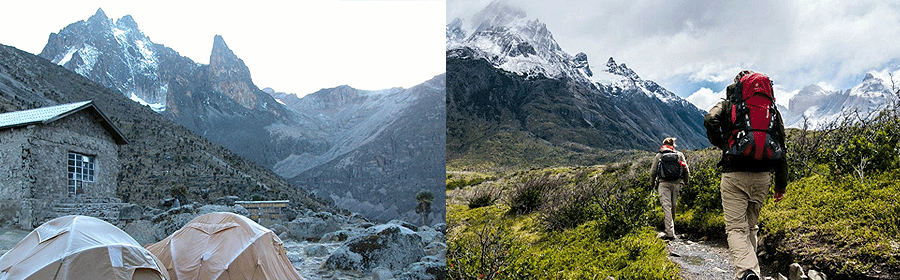
Mount Kenya National Park & Reserve Wildlife
Mount Kenya National Park, located around Africa’s second-highest peak, Mount Kenya, is a UNESCO World Heritage Site and a vital sanctuary for wildlife. Its diverse ecosystems range from dense montane forests to bamboo zones, high-altitude moorlands, and glaciers, supporting an array of animal species.
The park is home to iconic African wildlife, including elephants, buffalo, and leopards, which thrive in the lower forested regions. The rare and elusive bongo antelope, which inhabits the montane forests, is a notable conservation focus. Other herbivores, such as bushbucks, elands, and duikers, also roam the area.
Mount Kenya National Park is a birdwatcher’s paradise, with over 130 recorded bird species. Noteworthy are the endangered Abbott’s starling and the globally threatened Jackson’s francolin. The park’s higher altitudes provide a haven for unique bird species adapted to the alpine conditions, such as the scarlet-tufted malachite sunbird.
Reptiles and amphibians are also present, including endemic species like the Mount Kenya bush viper. The park’s unique flora, like giant lobelias and senecios, supports these diverse ecosystems.
The park’s biodiversity faces threats from human activities, such as poaching and habitat encroachment. However, ongoing conservation efforts, including anti-poaching initiatives and community engagement, aim to preserve this critical wildlife habitat. Mount Kenya National Park offers not just spectacular landscapes but also a rich tapestry of wildlife, making it a key ecological and cultural landmark in Kenya.
Mount Kenya National Park & Reserve Entrance fees
Mount Kenya National Park & Reserve Entrance Fee (1st January 2026 to 31st December 2026)
|
East African Citizen |
Kenyan Resident |
Non-Resident |
African Citizen |
||||
|
Adult |
Child/ |
Adult |
Child/ |
Adult |
Child/ |
Adult |
Child/ |
|
800 |
400 |
1,100 |
550 |
70 |
35 |
30 |
15 |
Notes
* Mountain Climbing – Mt Kenya packages include camping fees
* Special activity fees exclude park, reserve, or sanctuary conservation fees
* MT. Kenya “Low season” shall be from 1st October to 31st November and 1st March to 31st June
* MT. Kenya “High season” shall be from 1st July to 31st September, and 1st December to 29th February
* International (INTL) Visitors – Refers to visitors other than EAC and the rest of Africa with a valid passport
* Rest of Africa – Refers to nationals of African countries other than East African countries with a valid passport
* Kenyan Citizen – Refers to Kenyan nationals by birth and registration, with a valid Identification Card and a valid passport
* Resident -Refers to persons of other nationalities residing in Kenya with valid documentation from the Kenyan government
* Daily fee is a single entry fee valid for 24 hours of continuous uninterrupted stay inside a KWS national park/ reserve/ sanctuary
* Senior Citizen – Refers to Kenyan Citizens aged 75 years and above. Senior citizens shall access all KWS parks, reserves, and sanctuaries for free
* Children -Refers to persons from the age of five (5) years to seventeen years (17) years. Children below the age of five (5) years shall access all KWS parks, reserves, and sanctuaries for free
* East African Community (EAC) Citizen – Refers to nationals of East African countries of Kenya, Uganda, Tanzania, Rwanda, South Sudan, Burundi, and the Democratic Republic of Congo
(DRC)
* Conservation Fees – Refers to fees charged in national parks, reserves, and sanctuaries to conserve and protect natural resources, such as wildlife, habitats, and ecosystems
* Persons with Disabilities(PWD) – Refers to Kenyan Citizens who have a physical, sensory, mental, or other impairment, including any visual, hearing, learning, or physical incapability, which adversely impacts social, economic, or environmental participation. PWD access to all KWS parks and sanctuaries for free upon presentation of valid documentation from the National Council for Persons with Disabilities
* Student – Refers to an individual from a recognized secondary, government, or private college or university up to twenty-three (23) years old visiting the parks for purposes of learning about conservation through a documented and organized arrangement with that institution. It excludes students on personally arranged holidays. KWS will require a minimum of one (1) week’s notice to issue a written authorization for the student rate
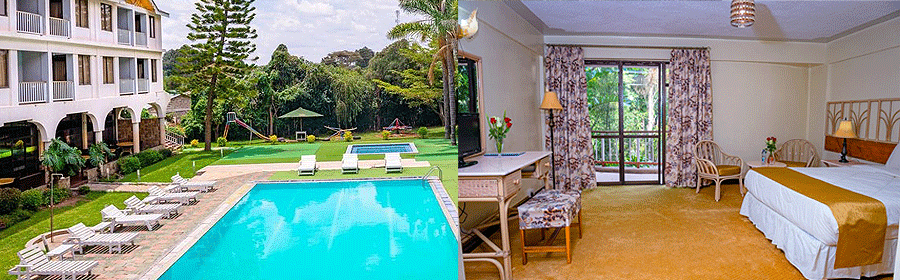
Mount Kenya National Park & Reserve Where To Stay | Accommodation
Sirimon Route | Mount Kenya National Park & Reserve Hiking Routes
Sirimon Route is nestled on the northwest flank of Mount Kenya and offers a gateway to the mountain’s majestic peaks through the town of Nanyuki. The journey from Sirimon Gate to Point Lenana spans roughly 53 kilometers, with the trailhead starting at an elevation of 2,440 meters and culminating at the peak’s lofty 4,985 meters (16354 ft).
This route is dotted with notable landmarks and campsites, such as Old Moses Camp at 3,300 meters (10826 ft), providing a respite for trekkers early in their ascent, and Shipton Camp at 4,200 meters (13779 ft), which serves as a strategic base for the final push to the summit.
The path unfolds a visual narrative of Mount Kenya’s rich tapestry, from the dense bamboo thickets at lower altitudes to the heather and moorland’s open expanses, culminating in the alpine zone’s stark beauty. Each step offers a new vista, the verdant valleys, or the imposing grandeur of Nelion and Batian, the mountain’s highest sentinels.
The Route is favored for its moderate difficulty and high success rate, attributed to its gradual incline that facilitates acclimatization, a critical factor for mountaineering endeavors. Trekkers are rewarded with the physical triumph of sumitting and the sensory experience of Mount Kenya’s diverse ecosystems.
However, the route’s length demands both time and endurance, potentially posing a challenge for those on a tight schedule. Preparation is key; adequate mountain gear, including insulated clothing and robust boots, is essential, along with camping supplies to weather the mountain’s capricious climate.
The Sirimon Route, with its clearly defined trails and designated campsites, offers a structured approach to the ascent of Mount Kenya. The presence of our professional guides ensures meticulous navigation and safety, providing climbers with a reliable and secure passage through the mountain’s diverse terrains.
Sirimon Route Hiking & Trekking Packages
Mount Kenya Climb 1 Day Hike Sirimon Route
Mount Kenya Climb 1 Day Hike Sirimon Route has the gentlest slope of all approach routes and is therefore perfect for beginners. It offers two distinctive day-trips. One you can drive to the park entrance, the hike starts from the Park entrance gate through the Gallery forest up to Old Moses Camp at an altitude of 3000 meters. This is a favorite spot for ornithologists and offers an opportunity to see the Grevy Zebras in the forest. The second day trip Sirimon Route starts with a drive to Old Moses Camp where the hike starts through the barrow towards Liki North Valley. Here the Moorland offers a gentle climb through fascinating vegetation with a chance of seeing the peaks.
2 Days 1 Night Mount Kenya Climbing Sirimon Route (Moorland)
2 Days 1 Night Mount Kenya Climbing Sirimon Route trip is for those that are interested in hiking through the forest and dry Moorland with a night spent at Liki North Valley. Day 2 contains an ascent of the Liki North Valley for a glimpse of the peaks and a descent to Old Moses for pick up. The Sirimon route features the most gradual ascent profile and best acclimatization options and passes through impressive Yellowwood forests in the lower reaches and features abundant wildlife.
Mount Kenya Climbing 3 Days 2 Nights Sirimon Route Hiking Safari
Mount Kenya Climbing 3 Days 2 Nights Sirimon Route Hiking Safari is an intensive, short-duration trek aimed at well-acclimatized and physically fit hikers. The objective is to ascend to Point Lenana, the third highest peak of Mount Kenya, in a minimal amount of time. The adventure begins with a drive from Nairobi to the base lodge on the western slopes of Mount Kenya. Here, participants undergo a briefing and equipment check before starting their hike at the Sirimon Park Gate, crossing the equator en route to Old Moses camp at 3,300 meters. This initial hike takes about 3-4 hours through diverse ecological zones, offering trekkers a chance to acclimate and enjoy the local wildlife. On the second day, an early breakfast precedes a 7-8 hour hike to Shipton's camp at 4,236 meters. The route traverses the Mackinder Valley, featuring unique alpine vegetation and leading to the camp situated beneath the glaciers and rocky summits. The summit attempt on the third day starts before dawn, with climbers tackling steep scree and rocky paths to reach Point Lenana at 4,985 meters for sunrise. Following the successful ascent, the descent begins back to Shipton’s camp for brunch, then down to Old Moses camp. The journey concludes with a transfer off the mountain.
Climbing Mount Kenya 4 Days 3 Nights Sirimon Route Trekking Package
Mount Kenya 4 Days 3 Nights Trekking Package via the Sirimon Route is a captivating journey to the central peaks of Mount Kenya, suitable for those with limited time but a strong desire to reach the third highest peak, Point Lenana. The Sirimon route starts 25 km from Nanyuki town and provides a direct path to the mountain’s northern side, including the peaks of Batian, Nelion, and Lenana. The trek begins with a drive from Nairobi to Nanyuki, followed by an ascent to Old Moses Camp, which serves as the first night’s accommodation. The route progresses through diverse ecosystems, starting in a dense forest and transitioning to heathland. Climbers then ascend to Shipton Camp, situated at 4200 meters in Mackinders Valley. The steep climb to Point Lenana starts before dawn in order to catch the sunrise at the summit. This non-technical ascent is achievable for any healthy individual. After reaching the peak, trekkers descend to Shipton Camp for breakfast, followed by a return to Old Moses Camp for dinner and overnight rest. The final day involves a descent through the rainforest to the Sirimon Gate and a drive back to Nairobi. The trek is supported by guides and porters, with budget-friendly accommodations and meals provided throughout the journey.
5 Days 4 Nights Climbing Mount Kenya/ Trekking Package (in Sirimon/ Out Chogoria)
5 Days Mount Kenya Climbing Sirimon Chogoria Routes package offers a unique and varied trekking experience, combining the Sirimon route with the Chogoria path. The journey begins in Nairobi, with a drive to Nanyuki. The climb starts at the Sirimon gate, leading through diverse forests to Old Moses Camp, where the first night is spent. The following day, hikers ascend to Shipton Camp, passing through the Likii North Valley and Mackinder's Valley. The trek to Shipton Camp takes 7-8 hours, culminating in a restful evening at 4200 meters. On the fourth day, an early start leads to Point Lenana, the trek's highest point, offering panoramic views that may include Mt. Kilimanjaro and the Indian Ocean. The descent brings trekkers to Mintos Hut for breakfast, followed by a hike to Road Head for lunch. The final day's walk to Chogoria is the conclusion of the trek, after which the climbers return to Nairobi. This package is ideal for those looking to experience the contrast of Mount Kenya's terrain and enjoy the mountain's beauty during the optimal seasons of January to March and July to October. Accommodations along the route offer basic amenities, ensuring a comfortable journey amidst the mountain's rugged environment.
6 Days 5 Nights Climbing Mount Kenya/ Trekking Package (in Sirimon/ Out Naro Moru)
7 Days 6 Nights Climbing Mount Kenya/ Trekking Package (in Sirimon/ Out Naro Moru)
Naro Moru Route | Mount Kenya National Park & Reserve Hiking Routes
Naro Moru Route, a favored path for climbers aiming to conquer Mount Kenya, begins at the Naro Moru Gate, located on the mountain’s western side. The starting point is at an elevation of 2,600 meters (8,530 feet). The route itself is approximately 40 kilometers (24.85 miles) in length and leads to Point Lenana, the trekking peak, which stands at an impressive 4,985 meters (16,355 feet) above sea level1.
The trail is known for its steep sections, including the challenging ‘vertical bog’, a marshy stretch that can be quite demanding. As climbers ascend, they pass through the Teleki Valley, offering views of the Tryndall and the Lewis Glacier.
The route includes overnight stops at Met Station Campsite, situated at 3,300 meters (10,827 feet), and Mackinder Campsite, located at 4,200 meters (13,780 feet), before the final summit attempt1.
The Naro Moru Route is renowned for its direct and rapid ascent, making it the quickest path to the peak. However, this also means that climbers have less time to acclimatize, which can increase the risk of altitude sickness. The route’s vertical bog section adds to the physical challenge.
To navigate this route successfully, climbers must be equipped with the right gear and supplies, and the assistance of a professional guide is highly recommended for safe passage.
Naro Moru Route Hiking & Trekking Packages
Mount Kenya Climb 1 Day Hike Naro Moru Route
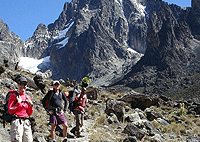
Mount Kenya Climb 1 Day Hike Naro Moru Route approaches the mountain from the west and is the quickest approach to the summit. These walks offer good opportunities for bird watching and for enjoying the different plant life. Moorland trips offer a drive up to Met Station from which one can hike to the Moorland. Here magnificent alpine plants can be enjoyed.
2 Days 1 Night Climbing Mount Kenya Naro Moru Route Trip
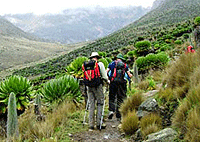
2 Days 1 Night Climbing Mount Kenya Naro Moru Route trip begins with a hike from the park entrance to the Met Station, where you spend the night. The next day you proceed to hike through the Moorland to the crest of Teleki Valley, for a splendid view of the park. Naro Moru route is the closest to Nairobi, with the Naro Moru Park Gate situated about 175 km's from Nairobi and 15 km's from Naro Moru town. The Naro Moru Route is on the west side of Mount Kenya.
2 Days 1 Night Mount Kenya Climbing Naro Moru Climbing (Point Lenana)
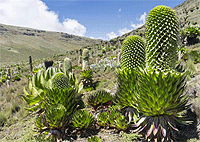
2 Days 1 Night Mount Kenya Climbing Naro Moru Climbing trip offers an opportunity to visitors with limited time to reach the third highest Peak of Mount Kenya (Point Lenana, 4985 meters). Hiking begins at the Met Station and goes up to Mackinders Camp (4200 m) to spend the night. A pre-dawn ascent of the Peak is done followed by a trek down to the Met Station for pick-up the same day. NB: only those physically fit and properly acclimatized to high altitudes should attempt this trip.
5 Days 4 Nights Climbing Mount Kenya/ Trekking Package (Naro Moru Route)
Chogoria Route | Mount Kenya National Park & Reserve Hiking Routes
Chogoria Route is often lauded as the most picturesque path to the summit of Mount Kenya, offering an immersive experience through diverse landscapes. The journey commences at the Chogoria Gate, with the trailhead situated at an elevation of 2,150 meters (7,054 feet). The route stretches over a distance of approximately 32 kilometers (20 miles), culminating at Point Lenana, the accessible peak at 4,985 meters (16,355 feet).
The ascent begins with a gentle walk through lush montane forests, home to a variety of wildlife, and gradually transitions into moorland, where the terrain opens up to reveal sweeping views of the highlands. Trekkers pass by the enchanting
Lake Ellis at 3,455 meters (11,335 feet), which serves as a serene campsite and offers opportunities for trout fishing. Further along, the path skirts the edge of the dramatic Gorges Valley, showcasing sheer cliffs and the spectacular Nithi Falls.
The route then leads to Mintos Camp at 4,200 meters (13,780 feet), positioned near the Hall Tarns, providing a vantage point for the awe-inspiring Temple and Lake Michaelson below. The final push to the summit traverses the alpine zone, where the landscape is dominated by rock, ice, and sparse vegetation, offering climbers a stark contrast to the lush valleys below.
The Chogoria Route’s gradual incline and scenic diversity make it an excellent choice for climbers who wish to acclimatize properly and enjoy the mountain’s natural beauty. The route’s length allows for a slower ascent, which can increase the success rate for reaching the summit.
However, its extended duration may not suit those with limited time, and the descent can be quite long if returning via the same path. To navigate this route, climbers must be equipped with appropriate gear for cold and wet conditions, and the guidance of a professional guide is highly recommended for a safe and enjoyable trek.
Chogoria Route Hiking & Trekking Packages
Mount Kenya Climb 1 Day Hike Chogoria Route
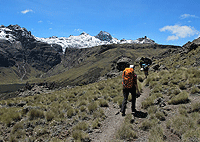
Mount Kenya Climb 1 Day Hike Chogoria Route approaches the mountain on the Eastern side. This route contains luxurious vegetation combined with the fact that the final eruption of Mount Kenya occurred on this side of the mountain. This makes it one of the most scenic parts of the entire area. The day starts by driving up to the park entrance and hiking to Mugi Hill, Lake Ellis and the Gates (Road Head) to experience the magnificent sceneries on the Eastern side of the mountain. After that we descend to the park entrance for pick up.
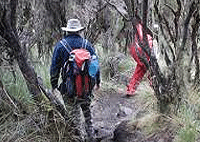
2 Days 1 Night Mount Kenya Climbing Chogoria Route
Mount Kenya Climb 1 Day Hike Chogoria Route approaches the mountain on the Eastern side. This route contains luxurious vegetation combined with the fact that the final eruption of Mount Kenya occurred on this side of the mountain. This makes it one of the most scenic parts of the entire area. The day starts by driving up to the park entrance and hiking to Mugi Hill, Lake Ellis and the Gates (Road Head) to experience the magnificent sceneries on the Eastern side of the mountain. After that we descend to the park entrance for pick up.
5 Days 4 Nights Climbing Mount Kenya/ Trekking Package (Chogoria Route)
Booking & Reservations Mount Kenya National Park & Reserve Contact
Mobile: +254-721-242-711
WhatsApp: +254-721-242-711
Reservations: +254 718-179-967
Email: [email protected]
Website: https://africanspicesafaris.com