Soysambu Conservancy (borders Lake Elmenteita & Lake Nakuru National Park)
Soysambu Conservancy is a vast, 48,000-acre (190 km²) non-profit conservation area located in Kenya’s Central Rift Valley. Nestled between Lake Nakuru National Park to the west and the Elementeita Badlands to the south, Soysambu includes a significant portion of Lake Elementeita. As an integral part of the Kenya Lakes System, it is designated as a UNESCO World Heritage Site, a Ramsar Convention Wetland Site, and a BirdLife International Important Bird Area (IBA).
The conservancy serves as a vital ecological haven, representing a successful model where human activity and traditional livestock operations coexist in harmony with nature.
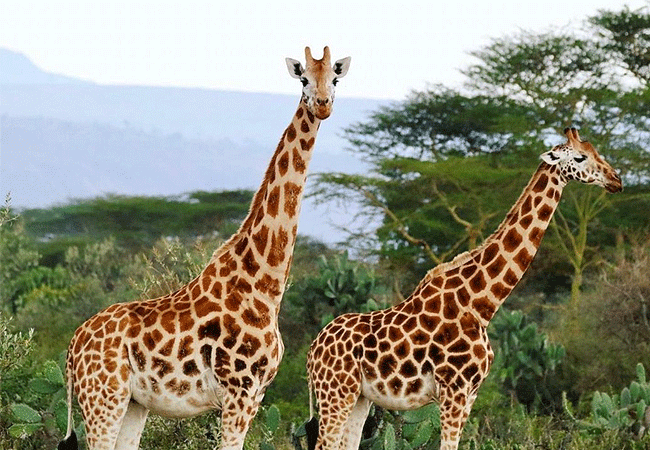
Home to over 10,000 mammals representing more than 50 species, Soysambu hosts a highly significant and successful population of 198 endangered Nubian (Rothschild’s) Giraffes. The landscape also supports lions, leopards, Cape buffalo, elands, hyenas, and colobus monkeys.
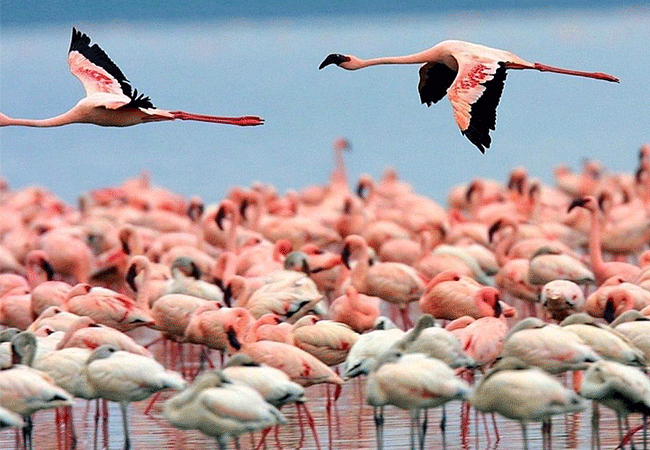
Furthermore, it is an extraordinary birding destination with over 450 recorded species. It acts as the only breeding ground in East Africa for Great White and Pink-backed Pelicans, and supports up to 28 percent of the world’s Lesser Flamingos along the African-Eurasian migratory flyway.
With a select few safari properties operating within its borders, such as the aristocratic Lake Elementeita Serena Camp, the rustic Mbweha Camp, and various private and public campsites, the conservancy ensures an exclusive safari experience. Visitors can enjoy day game drives, guided nature walks, horseback riding, unique camel treks, and adventurous motorcycle safaris with Dusty Helmets. Notably, it is also one of the few conservancies in Kenya that offers night game drives.
Soysambu is more than a wildlife refuge; it is a dramatic landscape bearing the scars of ancient volcanic upheaval, dotted with calderas, lava flows, and ancient obsidian tools. By securing its rich biodiversity, the conservancy provides a source of income for the local economy, maintaining a haven for future generations of wildlife and people alike.
How to Get There
By Road
✓ Distance: Approximately 130 km northwest of Nairobi and 25 km southeast of Nakuru
✓ Travel Time: 2.5–3 hours via the well-maintained Nairobi-Nakuru Highway (A104)
✓ Scenery: The journey offers breathtaking, panoramic views of the Great Rift Valley escarpment, Mount Longonot, and the shimmering rift lakes as you approach the conservancy
✓ Route: From Nairobi, drive northwest past Naivasha and Gilgil towards Lake Elementeita. To reach the Main Gate, turn off the highway onto Mbaruk Road and continue for about 10 kilometers. Public transport (matatus) and taxis are also readily available from Nakuru town
By Air
✓ Access: Private charter flights and helicopter landings can be easily arranged to land directly at any of these airstrips.
✓ Travel Time: A quick and incredibly scenic 30-minute flight from Nairobi (Wilson Airport or Jomo Kenyatta International Airport) over the Great Rift Valley.
✓ Airstrips: Soysambu operates three distinct private airstrips to conveniently serve its vast area: Kasambara Airstrip (located near the main gate and Lake Elmenteita), Head Office Airstrip (centrally located), and Congreve Airstrip (situated near Mbweha Camp and the Lake Nakuru National Park border)
History
The history of the estate traces back to 1906, when it was founded by Hugh Cholmondeley, 3rd Baron Delamere. For over a century, the Soysambu ranch has been owned and managed by the Delamere family, with operations including a large beef herd, a hay-baling operation, and an agroforestry enterprise.
Having previously found the cost of preserving wildlife exorbitant on its own, the owners entered into a partnership to officially form the Soysambu Conservancy as a non-profit organization in 2007. This was established to conserve the ranch’s flora, fauna, and scenery while promoting public access, best management practices, and a new sustainable business model.
Over the decades, the historic estate has hosted several notable visitors, including Winston Churchill, who picnicked by Lake Elementeita in 1908 after some pigsticking; Evelyn Waugh in the 1930s; Jomo Kenyatta in 1978; and Prince Amyn Aga Khan in 2001. It’s stunning, dramatic landscapes, even caught the eye of Hollywood, with part of the movie Tomb Raider 3 being filmed on the northern shores of the lake.
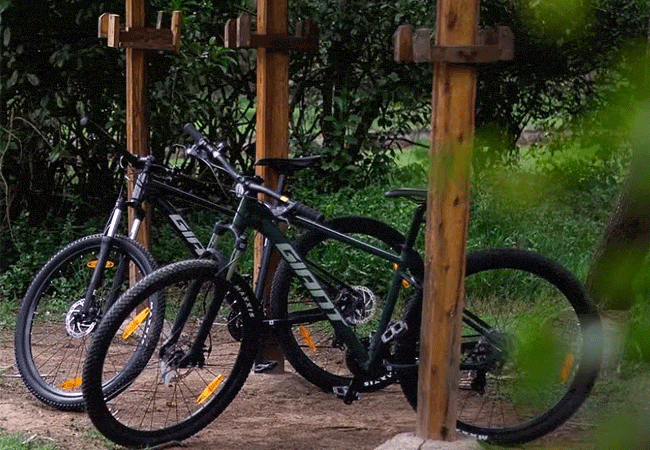
Activities that can be done in Soysambu Conservancy
Wildlife Viewing Experiences
✓ Morning & Afternoon Game Drives: Enjoy spectacular daytime safaris across Soysambu’s diverse landscapes, from golden-barked acacia woodlands to the alkaline shores of Lake Elmenteita. Drives offer incredible encounters with Burchell’s zebra, Cape buffalo, eland, waterbuck, Thompson’s and Grant’s gazelles, and the endangered Rothschild’s giraffe
You may also spot predators like lions, leopards, and spotted hyenas, along with troops of colobus and vervet monkeys. The drives showcase not just wildlife but also the geologic wonders of the Great Rift Valley, ancient lava flows, and the imposing Sleeping Warrior crater
✓ Night Game Drives: Soysambu is one of the few conservancies in Kenya that offers the truly unique experience of night game drives. Guided by experienced rangers using red-filtered spotlights, the conservancy comes alive after dark. This is your chance to spot elusive nocturnal species such as the aardvark, bush baby, caracal, genet cat, striped hyena, bat-eared fox, honey badger, white-tailed mongoose, and various owls
Nature-Based Guided Walks & Birding
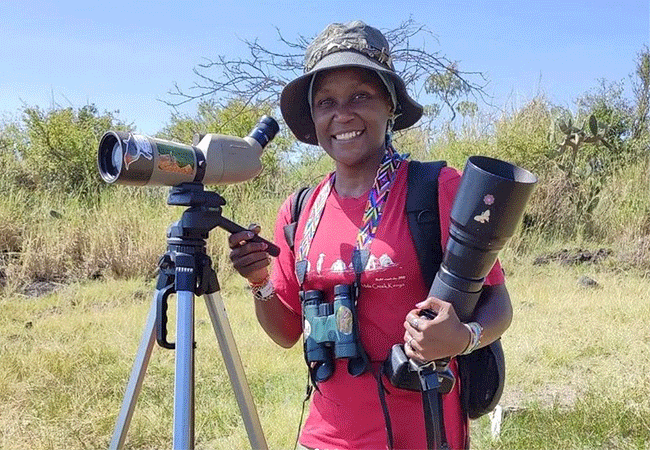
✓ Guided Nature Walks: Step out of the vehicle for an intimate guided nature walk to experience the delicate ecosystem on foot. Accompanied by experienced guides, you can explore the flora and fauna up close, feeling the history of a landscape where distant ancestors once roamed, leaving behind ancient obsidian tools and earthworks.
✓ Birdwatching: A premier destination for bird enthusiasts along the African-Eurasian flyway, Soysambu boasts over 450 recorded species and is a globally recognized Important Bird Area. Lake Elmenteita is the only breeding ground in East Africa for the Great White and Pink-backed Pelicans. Visitors can watch vast flocks of Lesser and Greater Flamingos feeding on spirulina algae, while kingfishers, cape teals, yellow-billed storks, and birds of prey fill the skies and shores
Immersive Conservation Experiences
✓ Rothschild’s Giraffe Encounters: Soysambu is home to a highly successful Endangered Species Recovery Program. With a thriving population of 198 endangered Nubian (Rothschild’s) Giraffes, guests have the unique opportunity to observe and learn about the intensive conservation efforts protecting these majestic animals in their natural habitat
✓ Eco-Project Insights: Learn about Soysambu’s innovative approach to coexisting with nature. Discover how the conservancy integrates a working livestock ranch with wildlife conservation by using mobile predator-proof bomas. Visitors can see firsthand how this balanced model protects the landscape, optimizes grazing resources, and minimizes human-wildlife conflict
Unique Bush Experiences
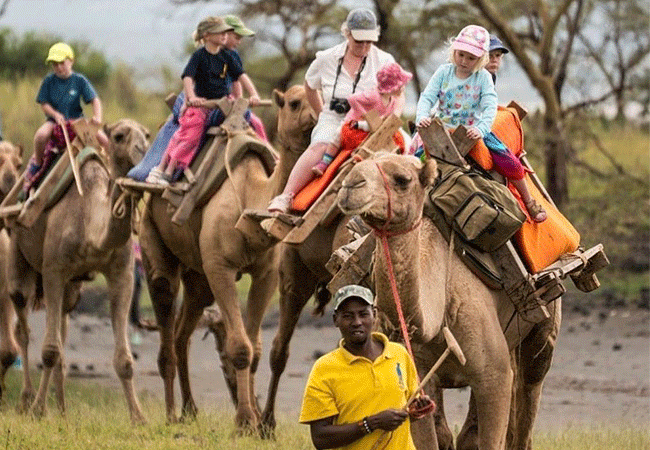
✓ Camel Treks & Fly Camping: Experience the romance of the wild with BOBONG and Ol Maisor Camel Treks. Options range from short scenic camel rides to overnight fly camping and fully camel-assisted walking safaris
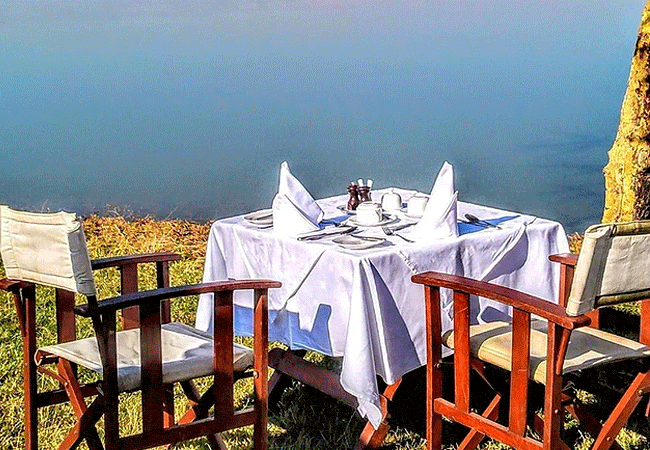
✓ Sundowners & Bush Meals: Enhance your safari with a bush breakfast, a scenic picnic lunch, or an unforgettable sundowner. Relax with a drink in hand as the sun sets over the caldera-dotted savannah, soaking in the profound peace of the Great Rift Valley
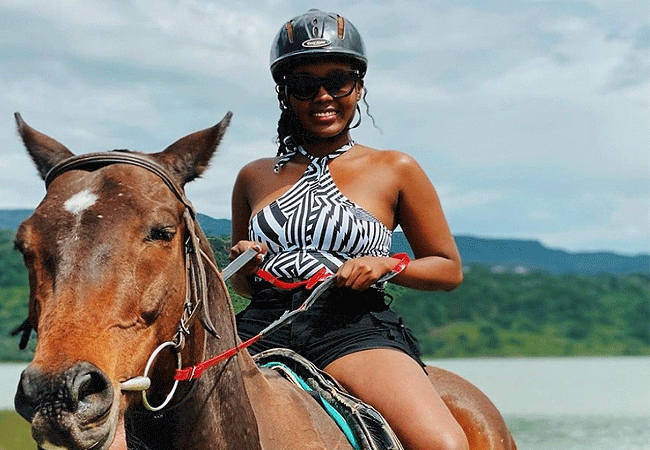
✓ Horseback Safaris: Enjoy a leisurely horseback ride tailored to any ability level. Accompanied by experienced rider guides, these safaris offer a tranquil, engine-free way to absorb the stunning views of Lake Elmenteita and the Sleeping Warrior Crater while riding alongside grazing plains game
✓ Motorcycle Safaris: For the adventurous, experience a world-class enduro motorbike safari. Hosted by “Dusty Helmets,” these guided rides take you along scenic routes far removed from the typical tourist circuit, blending close encounters with wildlife with cultural interactions among diverse Kenyan tribes
Wildlife in Soysambu Conservancy
Wildlife & Biodiversity
Soysambu Conservancy is a critical conservation area within Kenya’s Central Rift Valley, forming a vital wildlife corridor bordered by Lake Nakuru National Park to the west and the Elementeita Badlands to the south. Covering 48,000 acres (190 km²) of ecologically diverse wilderness, Soysambu includes a significant portion of Lake Elementeita and is an integral part of the UNESCO World Heritage Site “Kenya Lake System in the Great Rift Valley,” a Ramsar Convention Wetlands Site, and a Bird Life International Important Bird and Biodiversity Area (IBA).
The conservancy’s stunning landscapes bearing the scars of ancient volcanic upheaval with calderas, lava flows, open savannahs, golden-barked acacia woodlands, and alkaline lake shores—provide natural habitats for a wide variety of wildlife. These habitats are uniquely interwoven with a working beef cattle and hay operation, demonstrating a highly successful model of coexistence between sustainable livestock management and wildlife conservation.
Hosting over 10,000 mammals representing more than 50 species, Soysambu plays a crucial role in the survival of endangered species and migratory birds. Its protected borders provide a haven where wildlife thrives in an incredibly rich biodiversity hotspot
Wildlife at Soysambu Conservancy
Large Mammals
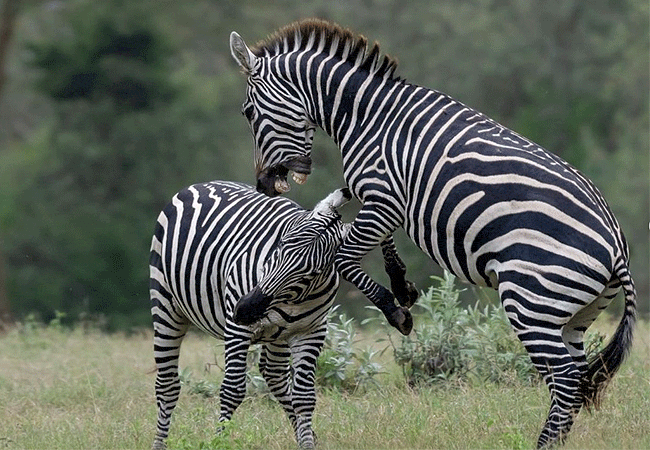
✓ Burchell’s Zebra – Common grazers that roam the plains in large numbers.
✓ Hippopotamus – Found resting and feeding near the freshwater rivers, troughs, and lake shores.
✓ Waterbuck, Reedbuck, and Impala – Often found browsing near riparian areas and acacia woodlands.
✓ Cape Buffalo and Eland – Large herbivores frequently seen grazing across the conservancy’s expansive savannahs.
✓ Thompson’s and Grant’s Gazelles – Graceful antelopes frequently spotted grazing throughout the diverse landscape.
✓ Steinbok and Klipspringer – Smaller antelopes adapted to the varied terrain, with klipspringers favoring the rocky, volcanic outcrops.
✓ Rothschild’s (Nubian) Giraffe – Home to a highly significant and carefully protected population of 198 endangered giraffes, representing a highly successful Endangered Species Recovery Program.
Big Cats & Predators
✓ Jackals: Frequently seen roaming the plains and woodland edges
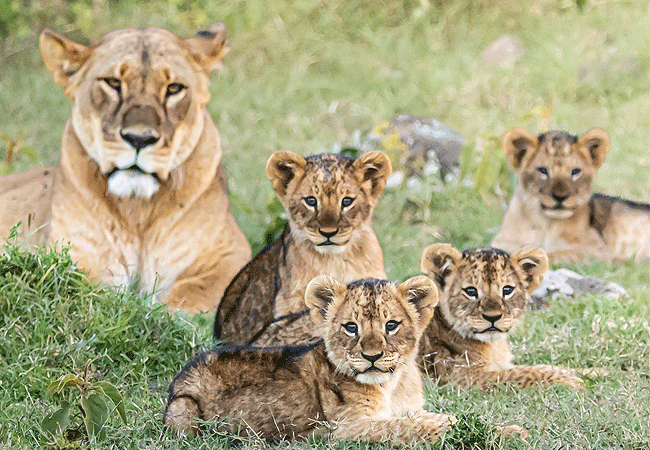
✓ Lions: A small population of resident lions patrols the conservancy and is frequently spotted by guests
✓ Leopards: Elusive but ever-present, utilizing the acacia trees and woodland cover to camouflage and hunt
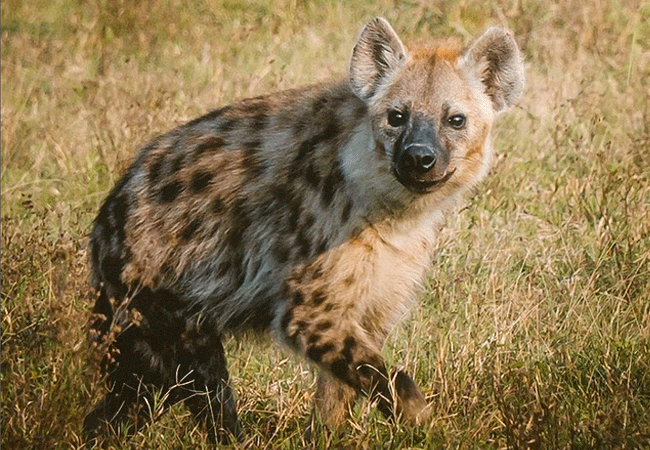
✓ Spotted & Striped Hyenas: Both species are present, with the striped hyena being a special highlight during night game drives
✓ Nocturnal Predators: The conservancy is a haven for rare nighttime predators, including the caracal, aardwolf, genet cat, bat-eared fox, honey badger, white-tailed mongoose, and zorilla, all commonly sighted during guided night safaris
Other Mammals
✓ Warthogs: Commonly seen foraging in the savannah and woodlands
✓ Nocturnal Mammals: Aardvarks, bush babies, bush pigs, porcupines, and spring hares add exceptional charm and excitement to night drives
✓ Primates: Baboons, vervet monkeys, and beautiful black-and-white colobus monkeys are often encountered in the acacia groves and forest canopies
Birdlife
✓ Pelicans: The lake’s rocky islands provide the only breeding ground in East Africa for Great White and Pink-backed Pelicans
✓ Raptors & Scavengers: Vultures, eagles, kites, goshawks, sparrow-hawks, owls, and secretary birds trawl the skies and plains
✓ Total Recorded Species: Over 450 bird species have been documented, making Soysambu a globally recognized birding haven
✓ Flamingos: Lake Elmenteita supports up to 28% of the world’s Lesser Flamingos, along with Greater Flamingos, which congregate in the hundreds of thousands to feed on blue-green spirulina algae
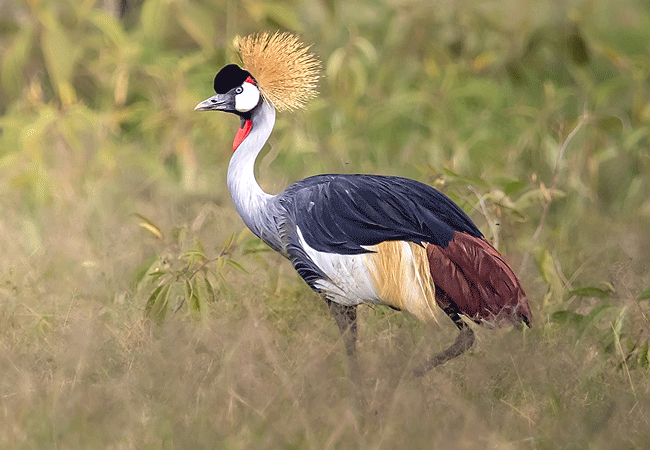
✓ Colorful & Ground Birds: Kingfishers, bee-eaters, hoopoes, woodpeckers, rollers, ground hornbills, kori-bustards, yellow-necks, and francolins add brilliant color and ground antics to any safari experience
✓ Migratory & Water Birds: Over 100 migratory species utilize the African-Eurasian flyway here. Highlights include the Black-Necked Grebe, African Spoonbill, Pied Avocet, Little Grebe, Yellow-Billed Stork, Black-Winged Stilt, Grey-Headed Gull, Cape Teals, Cormorants, and Gull-Billed Terns
Accommodation in Soysambu Conservancy
Accommodation
Soysambu Conservancy features outstanding lodges and camps that combine luxury, authentic wilderness immersion, and rich heritage. Each property offers a distinctive safari experience framed by the dramatic volcanic landscapes of the Great Rift Valley and the bird-filled shores of Lake Elementaita.
Lake Elementaita Serena Camp
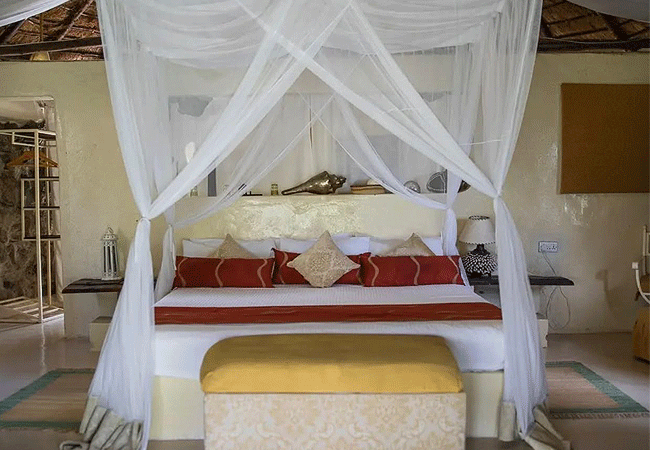
Lake Elementaita Serena Camp is an exclusive, up-market camp located directly along the sapphire-blue shores of Lake Elementaita. Designed to blend aristocratic elegance with the modern comforts of a five-star facility, the camp seamlessly echoes the rich history and culture for which Soysambu is famous.
The camp offers 25 evocative tents, providing an intimate and luxurious retreat just steps away from where hundreds of thousands of flamingos and pelicans congregate.
Accommodation Options:
✓ Standard Tents (24 units)
✓ The Flamingo Suite (1 unit featuring a sitting room, bedroom, bathroom, Jacuzzi bath, shower, and a private balcony)
Guests can enjoy high-quality cuisine and exclusive bush dining experiences set within the lodge’s pristine surroundings.
Activities include easy, undisturbed game drives in Soysambu, excursions on Lake Elementaita, camel rides, horse riding, archery, nature walks, motorcycle safaris, hiking the Sleeping Warrior hills, quad biking, and visits to the nearby Kariandusi Museum or Kikopey Springs.
Mbweha Camp
Mbweha Camp is a luxury safari camp tucked away in the spectacular Great Rift Valley on the private 6,400-acre Congreve Conservancy. Nestled against the southern border of Lake Nakuru National Park, the camp affords beautiful, sweeping views over the Eburru and Mau ranges.
Named after the Kiswahili word for jackal, as the area hosts all three East African species (Side-striped, Silver-backed, and Golden), the camp is surrounded by euphorbia candelabra, yellow-barked acacia, and indigenous trees.
Accommodation Options:
✓ Rustic Lava-stone Cottages (Featuring thatched roofs and rustic charm)
Guests can relax and chat before a delicious meal in the camp’s inviting sunken lounge, which features a warm center fireplace.
Activities include taking advantage of seamless access to both Soysambu’s expansive plains and Lake Nakuru National Park for game drives, birdwatching, and spotting the conservancy’s diverse wildlife.
Punda Milias Nakuru Camp
Punda Milias Nakuru Camp is nestled within 10 acres of indigenous African bush adjacent to Soysambu Conservancy. This camp offers a versatile range of accommodations, making it a perfect base for families, budget travelers, and groups seeking a balance between outdoor camping and indoor comfort.
The camp features everything from luxury cottages with outdoor jacuzzis to spacious grounds where guests are welcome to pitch their own tents under the stars.
Accommodation Options:
✓ Private Camping Pitches
✓ Buffalo Cottage (Self-contained 2-room family unit)
✓ Family Tents (Features a double bed and a bunk bed)
✓ Twiga Cottage (Self-catering with lounge and kitchen)
✓ Safari Tents (En-suite canvas tents with open-roof hot showers)
✓ Bandas & Dorm Tents (Spacious interiors with shared hot-water washrooms)
✓ Punda Milias House (Fully furnished family/group house with fireplace and balcony)
Guests can unwind at the outdoor pool and pool terrace, or enjoy a wide selection of drinks at the well-stocked bar. For those in the cottages, fully equipped modern kitchens offer convenient self-catering options.
Soysambu Campsites
For travelers and adventurers seeking a highly authentic, under-the-stars experience, Soysambu offers a variety of public and private campsites strategically located across its beautiful terrain.
✓ Sugonoi Campsite: Easily accessible from the main gate, nestled amongst acacia trees near the north shore. Amenities include a bush toilet, shower, washing water, and firewood
✓ Waterbuck Campsite: Located in the forest about a kilometer from the lake’s north shore. This public campsite is ideal for student groups, volunteers, and researchers, featuring two long-drop toilets and showers
✓ Monkey Bridge Campsite: A shared campsite located next to the Mereronyi River in a spacious acacia grove north of the lake. Features a water tap, bush toilets, and two showers (one with hot water capabilities)
✓ Simon’s Campsite: A private campsite facing south with a commanding view of the Sleeping Warrior crater and Mt. Eburru. Named after renowned wildlife artist Simon Combes, it overlooks the lake among acacia and candelabra trees
✓ Pelican Campsite: A small, private campsite on the eastern lakeshore. Known for its variety of waterbirds, it is also frequently visited by resident lions and leopards. Amenities include a bush toilet, a shower, water for washing, and firewood
✓ Flamingo Campsite: Located near the “salt pan,” featuring a great view of the Sleeping Warrior volcano. It sits by a secluded cove that usually hosts a resident population of flamingos. Provided with a bush toilet, shower, washing water, and firewood
Booking & Reservations Soysambu Conservancy Contact
Mobile: + 254-721-242-711
WhatsApp: +254-721-242-711
Reservations: +254 718-179-967
Email: [email protected]
Website: https://africanspicesafaris.com