
Shimba Hills National Reserve | Kwale County | Southeastern Kenya
Shimba Hills National Reserve is a pristine wonderland of rolling meadows, ancient forests, and dramatic coastal scenery situated just 33 km southwest of Mombasa near Kwale Town. Covering 321 sq km and resting at an altitude of 120 to 450 metres above sea level, it is one of East Africa’s most important coastal ecosystems, home to one of the largest remaining coastal rainforests on the continent, second only to the Arabuko Sokoke Forest.
The reserve’s forests are extraordinary in their biodiversity, harbouring over 1,100 plant species, of which 280 are endemic to the ecosystem, and 19 are endangered tree species. Two of Kenya’s most beautiful orchids bloom within the park: Eulophia livingstoniana and cacullata in April, and Eulophia wakefieldii in July and August. The surrounding Mkongani and Mwaluganje forests further extend this ecological richness, creating a vast coastal forest complex of regional significance.
Shimba Hills is most famous for harbouring Kenya’s last breeding herd of sable antelope, a magnificent and increasingly rare species with scimitar-shaped horns and striking black coats that even captivated Ernest Hemingway, who wrote about them in The Green Hills of Africa.
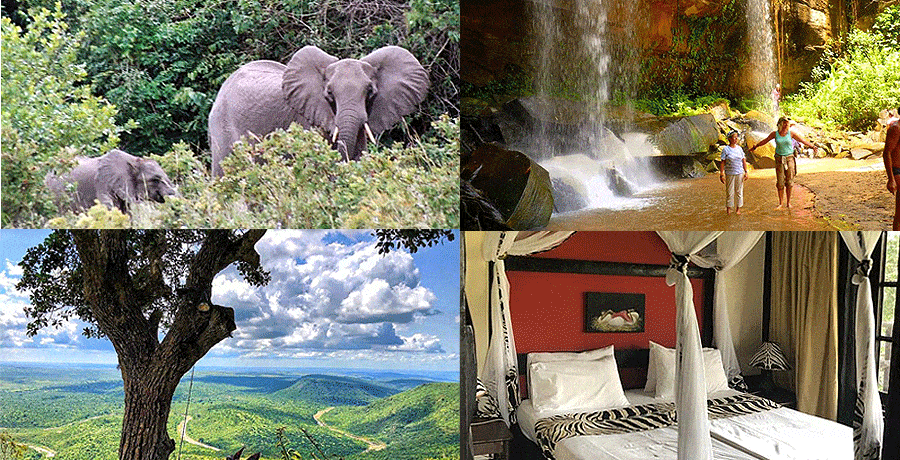
The reserve is also home to over 600 elephants, leopards, and a wealth of coastal endemic bird species, making it one of Kenya’s most distinctive and rewarding safari destinations and one of the most accessible from the coast.
Location & Accessibility
Shimba Hills National Reserve is located 33 km southwest of Mombasa in Kwale County — an easy drive from the coast, making it ideal for day trips or overnight safaris combined with a beach holiday.
By Road:
✓ From Nairobi: Drive to Mombasa (approximately 300 miles, 8 hours), then continue to the reserve as above
✓ Accessibility: Well-suited for day trips or overnight stays directly from Mombasa and the South Coast beach resorts
✓ From Mombasa: Drive via the Likoni-Ukunda Road (A14) onto the C106 road to the main gate approximately 30 miles, taking around 2 hours
By Air:
✓ Airstrip: The reserve has its own small airstrip for charter flights
✓ Flight: Nairobi Wilson Airport to Mombasa Moi International Airport, just over 1 hour
✓ Ground Transfer: From Mombasa airport, road transfer via Likoni-Ukunda Road (A14) onto the C106 to the main gate — approximately 2 hours
Park Gates:
✓ Main Gate: Primary entrance for all visitors
✓ Secondary Gates: Kivumoni Gate, Kidongo Gate, and Shimba Gate
Vegetation & Ecosystem
Shimba Hills supports one of Kenya’s most ecologically unique and biodiverse habitats, a rare combination of coastal rainforest, grassland, and riverine forest found nowhere else in the country in this form.
✓ Coastal Escarpments: Small escarpments bordering the rainforest areas, adding dramatic topography to the reserve’s landscape
✓ Grasslands & Woodlands: Undulating hills patched with open grasslands, woodland clumps, and coastal bushland, the primary habitat for sable antelope and buffalo
✓ Riverine Forest: Ribbons of riverine forest running alongside the water, springs, and rivers of the hills, supporting elephants, colobus monkeys, and abundant birdlife
✓ Coastal Rainforest: One of the last remaining coastal rainforests in East Africa; over 1,100 plant species recorded, including 280 endemics and 19 endangered tree species
✓ Elephant Corridor: A fenced corridor connects Shimba Hills to the Mwaluganje Forest Elephant Sanctuary, allowing the free movement of elephants between the two areas
✓ Endemic Orchids: Two of Kenya’s most beautiful orchid species bloom within the park: Eulophia livingstoniana and cacullata (April) and Eulophia wakefieldii (July–August)
✓ Surrounding Forests: Mkongani Forest and Mwaluganje Forest extend the ecological corridor beyond the reserve boundaries, adding biodiversity and providing critical elephant habitat
Wildlife
Shimba Hills offers a unique wildlife experience unlike that of most Kenyan parks; many species are encountered in a forested setting rather than on open savannah, making sightings feel intimate and unexpected. Late afternoon is the optimal time for game viewing, as cooler temperatures draw animals out of the shade to seek water.
The Sable Antelope, Kenya’s Last Breeding Herd:
Shimba Hills National Reserve is home to the last breeding herd of indigenous sable antelope in Kenya, the reserve’s most iconic and irreplaceable conservation treasure.
✓ Best Viewing: Early morning or late afternoon on the central grasslands at Buffalo Ridge and around the old airstrip near Longo Forest
✓ Conservation: Historically hunted to near-extinction in Kenya for their spectacular horns, the Shimba Hills represent their last stronghold in the country
✓ Appearance: Among Kenya’s largest antelopes, with striking black coats, white facial markings, and magnificent, long, scimitar-shaped horns — widely considered the most beautiful of Africa’s large antelopes
Elephants:
✓ Population: Over 600 elephants inhabit the reserve, a significant population for a park of this size
✓ Elephant Corridor: A fenced corridor links the reserve to the Mwaluganje Forest Elephant Sanctuary, extending the elephants’ range
✓ Habitat: Often seen in the forested areas around Elephant Hill and Longo Forest, a rare opportunity to observe elephants in a tropical forest setting
Other Mammals:
✓ Antelopes & Herbivores: Buffalo, waterbuck, bushbuck, common duiker, blue duiker, suni, warthog, and bush pig
✓ Primates: Sykes’ monkey, vervet monkey, and black-and-white colobus monkey are all commonly seen in the forest canopy
✓ Predators: Leopards are present and often heard at night, though rarely seen; hyenas and serval cats also inhabit the reserve
✓ Reintroduced Species: Masai giraffe and ostrich have been successfully reintroduced to the reserve; the rare roan antelope, a relative of the sable, is also present
✓ Other Species: Olive baboon, red shrew, and a variety of smaller forest mammals
Birdlife:
With 111 recorded species, 22 of which are coastal endemics, Shimba Hills is one of Kenya’s premier coastal birding destinations. Birdwatching is especially rewarding during the spring migration when additional species pass through.
✓ Grassland Birds: Croaking cisticola and various open-country species
✓ Best Viewing: Guided forest walks offer the most rewarding birdwatching experience
✓ Forest Specialities: Mottled swift, trumpeter hornbill, spotted ground thrush, and Zanzibar red bishop
✓ Coastal Endemics: Fischer’s turaco, green barbet, golden palm weaver, Narina trogon, and red-necked spurfowl
✓ Migration: Spring migration brings additional species to the reserve, making it the best birding period of the year
Key Landmarks & Attractions
✓ Elephant Hill: A rewarding trekking destination with panoramic reserve views; excellent birdwatching along the trail
✓ Buffalo Ridge: The prime location for spotting sable antelope on the central grasslands, particularly in the early morning and late afternoon
✓ Mwaluganje Elephant Sanctuary: Connected to the reserve via a fenced elephant corridor; a dedicated elephant conservation area within the broader forest complex
✓ Giriama Point: One of the best viewpoints in the reserve on the eastern side of the park, offering excellent wildlife watching as animals move toward the rivers to drink, with Indian Ocean views beyond
✓ Sheldrick Waterfalls: A spectacular 25-metre waterfall cascading into a natural pool, one of the reserve’s most visited natural attractions; visitors can swim in the pool at the base; accessible via a 2-hour round-trip trek
✓ Pengo Hill (450 m): The reserve’s highest point, offering magnificent panoramic views of the surrounding landscape, the Tsavo plains, and on clear days, Mount Kilimanjaro and ocean views stretching as far as Chale Island
Activities
Game Drives:
✓ Night Drives: Guided night drives available, excellent for leopard, hyena, and nocturnal species
✓ Best Time: Late afternoon, when cooler temperatures bring animals out of the forest shade to seek water; night drives offer chances of leopard and hyena sightings
✓ Experience: Explore the reserve by safari vehicle through grasslands, forest edges, and riverine areas for encounters with sable antelope, elephants, buffalo, and forest mammals
Guided Forest Walks:
✓ Features: Walks can include visits to Sheldrick Waterfalls and forest viewpoints
✓ Wildlife: Excellent chances of encountering elephants, colobus monkeys, and a variety of forest birds, including Fischer’s turaco and trumpeter hornbill
✓ Experience: The best way to experience Shimba’s unique coastal rainforest is guided by KWS rangers through ancient trees, endemic plants, and diverse wildlife
Trekking:
✓ Terrain: Varied terrain ranging from gentle walks to more challenging forest hikes; trails cater to all fitness levels
✓ Elephant Hill Trail: A rewarding hike offering panoramic views over the reserve and the Indian Ocean; outstanding birdwatching en route
✓ Sheldrick Falls Trail: The most popular trekking route is a 2-hour round-trip hike to the 25-metre waterfall, with wildlife sightings along the way and a refreshing swim at the base
Bird Watching:
✓ Best Season: Spring migration period for maximum species diversity
✓ Best Method: On foot during guided forest walks for the most rewarding sightings
✓ Species: 111 recorded species, including 22 coastal endemics, Fischer’s turaco, green barbet, Narina trogon, and golden palm weaver, among the highlights
Picnicking:
✓ Sites: Designated picnic sites within the reserve for families and groups to enjoy meals in a natural setting
Find our Shimba Hills safaris from Mombasa below:
1 Day Shimba Hills National Reserve Safari from Mombasa | Click Here
2 Days 1 Night Shimba Hills National Reserve Safari from Mombasa | Click Here
3 Days 2 Nights Shimba Hills National Reserve Safari from Mombasa | Click Here
Climate & Best Time to Visit
✓ April to May: Long rains; lush vegetation, but trails can be wet and muddy
✓ January to March: Hot and dry; good game viewing and trekking conditions
✓ October to November: Short rains; still visitable but some trails may be affected
✓ June to October: Cooler and drier; excellent for wildlife viewing and forest walks
✓ Best Time to Visit: The dry seasons offer the most comfortable conditions and reliable wildlife viewing
✓ Spring Migration: Additional bird species are present during the migration period, making it an excellent time for birdwatching
✓ Game Viewing Tip: Late afternoon is the best time for game drives year-round, as animals emerge from forest shade to seek water in cooler temperatures
Accommodation
Inside the Reserve:
✓ Public Campsite: A forested camping area with excellent views over the surrounding forest; pit latrine available; no water on site
✓ Special Campsite: A private, exclusive-use campsite on a broad grassy area with magnificent views; water, latrine, and seating area available; must be booked in advance
✓ Shimba Hills Lodge: Located 1.6 km from the main entrance gate; unique treehouse-style rooms built above a waterhole that regularly attracts wildlife; guests can observe animals from the comfort of their rooms in a forest setting
Outside the Reserve:
✓ Shimba Hills Green Lodge: Approximately 19 km from the main gate; eco-friendly lodge emphasising sustainable tourism and environmental conservation; a serene, green retreat
✓ Baobab Resort Diani: Approximately 50 km from the reserve along the Mombasa coastline; coastal resort with ocean views, swimming pools, restaurants, and beach access ideal for combining a safari with a beach holiday
Shimba Hills National Reserve Entrance Fees
Shimba Hills National Reserve Entrance Fees (1st January 2026 to 31st December 2026)
|
East African Citizen |
Kenyan Resident |
Non-Resident |
African Citizen |
||||
|
Adult |
Child/ |
Adult |
Child/ |
Adult |
Child/ |
Adult |
Child/ |
|
500 |
250 |
675 |
350 |
50 |
25 |
20 |
10 |
Notes;
* KENYAN (KE) CITIZEN– refers to Kenyan nationals by birth and registration, with a valid Identification Card
* REST OF AFRICA – refers to nationals of African countries other than East African countries with a valid passport
* RESIDENT – refers to persons of other nationalities residing in Kenya with valid documentation from the Kenyan government
* DAILY FEE is a single entry fee valid for 24 hours of continuous uninterrupted stay inside a KWS national park/ reserve/ sanctuary
* INTERNATIONAL (INTL) VISITORS – refers to visitors other than EAST AFRICAN CITIZENS and the rest of Africa with a valid passport
* SENIOR CITIZEN – refers to Kenyan Citizens aged 75 years and above. Senior citizens shall access all KWS parks, reserves, and sanctuaries for free
* CHILDREN – refers to persons from the age of five (5) years to seventeen years (17) years. Children below the age of five (5) years shall access all KWS parks, reserves, and sanctuaries for free
* CONSERVATION FEES – refers to fees charged in national parks, reserves, and sanctuaries for the purpose of conserving and protecting natural resources, such as wildlife, habitats, and ecosystems
* EAST AFRICAN COMMUNITY (EAC) CITIZEN – refers to nationals of East African countries of Kenya, Uganda, Tanzania, Rwanda, South Sudan, Burundi, and the Democratic Republic of Congo (DRC) with a valid passport
* STUDENT– refers to an individual from a recognized secondary, government, or private college or university, aged up to twenty-three (23) years old, visiting the parks for purposes of learning about conservation through a documented and organized arrangement with that institution. It excludes students on personally arranged holidays. KWS will require a minimum of one (1) week’s notice to issue a written authorization for the student rates
* PERSONS WITH DISABILITIES (PWD) – refers to Kenyan Citizens who have a physical, sensory, mental, or other impairment, including any visual, hearing, learning, or physical incapability, which adversely impacts social, economic, or environmental participation. PWD access all KWS parks, reserves and sanctuaries for free upon presentation of valid documentation from the National Council for Persons with Disabilities
Shimba Hills National Reserve Wildlife | Animals & Birds
Shimba Hills National Reserve boasts diverse wildlife, making it a remarkable destination for nature enthusiasts. Among its notable inhabitants is the last breeding herd of indigenous Sable Antelope in Kenya. These striking antelopes, with their saber-shaped horns and black coats marked with white stripes, are often considered the most beautiful of the large antelopes.
They can be spotted on the central grasslands (Buffalo Ridge) and around the old airstrip near Longo Forest, with early morning or late afternoon being the optimal times for viewing. Historically, Sable Antelopes were heavily hunted, and the species nearly became extinct in Kenya. Even captivated by their beauty, Ernest Hemingway wrote about them in his book, “The Green Hills of Africa.”
The park also provides a unique habitat for elephants, offering a rare opportunity to observe these majestic creatures in a forested setting rather than the typical savannah. The tropical forests of Shimba Hills are home to over 600 elephants, often seen around Elephant Hill and in forested areas such as Longo Forest.
Shimba Hills’ dense vegetation and hot daytime weather make wildlife viewing challenging, as many animals remain hidden in the forest during the day. Late-afternoon visits are recommended for a better chance of sightings.
Besides elephants and sable antelopes, the park is home to buffalo, waterbuck, bushbuck, hyenas, warthogs, leopards, baboons, Sykes’ monkeys, vervet monkeys, colobus monkeys, servals, duikers, suni, and bush pigs.
The Masai giraffe and ostrich have been reintroduced to the park, though attempts to reintroduce impalas and zebras have been unsuccessful. Additionally, the rare roan antelope, a relative of the sable antelope, can also be found in Shimba Hills and the Masai Mara National Reserve.
Birdlife in Shimba Hills National Park is particularly abundant during the spring migration, with 111 bird species recorded, 22 of which are coastal endemics. This makes the park a significant spot for birdwatching enthusiasts.
Shimba Hills National Reserve Activities | What To Do
Game viewing
Shimba Hills National Reserve is home to various animal species, including a large number of elephants and sable antelope. Though there are also other animal species within the reserve, like the waterbuck, Bush Pig, Coastal black and white, Blue Duiker, Serval cat, Red Shrew, and others.
Due to the reserve’s thick nature, forest game viewing is not as rewarding as on the savannahs, since many animals spend their time deep in the forest. Though it’s not a bad thing. The best time of day to go on a game drive is in the late afternoon, when cooler temperatures draw the animals out of the shade and into the open to seek water.
Bird watching
Shimba Hills National Reserve is also known for its excellent birding opportunities, and twitchers can search for the Croaking Cisticola or the Zanzibar Red Bishop, as they are the unique species in the reserve, like the green barbet, Fischer’s turaco, Golden palm weaver, mottled swift, Narina trogon, and Red-necked spurfowl, among others.
Guided forest walks
Guided forest walks in the Shimba Hills National Reserve are the right way to connect, as you explore the green forests in the reserve, as well as the green trees. On the other hand, during the guided forest walk experiences, you can spot various animals like elephants and mottled swift, among others.
Bird species can also be spotted, such as the Red-necked spurfowl, spotted ground thrush, and Trumpeter hornbill. Possible features can be spotted during nature walks in the forest, such as the Sheldrick waterfalls.
Trekking
One of the most popular trekking routes is the path to Sheldrick Falls, a stunning waterfall that cascades down a rocky cliff into a natural pool. The trek to the falls takes about 2 hours round-trip and offers breathtaking views of the surrounding landscape and opportunities to spot wildlife along the way. The cool, refreshing waters of the falls provide a perfect spot for a relaxing break after the hike.
Another notable trekking route is the trail to Elephant Hill, which offers panoramic views of the reserve and the Indian Ocean beyond. This trail is particularly rewarding for birdwatchers, as its diverse habitats support a wide range of bird species.
Shimba Hills National Reserve Accommodation | Where To Stay
Shimba Hills Lodge
Shimba Hills Lodge is located within the heart of Shimba Hills National Reserve, just 1 mile (1.6 km) from the main entrance gate. This lodge offers a unique and immersive experience, with its treehouse-style rooms overlooking a waterhole that frequently attracts wildlife. Guests can enjoy the sights and sounds of the forest and observe animals from the comfort of their rooms, making it a perfect spot for those looking to stay close to nature.
Shimba Hills National Reserve Campsites
Shimba Hills National Reserve has only one special campsite and one public campsite in the reserve and both are in an excellent setting. The Public Campsite offers a forested camping area with as well excellent views over the surrounding forests. There is no water on site.
A pit latrine is available. The Special Campsite (called also a private campsite, as it must be booked in advance on an exclusive use basis) offers a broad grassy area with magnificent views. Water, a latrine, and a seating area are available.
There are also some accommodation options outside the boundaries of the reserve. Some of those hotels are:
Shimba Hills Green Lodge
Shimba Hills Green Lodge is located outside the park, approximately 12 miles (19.3 km) from the Shimba Hills National Reserve main gate. This eco-friendly lodge emphasizes sustainable tourism practices and offers comfortable accommodations focusing on environmental conservation. It provides a serene and eco-conscious retreat, ideal for guests who want to enjoy the area’s natural beauty while supporting green initiatives.
Baobab Resort Diani
Baobab Resort Diani is located along the Mombasa Coastline, around 31 miles (49.9 km) from the Shimba Hills National Reserve entrance gate. This resort offers a coastal getaway with beautiful ocean views and amenities including swimming pools, restaurants, and beach access. It’s an ideal choice for visitors who wish to combine a safari experience with a beach holiday, providing a relaxing escape from the Indian Ocean.
Booking & Reservations Shimba Hills National Reserve Contact
Mobile: + 254-721-242-711
WhatsApp: +254-721-242-711
Reservations: +254 718-179-967
Email: [email protected]
Website: https://africanspicesafaris.com